Roof cargo bags hinge on three things: a snug fit on your crossbars, straps that hold from all four sides, and a shell that seals against rain and road spray. Buyers with bare roofs should choose a roof box or hitch carrier instead. The main tradeoff is simple setup against long term weather resistance.
Fit begins with your crossbars
A roof cargo bag sits on crossbars, not on the roof itself. Check that your vehicle has front and rear bars, and measure the distance between them. The bag's strap zones should line up with those bars.
Bags are sized for a range of bar spreads, but the listing should state that range. If the spread is too narrow, the bag sags in the middle. Too wide, and the straps pull at an angle that lets the bag shift.
Small SUVs often have shorter bar spreads than full size trucks, so a bag that fits a Subaru Outback may not sit right on a Ford Escape. Compare the bag's minimum and maximum bar spacing to your vehicle before buying.
Strap design decides whether the bag stays put
Look for four independent corner straps. Each strap should loop around a crossbar and cinch tight without twisting. Bags with only two center straps can pivot around that single axis and drift sideways on the highway.
Buckle type matters as much as strap count. Metal cam buckles hold tension better than plastic side release clips, especially when the bag is full and wind pushes against it. Check that the straps are sewn into a reinforced base, not just looped through fabric.
Some bags include anti slip mats that go between the bag and the roof. These help on painted roofs but do not replace proper strapping. A mat alone will not stop a bag from moving under braking.
Weatherproofing is in the seams and zips
The fabric label only tells part of the story. A bag made from coated polyester or PVC backed nylon resists water better than plain nylon, but the weak points are the seams and the zipper. Look for welded or taped seams, not just stitched ones.
The zipper should sit under a storm flap or be a water resistant design. A flap that covers the zipper from above keeps rain from pooling and seeping through. Check that the flap extends past the zipper ends.
For winter climates, consider how the bag handles snow and ice. A dark shell absorbs heat and can help melt snow, but a stiff shell in cold weather may crack if folded. Look for material rated for cold flexibility.
Use cases shape the size and shape you need
Camping trips and family vacations often mean bulky, oddly shaped gear: tents, sleeping bags, chairs. A bag with a rectangular footprint and a flat top stacks these better than a tapered bag. Measure your gear pile before picking a capacity.
Weekend travel usually means duffels and small bags. A lower profile bag reduces wind noise and fuel penalty, and is easier to load without a step stool. Small SUVs benefit from a bag that sits forward on the bars, away from the rear hatch.
If you carry gear in winter climates, pick a bag with a dark shell and a smooth top. Snow will slide off a taut surface but pile on a loose, wrinkled one. A bag that sags collects meltwater.
Coated fabric versus rigid shell: the real tradeoff
Soft bags fold down for storage and go on in minutes, but they rely on tight straps and good seals to stay dry. Rigid roof boxes resist weather and theft better, but they are heavy, expensive, and need a place to live when not in use.
Hybrid bags with a rigid base and soft upper blend the two. They hold their shape on the rack and resist puddling, but still pack smaller than a box. The tradeoff is weight and price against a basic soft bag.
For most occasional users, a well made soft bag is the right call. If you drive through heavy rain often or park outside in winter, a hybrid or box may save you from wet sleeping bags.
| Shell style | Water resistance | Storage when empty | Suits |
|---|---|---|---|
| Basic soft bag | Low, open zips leak | Folds flat | Dry climates, short trips |
| Coated soft bag | Good, taped seams help | Folds flat | Occasional rain, weekend use |
| Hybrid shell bag | High, rigid base resists pooling | Partially collapsible | Frequent rain, long trips |
| Hard roof box | Very high, sealed lid | Bulky, needs garage space | Year round, high security |
What to check in a listing before you buy
The listing should state the bag's dimensions, not just capacity in cubic feet. Compare the length and width to your roof's usable area. A bag that overhangs the windshield or rear hatch is unsafe and noisy.
Look for the strap length and the bar spread range. If the listing does not list a bar spread, ask the seller. A bag that fits only a narrow spread will not work on a vehicle with widely spaced bars.
Check the material and the seam construction. Words like 'water resistant' mean less than 'welded seams' or 'taped seams'. If the listing says 'waterproof', ask whether the zipper is covered by a storm flap.
Confirm that the bag includes enough straps for four corner attachment. Some bags ship with only two straps, which is a red flag for highway stability.
Mistakes that turn a roof bag into a sail
The most common mistake is loading the bag unevenly. A heavy item at the front or back changes the bag's shape and lets wind get underneath. Distribute weight evenly and put flat items at the bottom.
Another mistake is overfilling. A bulging bag creates a rounded top that wind can lift. Leave room for the top to sit flat, and use interior straps if the bag has them.
Drivers often forget to retighten the straps after the first few miles. Fabric settles and straps stretch. Stop and check tension before highway speeds, and again after an hour of driving.
Some buyers skip the crossbars entirely and strap the bag to roof rails or a bare roof. That is unsafe. The bag needs two crossbars to sit on, and the straps must wrap around those bars.
When a roof bag is the wrong tool
If your vehicle has no crossbars, buying a roof bag means also buying a rack system. That cost and effort may push you toward a hitch cargo carrier instead, especially for heavy gear.
For gear that must stay dry in sustained rain, a hard roof box is a better choice. Soft bags can leak at the zipper even when well designed, and a box's sealed lid removes that risk.
If you frequently carry expensive equipment or park in high crime areas, a lockable box offers security a soft bag cannot. A soft bag can be cut open with a knife.
For very tall or heavy items, a roof bag's soft walls offer no protection. A roof basket with tie down points may handle lumber, kayaks, or coolers more safely.
Roof Cargo Bag Questions Buyers Ask First
Do I need crossbars for a roof cargo bag?
Yes. A roof cargo bag sits on two crossbars, and the straps wrap around those bars. Strapping a bag to roof rails or a bare roof is unsafe because the bag can shift or lift at speed. If your vehicle lacks crossbars, factor that cost into the decision.
How do I keep a roof cargo bag from flapping?
Use four corner straps, keep the bag evenly loaded, and cinch the straps tight. Stop after the first few miles to retighten, since fabric settles. A flat top with no bulges also reduces wind lift. Avoid overfilling the bag.
Is a roof cargo bag waterproof?
Most are water resistant, not fully waterproof. The weak points are the zipper and the seams. Look for welded or taped seams and a storm flap over the zipper. Even then, sustained rain can find a way in, so pack sensitive gear in dry bags.
What size roof cargo bag fits a small SUV?
Measure the distance between your front and rear crossbars, then compare that to the bag's stated bar spread range. Small SUVs often have shorter spreads, so a bag designed for a truck may not fit. Also check the bag's length against your roof's usable area.
Can I leave a roof cargo bag on my car all winter?
You can, but it will collect snow and ice, and the straps may loosen with temperature swings. If you park outside, a dark shell helps snow slide off. Check the material's cold flexibility rating, and retighten straps after big temperature changes.
The Roof Bag Pick for Most Campers and Road Trippers
For a family that camps a few weekends a year and drives through occasional rain, a coated soft bag with four corner straps and taped seams is the practical pick. It folds flat for storage and keeps gear dry in normal weather. If you park outside through snowy winters or carry gear in sustained downpours, choose a hybrid shell bag with a rigid base instead. That base stops water from pooling under the bag and holds its shape on long highway runs.
Real roof cargo bag listings, so you can check the points in this guide against actual products. These are affiliate links: as an Amazon Associate we earn from qualifying purchases, at no extra cost to you.
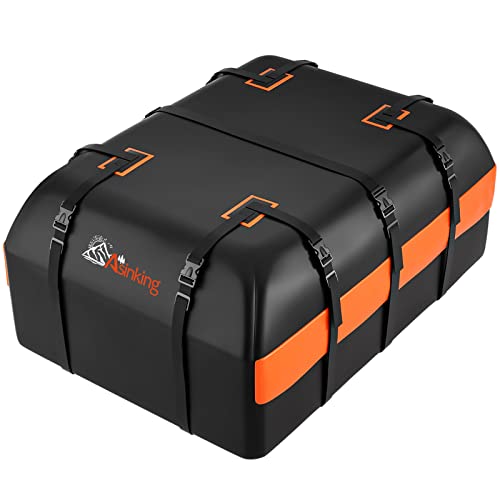 ASINKING Car Rooftop Cargo Carrier Bag, 21 Cubic Feet 100% Waterproof…
View on Amazon ↗
 OVAMAN 6 Rooftop Cargo Tie Down Hook Straps-Secure Any Car Roof…
View on Amazon ↗
 ALLTOAUTO 21 CuFt Waterproof Rooftop Cargo Bag with 10*Straps 6*Hooks 1*Anti-Slip…
View on Amazon ↗
Listing names and images come from Amazon and are rechecked against the live listings; last checked Nov 8, 2026. No prices shown; the current price is on the listing.
What this guide is. Use this guide as a checklist to hold against any roof cargo bag listing. It is written from general knowledge of the category, not from testing individual models, so verify every dimension and strap detail on the product page before you buy.