Focus on vehicle fit, load type, and how often you need the trunk empty. Tall rigid organizers suit families with bulky gear, while low collapsible ones fit small sedans and disappear when not in use. The main tradeoff is between staying power and flexibility. Check floor grip, height against your trunk opening, and whether you need a lid or open bins before comparing anything else.
Measure the Gap Under Your Lid
Most trunk organizers fail because they are too tall for the space. A deep bin can press against the trunk lid or block the parcel shelf. Compare the organizer's height to the lowest point of your trunk opening, not just the floor area.
Small cars and sedans often have a shallow opening. A low profile organizer under 10 inches tall leaves room for the lid to close without crushing the top. Taller models around 12 to 14 inches fit many SUVs and crossovers, but check the hinge area.
Rideshare drivers carry different gear on every shift. A low, wide organizer keeps the floor clear and lets you fold the seats without removing the whole unit. Look for a design that sits below the rear seat back height.
- Measure from trunk floor to the lowest point of the closed lid.
- Leave at least an inch of clearance for the lid hinge and latch.
- Low profile designs suit sedans; taller bins need an SUV or hatch.
Floor Grip Turns a Bin Into a Held Tray
An organizer that slides on carpet or plastic floor liners becomes a hazard. Check the listing for a nonslip base, rubberized feet, or grip strips. A textured bottom helps, but a heavier base does more to keep the unit in place.
Some designs include adjustable straps that clip to the trunk's cargo hooks or tie down points. Straps add security on curved roads and hard stops. Without hooks in your trunk, a strap system cannot work, so check your vehicle first.
Carpeted trunks provide more friction than plastic or rubber liners. If you use an all weather mat, look for deeper grip elements or a wider footprint. A tall, narrow organizer tips more easily than a low, wide one.
Lids, Pockets, and Open Bins Serve Different Loads
Open bins are fast for groceries and bulky items. Lidded compartments protect small tools, chargers, and documents from shifting or spilling. A mix of open and closed sections often works best for family road trips.
Parents carry a mix of snacks, wipes, toys, and emergency supplies. Pockets on the outside keep small items reachable without digging through the main compartment. A lid on the main section keeps a full load from tumbling out on a steep driveway.
For rideshare cars, open bins with dividers allow quick access to cleaning supplies, water bottles, and cables. A rigid divider system stops items from mixing during passenger pickups. Avoid too many small pockets that hide items from view.
The TradeOff Between Staying Put and Folding Away
Collapsible fabric organizers fold flat and store behind a seat when the trunk is empty. They weigh little and cost less. But thin walls sag under heavy items, and the whole unit can slide on a smooth liner.
Rigid hardshell organizers hold their shape under a full load of tools or camping gear. They stay planted during hard braking. The tradeoff is that they occupy the same space even when empty, and they are heavier to lift out.
Semirigid designs with stiffened side panels offer a middle ground. They keep their shape better than soft fabric but still fold somewhat flat. For most buyers, this balance works if the trunk is used for both hauling and daily errands.
| Design type | Staying power | Flexibility | Best load |
|---|---|---|---|
| Collapsible fabric | Low | Folds flat | Light, occasional errands |
| Semirigid fabric | Medium | Partly foldable | Mixed daily and trip gear |
| Rigid hardshell | High | Fixed shape | Heavy tools, camping gear |
A collapsible design suits a small car where trunk space is precious. A hardshell organizer fits a family SUV that always carries supplies. Match the design to how often you need an empty trunk, not just to the load.
Read the Listing for What Is Not in the Photo
Product photos crop out the base, the strap length, and the folded size. Check the listing for the unfolded and folded dimensions, not just the capacity. A 60 liter organizer sounds large, but the shape decides what actually fits.
Ask the seller about the base material and whether the bottom is rigid or soft. A soft bottom sags between dividers and lets small items slip underneath. Also confirm whether the side panels are removable or stitched in place.
Some listings show a full trunk of gear but the organizer is empty. Look for photos of the interior dividers and the underside. If the listing does not show the base or the folded state, ask before buying.
- Check unfolded and folded dimensions, not just capacity.
- Confirm the base is rigid or has a firm insert.
- Look for photos of the underside and strap attachment points.
- Ask whether the dividers are adjustable or fixed.
Skip These Features If You Do Not Need Them
Insulated cooler sections sound useful but add bulk and cost. Unless you routinely carry cold groceries for over an hour, a separate cooler bag is more flexible. The insulation also takes up space inside the organizer.
Built in USB ports or LED lights are rare on trunk organizers and often poorly sealed. A trunk is a dusty, humid place. Extra electronics add failure points without improving organization.
Waterproof fabric matters if you carry wet boots, beach gear, or cleaning supplies. For dry groceries and papers, a water resistant coating is enough. Check the zipper type if you need a sealed lid.
Who Should Skip a Trunk Organizer
Tall drivers who fold the rear seats for long items may find any organizer blocks the pass through. A flat cargo tray or a seat back organizer keeps the floor clear. If you haul a stroller and a full load weekly, a bin may cost more space than it saves.
Rideshare drivers with a constantly changing trunk might prefer a collapsible crate they can remove in seconds. A fixed organizer with many compartments slows down the switch between personal and passenger cargo.
If your trunk already has built in underfloor storage or side cubbies, a large organizer duplicates what you have. Use the existing spaces first, then add only a small tray for loose items.
Care and Long Term Costs Stay Low
Most fabric organizers wipe clean with a damp cloth. A removable, washable liner helps if you carry muddy gear. Rigid plastic models rinse off easily but show scratches over time.
Straps and buckles are the first parts to fail. Check that they are sewn into the body, not glued. A broken strap turns a secure organizer into a sliding bin.
There are no consumables to replace. The main long term cost is buying a second organizer because the first did not fit your trunk. Measure twice, buy once.
Trunk Organizer Questions Buyers Ask Before Opening a Listing
What is a trunk organizer for?
A trunk organizer divides the cargo area into sections so groceries, tools, and emergency gear stay in place while driving. It prevents bags from rolling into the trunk corners and keeps small items from sliding under the seats.
Which trunk organizer stays in place on a plastic liner?
Look for a wide, low base with deep rubberized grip strips or a heavy rigid bottom. Straps that clip to cargo hooks add security. On a smooth plastic liner, a tall narrow organizer slides more easily than a low wide one.
Should I buy a collapsible or rigid trunk organizer?
Collapsible suits a small car or a trunk you empty often. Rigid suits a family vehicle that always carries supplies. If you need both, a semirigid design with stiffened panels folds partly flat while holding its shape under load.
Is a trunk organizer worth it for a small car?
Yes, if you choose a low profile model that fits under the lid. It turns a shallow trunk into usable sections. Skip tall bins that block the opening or prevent the parcel shelf from closing.
How do I compare trunk organizer sizes?
Compare the unfolded height to your trunk opening, not just the floor area. Check the folded size if you plan to remove it. A capacity number in liters does not tell you whether a stroller or a tool box will fit.
Which Trunk Organizer to Hold Out For
A family with young kids and a midsize SUV does best with a semirigid organizer around 12 inches tall, with an open main section, a couple of exterior pockets, and a nonslip base. It holds snacks, wipes, and toys without blocking the lid. If you drive a small sedan and need the trunk empty on short notice, get a low collapsible organizer under 10 inches tall instead.
Real trunk organizer listings, so you can check the points in this guide against actual products. These are affiliate links: as an Amazon Associate we earn from qualifying purchases, at no extra cost to you.
 CARHARTT Carhartt Collapsible Cargo Organizer for Car, SUV, and Truck, Black…
View on Amazon ↗
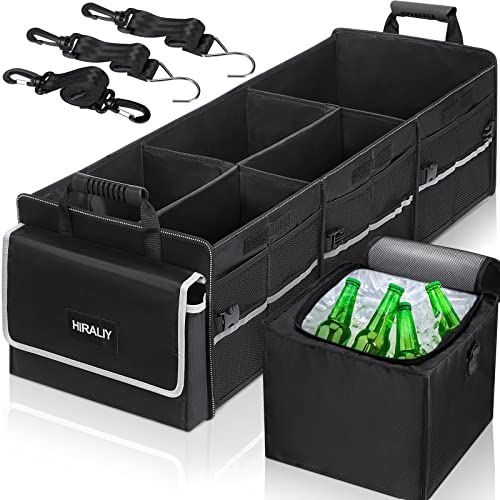 HIRALIY HIRALIY 75L Car Trunk Organizer for SUVs with Leakproof Cooler…
View on Amazon ↗
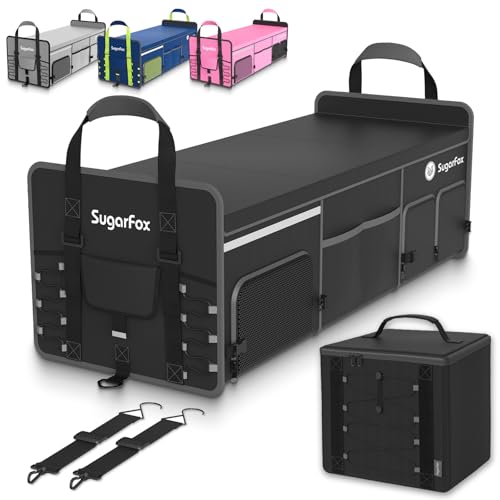 SUGARFOX SugarFox Car Trunk Organizer for SUV, 95L with 26L Cooler,…
View on Amazon ↗
Listing names and images come from Amazon and are rechecked against the live listings; last checked Nov 8, 2026. No prices shown; the current price is on the listing.
What this guide is. Use this guide as a checklist to hold against any trunk organizer listing, not as a verdict on a specific model. It is written from general knowledge of the product category, without reading individual product documents or owner reviews, so verify any listed dimension against your own trunk before you buy.