Decide how many people will actually play and how much patience the group has. For two players or family nights, pick games with drop in coop and gentle hint systems. Solo players should favor games with deep mechanics and no forced waiting. The main tradeoff is between instant accessibility and long term challenge.
Count the Couch Before You Count the Puzzles
Puzzle games split into three head count groups. Solo games assume one person holds the controller and the whole mental load. Two player games often use asymmetric roles, where each person sees different clues and must talk through them. Family style games allow drop in play, so a third or fourth person can join without breaking the puzzle.
Check the listing for the exact number of players supported. A game labeled coop may still force one player to watch during long stretches. If you plan to play with a partner, look for games where both screens or both inputs stay active at the same time.
For offline play, verify the game does not require a persistent internet connection. Some puzzle games fetch daily challenges or verify ownership online, which can block a couch session on airplane mode or in a cabin.
Hint Systems Decide Whether Stuck Means Five Minutes or Fifty
The hint system is the quiet feature that shapes the whole mood. Some games let you nudge a clue, then a stronger clue, then a nearly direct answer. Others offer one vague hint per level and nothing else. Compare the hint cadence before buying.
A good hint system for casual beginners should let players control how much help they get. Look for terms like adjustable hints, progressive hints, or an optional hint button in the listing. Avoid games that punish hint use with locked content or lower scores unless you want that pressure.
For family nights, hints should be available to any player, not buried in a menu. If a game requires one person to look up solutions on a phone, the shared moment collapses.
Skill Gaps Between Players Are the Real Boss Fight
Puzzle games fail most often when one player solves everything while the other watches. To keep mixed skill groups together, look for games with separate difficulty settings per player or puzzles that split into parallel paths.
Some designs use time pressure or dexterity sections that punish slower thinkers. If your group includes kids or casual beginners, avoid games where one wrong move resets the whole puzzle. Instead, look for games with undo buttons, checkpoint restarts, or nonpunishing failure states.
Ask the seller or read the listing for any mention of assist modes. A game with colorblind options, larger text, or a slower timer often signals a design that respects different skill levels.
Which Features Matter and Which Are Just Box Art
Marketing screenshots show colorful worlds and clever gimmicks. The features that actually change your experience are player count, hint style, difficulty options, and save systems. Ignore claims about hundreds of levels unless the listing also tells you how those levels vary.
A puzzle game lives or dies on its puzzle variety. Compare how the listing describes progression. If it only says 100 levels without explaining new mechanics, the puzzles may repeat the same trick. Look for phrases like new mechanics introduced, escalating complexity, or different puzzle types per world.
Money puzzle video game searches often lead to games with in app purchases or premium currency. For a family or casual purchase, check the listing for paid boosters or locked levels. A one time purchase with no microtransactions is the cleaner choice.
Reading a Listing Like a Puzzle You Can Solve
- Check the exact player count and whether coop is local, online, or both.
- Look for the hint system description: progressive, adjustable, or none.
- Verify offline play and whether any daily content requires a connection.
- Scan for difficulty options, assist modes, or accessibility features.
- Ask the seller about average playtime for the main story or puzzle set.
If the listing does not answer these questions, ask the seller before buying. A vague listing often hides a thin puzzle set or a frustrating difficulty spike. You are not asking for a review, only for the facts about how the game handles these features.
Where Puzzle Games Go Wrong for Specific Buyers
Two players searching for a shared experience often end up with a solo game that has a tacked on coop mode. Check whether both players solve puzzles together or simply pass the controller back and forth. True coop means simultaneous input and shared information.
Casual beginners need low friction starts. Avoid games with long unskippable tutorials or dense lore dumps before the first puzzle. A good casual puzzle game teaches through play, not through a manual.
Family nights require short sessions and clear goals. If a game demands a two hour commitment per level, it will not survive a living room with kids. Look for games with save anywhere systems or short level chunks.
Long Term Costs and Care for Puzzle Games
Most puzzle games are one time purchases, but some live on season passes or cosmetic shops. Check the listing for any mention of downloadable content or required updates. A game that needs a day one patch to fix bugs is a different product than the one on the disc or cartridge.
For offline play, consider how the game handles saves. Cloud saves require an account and sometimes a subscription. Local saves keep your progress without an internet connection, which matters for travel or long periods away from Wi-Fi.
Physical copies of puzzle games hold value better if they contain the full game on the cartridge or disc. Digital versions are convenient but cannot be resold or shared easily across accounts.
When to Skip a Puzzle Game Entirely
Skip this product type if your group wants action, competition, or fast reflexes. Puzzle games reward patience and observation, not twitch skill. A family that loves racing games or party brawls will likely bounce off a slow logic puzzle.
Also skip puzzle games if you have no tolerance for being stuck. Even the best hint systems cannot remove every moment of frustration. If you prefer games where progress is guaranteed, look at narrative adventures or cozy games instead.
For a deeper alternative, explore coop adventure games that trade solo freedom for a shared story or a cozy farming game as a low pressure alternative.
Comparing the Main Design Types
| Design Type | Ideal Head Count | Hint Style | Skill Gap Handling | Session Length |
|---|---|---|---|---|
| Casual puzzle | 1 to 4, drop in | Generous, adjustable | Assist modes common | 5 to 20 minutes |
| Narrative puzzle | 1 to 2 | Story based, subtle | Checkpoint restarts | 30 to 60 minutes |
| Coop puzzle | 2, sometimes 3 | Communication based | Shared roles, talk it out | 20 to 40 minutes |
| Logic puzzle | 1 | Minimal or none | Steep, no hand holding | Hours per session |
Use this table as a first filter. If your group has three players, casual puzzle is the safest bet. If you play alone and want a mental workout, logic puzzle fits. The table also explains why a coop puzzle can frustrate a solo player: the hint style assumes a partner to bounce ideas off.
Puzzle Game Questions Worth Asking Before You Buy
Is a puzzle video game good for two players?
Only if the game is built for simultaneous coop, not just alternating turns. Look for asymmetric roles where each player holds different clues. A true two player puzzle game keeps both people talking and solving at the same time. Check the listing for local coop and shared screen support.
What is the best hint system for casual beginners?
A progressive hint system works best. It gives a small nudge first, then a stronger clue, then a near answer. This keeps beginners moving without spoiling the solve. Avoid games with one vague hint per level or no hints at all unless the group enjoys long stuck moments.
Can I play puzzle games offline?
Many puzzle games work offline, but some require a connection for daily challenges, cloud saves, or ownership checks. Before buying, check the listing for offline play support and whether the full game is on the disc or cartridge. If you travel or live with spotty internet, prioritize local saves and no online dependency.
How do I compare two puzzle games without playing them?
Compare the same five features across both listings: player count, hint style, difficulty options, save system, and puzzle variety description. Ignore screenshots and level counts. If one listing clearly explains new mechanics per world and the other does not, the clearer one is usually the safer buy.
Which puzzle game type works for family nights?
Casual puzzle games with drop in multiplayer, short sessions, and adjustable hints fit best. Avoid logic puzzles with steep learning curves and long reset penalties. Family nights need games where a child or a tired adult can still contribute without slowing the group down.
Which Puzzle Game Should You Actually Get?
A family or couple wanting a shared couch experience should pick a casual puzzle game with drop in coop, progressive hints, and no online requirement. That covers two player nights, mixed ages, and offline cabins. A solo player who wants a deep mental challenge should instead pick a logic puzzle with minimal hints and long sessions. The casual coop pick fails the solo player by being too easy and too talkative.
Real puzzle video game listings, so you can check the points in this guide against actual products. These are affiliate links: as an Amazon Associate we earn from qualifying purchases, at no extra cost to you.
 SPRINGBOK Springbok's 1000 Piece Jigsaw Puzzle Gamer's Trove, Multi | Video…
View on Amazon ↗
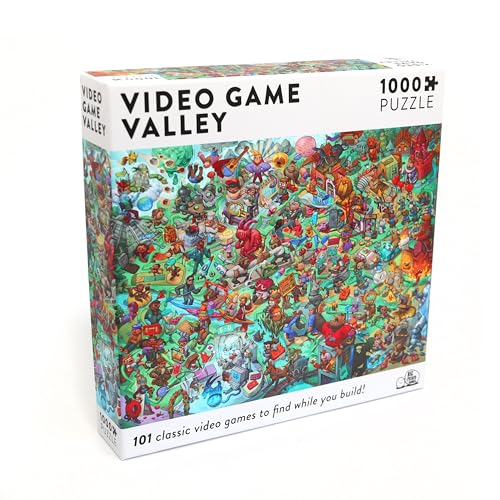 BIG POTATO Big Potato Video Game Valley: Jigsaw Puzzle for Adults (1000…
View on Amazon ↗
 TOYNK Super Never Ending Showdowns Retro Video Games 1000-Piece Jigsaw Puzzle…
View on Amazon ↗
Listing names and images come from Amazon and are rechecked against the live listings; last checked Nov 8, 2026. No prices shown; the current price is on the listing.
About this guide. Use this checklist to hold against any puzzle game listing before you buy. The guide covers the product type in general and no individual game documents or user reviews were used, so verify any dimension like exact player count or hint options on the store page.