Start with panel wattage and battery capacity, because those two numbers set what you can realistically charge in a day. Frequent travelers and iPhone users should favor a small foldable panel with a built in battery. Family households and base camp setups need a larger panel that charges devices directly. The main tradeoff is portability versus charging speed: a panel that fits in a carry on will refill a phone slowly, while a panel that powers a cooler will not fit in a daypack.
Wattage Sets the Pace
A panel's wattage tells you how much power it can produce in full, direct sun. A 5 watt panel can maintain a phone battery but adds charge slowly. A 21 watt panel can refill a phone in a few hours and keep two devices topped up. A 40 watt panel can run a tablet and a phone at the same time, or slowly refill a power station.
Check the listed wattage, then compare it to the device you want to charge. A phone draws 5 to 10 watts while charging. A tablet draws 10 to 15 watts. A USB-C laptop can draw 30 watts or more, which is beyond most portable panels. If the panel wattage is lower than the device draw, the battery may still drain while plugged in.
Real world sun is rarely full and direct. Clouds, shade, and panel angle can cut output by half or more. A 21 watt panel may deliver 8 to 12 watts on a bright but hazy day. That is still enough for a phone, but a laptop will charge only in ideal conditions.
Battery Capacity Decides When You Charge
Some solar chargers store power in a built in battery. Others send power straight from the panel to your device. A built in battery lets you collect energy during a sunny walk and charge your phone after dark. A direct charge panel only works while the sun is on it.
Battery capacity is listed in milliamp hours, often shortened to mAh. A phone battery holds around 3,000 to 5,000 mAh. A solar charger with a 10,000 mAh battery can refill a phone about twice before it needs sun again. A direct charge panel has no capacity to compare, so you judge it by wattage alone.
For long flights and travel days, a built in battery matters more than a large panel. You can leave the panel on a hotel windowsill, then carry the charged battery in your pocket. For a desk setup that never leaves the house, a direct charge panel saves weight and cost.
Read the Port List Before You Buy
A solar charger is only useful if its ports match your cables and devices. Most panels include a USB A port. Many newer panels add USB-C, which can deliver more power and works with modern iPhones and Android phones. Check the output rating next to each port, listed in amps or watts.
A port labeled 5V/2.4A delivers about 12 watts. A USB-C port labeled 18W or 20W can fast charge a phone. Some panels include two USB A ports for sharing between family members. Others add a DC output for power stations or a micro USB input for topping up the built in battery.
Ask the seller for the exact port list and output ratings if the listing is vague. A panel with only one slow USB A port will frustrate a family household. A panel with USB-C Power Delivery will serve an iPhone user who wants a quick midday top up.
Three Panel Designs, Three Different Days
Portable solar chargers come in three broad styles. Small foldable panels have two to four segments and weigh under a pound. Mid size foldables unfold to about the size of a magazine and weigh one to three pounds. Rigid frame panels are larger, heavier, and built to sit on the ground or a stand for hours.
Small foldables suit frequent travelers and long flights. They slip into a carry on and unfold on a tray table or a sunny window. Mid size foldables suit day hikes, picnics, and one person who needs a full phone charge by evening. Rigid frame panels suit base camps, RVs, and family households that can leave the panel set up all day.
The table below summarizes how the three designs compare on the factors that matter most.
| Panel style | Wattage range | Weight feel | Charge speed | Suits |
|---|---|---|---|---|
| Small foldable | 5 to 10W | Pocket light | Slow trickle | Travelers, iPhone users |
| Mid foldable | 15 to 28W | Daypack weight | Steady for one phone | Hikers, one person |
| Rigid frame | 40 to 100W | Carry handle heavy | Fast for two devices | Base camp, family |
A small foldable that fits in a pocket will not fast charge a phone. A rigid frame that fast charges two devices will not fit in a carry on. Choose the design that matches where you will actually use it, not the one that looks most capable on a spec sheet.
The Carry On Test
Airline carry on limits shape which solar chargers work for frequent travelers. A panel with a built in battery must fit within the airline's size and watt hour limits for spare lithium batteries. Most small and mid size foldables pass without issue. Large rigid panels often do not.
Check the battery's watt hour rating if the listing provides one. Under 100 watt hours is generally allowed in carry on luggage. Most portable solar charger batteries are well under that, but a large power station with a panel attached may not be. When in doubt, ask the seller for the battery's watt hour rating.
For long flights, a small foldable with a built in battery is the most practical choice. You can charge the battery from a wall outlet before the flight, then use the panel at your destination. The panel itself rarely helps on a plane, since cabin windows block much of the sun's energy.
What the Listing Will Not Tell You
Some listings show a phone charging under a bright sky with the panel lying flat on a table. That setup works poorly in real life. A panel produces the most power when it faces the sun directly. Lying flat on a table, it may receive half the sun or less.
Look for panels with built in kickstands, grommets, or loops for hanging. A kickstand lets you angle the panel toward the sun. Grommets let you tie it to a backpack while you walk. If the panel has no way to angle it, expect slower charging than the wattage suggests.
Ignore claims about charging a laptop unless the panel lists a USB-C Power Delivery port with at least 30 watts of output. Most portable panels cannot sustain that. A laptop will charge in bursts or not at all. For phones and tablets, the wattage and port list are enough to judge the panel.
Who Should Skip a Solar Charger
A solar charger is a poor fit for a desk setup that stays indoors. The panel needs direct sun to work. A wall charger or a charging station delivers power faster and works at any hour. If you want a tidy desk with multiple devices, see other charging station options instead.
People who need a full phone charge quickly should also look elsewhere. A solar panel is slower than a wall outlet, even in perfect sun. A power bank with a high capacity battery is a better travel companion for a long flight or a busy day in a city.
If you already carry a power bank, a solar charger only helps on trips longer than two or three days away from outlets. For a weekend trip, the panel adds weight and rarely earns its place in the bag.
Mistakes That Lead to a Dead Phone
The most common mistake is buying a panel that is too small for the devices you carry. A 5 watt panel cannot refill a tablet in a day. A 10 watt panel can keep one phone alive but not two. Match the panel wattage to the total draw of your devices.
Another mistake is expecting the panel to charge while it sits in a backpack. A panel needs direct sun on its face. If it is inside a bag, under a jacket, or shaded by a tree, it produces almost nothing. Clip it to the outside of the pack and angle it toward the sun.
Buying a panel without a built in battery for evening use is a third mistake. A direct charge panel stops working at sunset. If you need power after dark, choose a model with a battery or carry a separate power bank.
Portable Solar Charger Questions, Answered
How many watts should a portable solar charger have?
For one phone, 10 to 15 watts is enough on a sunny day. For a phone and a tablet, look for 21 to 28 watts. For two devices at once or a power station, 40 watts or more works better. Subtract a third to a half for clouds or shade.
Can a solar charger power a laptop?
Only if the panel has a USB-C Power Delivery port rated at 30 watts or higher. Most portable panels cannot sustain that output. Even with the right port, a laptop may charge slowly or only in direct sun. A wall outlet remains the reliable choice.
Is a solar charger worth it for travel?
For trips longer than two or three days away from wall outlets, yes. For a weekend trip or a city stay, a high capacity power bank is lighter and faster. A small foldable panel with a built in battery is the most useful travel style.
What is the difference between a solar charger and a power bank?
A power bank stores energy from a wall outlet and releases it later. A solar charger collects energy from the sun. Some solar chargers include a built in battery, combining both functions. A direct charge solar panel has no storage and works only while the sun shines.
Which solar charger is best for iPhone users?
Look for a panel with a USB-C port that supports Power Delivery, ideally 18 to 20 watts. That allows fast charging for modern iPhones. A small foldable with a built in battery keeps an iPhone topped up through a travel day without needing a wall outlet.
The Panel That Fits Your Next Trip
A frequent traveler who carries one iPhone and wants backup power on a long trip should pick a small foldable panel with a built in 10,000 mAh battery and a USB-C Power Delivery port. That combination charges the phone after sunset and slips into a carry on. A family household setting up a base camp for several days should instead choose a rigid frame panel of 40 watts or more and charge devices directly during sunny hours. The small foldable will not keep up with multiple devices, and the rigid frame will not fly.
Real portable solar charger listings, so you can check the points in this guide against actual products. These are affiliate links: as an Amazon Associate we earn from qualifying purchases, at no extra cost to you.
 MARBERO MARBERO 21W Portable Solar Panel Foldable Solar Panel Charger IP65…
View on Amazon ↗
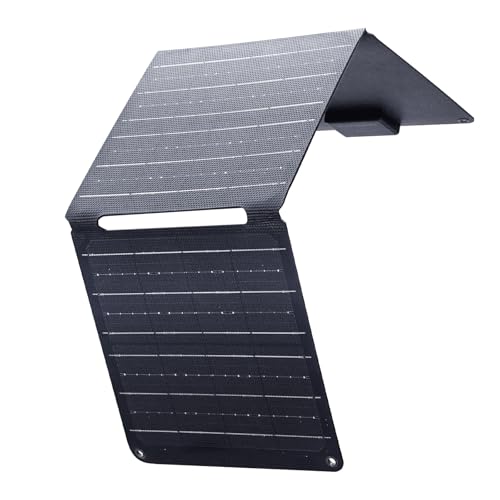 ALLPOWERS ALLPOWERS SP001 21W Portable Solar Panel Charger | Foldable Solar…
View on Amazon ↗
 BIGBLUE 21W Solar Panel Charger BigBlue SolarPowa 20 Portable Solar Charger…
View on Amazon ↗
Listing names and images come from Amazon and are rechecked against the live listings; last checked Nov 8, 2026. No prices shown; the current price is on the listing.
How to read this guide. Use this guide as a checklist to hold against any listing you open. It explains the category in general terms, not a verdict on a specific model, so verify the wattage, battery capacity, and port list on the page before you buy.