Portable ice makers suit buyers who want fresh ice without a water line or freezer space. The deciding factors are batch size, ice style, and how often you will refill and drain it. A compact model works for one or two people; a larger one covers a family or small gathering. The main tradeoff is counter space and upkeep for convenience.
Start With How Much Ice You Actually Use in a Day
Batch size is the first number to check. Most portable ice makers list a daily capacity and a per cycle output. Daily capacity is optimistic; it assumes you run the machine all day and keep adding water. The per cycle number tells you what you get in one sitting.
A small unit might make about 9 cubes in 8 to 10 minutes. That is enough for a couple of glasses or one shaker. A larger unit might make 24 to 30 cubes in the same time. For a dorm room or a two person kitchen, a small batch is fine if you start it before meals. For a family kitchen or an office break room, look for at least 24 cubes per cycle and a reservoir that holds enough water for several cycles.
The reservoir size sets how often you refill. A one quart reservoir might need topping up after every two or three batches. A two quart reservoir buys you a longer stretch. Check whether the listing gives a first batch time and a refill interval. Those numbers, not the daily capacity, predict your real routine.
- Per cycle output is more useful than daily capacity.
- Match reservoir size to how often you want to refill.
- A dorm or office with steady traffic needs a larger batch than a solo kitchen.
Ice Style Changes the Drink and the Machine
Most portable ice makers produce bullet ice: hollow or solid cylinders with a cloudy or opaque look. Bullet ice is fast to make and fine for water bottles, soft drinks, and casual mixed drinks. It melts a little faster than clear ice and can trap air or minerals, which makes it look foggy.
Nugget ice makers are a different type. They chew and compact ice flakes into soft, airy pellets. This is the ice people call chewable or Sonic style. Nugget ice cools drinks quickly, absorbs flavor, and is popular for sodas, iced coffee, and frozen cocktails. The tradeoff is slower output and a higher price. Nugget machines also tend to clog if you use hard water, so filtered water matters more.
A few portable units make clear ice cubes by freezing water slowly in layers. Clear ice is dense, melts slowly, and looks better in a glass. These machines are larger, slower, and usually cost more. Clear ice matters if you serve spirits neat or want slow dilution. For most everyday use, bullet or nugget ice is easier to live with.
The Drain and Clean Routine Nobody Plans For
A portable ice maker does not freeze ice like a freezer. It keeps the ice just below melting point, so unused cubes slowly melt and drip back into the water reservoir. That means you must drain the machine when you are done, or the water sits and can grow slime or scale.
Look for a drain plug on the bottom or side. Some units have a hose or a spout that makes draining less messy. If the listing does not mention a drain, assume you will be tilting the whole machine over a sink. Check whether the water reservoir lifts out for cleaning. A removable reservoir is easier to rinse than a fixed tank.
Self cleaning functions help with mineral buildup. The machine runs a cleaning cycle, but you still add a descaling solution or vinegar. Hard water areas need more frequent descaling. If your tap water leaves white residue on a kettle, it will do the same inside an ice maker.
- Unused ice melts back into the reservoir, so drain after each use.
- A drain plug or hose beats tilting the unit over a sink.
- Removable reservoirs and self cleaning cycles cut down on scrubbing.
How to Read a Listing Without Falling for the Hype
Ignore the words quiet and fast unless the listing gives a decibel number or a timed cycle. A unit that makes ice in 6 minutes is not necessarily better than one that takes 9; the batch size and cube size matter more. Check the dimensions against your counter depth, especially the clearance above the unit for opening the lid.
Look for the water fill method. Some units have a fill line and a maximum water mark. Others use a water bottle adapter. If the reservoir is small, a top fill opening can be awkward under a cabinet. Check the listing photos for where the water goes in and where the ice comes out.
Ask the seller about the compressor type or cooling method. Most portable ice makers use a small compressor, but some budget units use a thermoelectric cooler. Thermoelectric units are quieter and lighter but make ice much more slowly and struggle in warm rooms. If the listing does not say compressor, ask before buying.
Also check the warranty and whether the maker uses a refrigerant that a local repair shop can service. Many portable units are sealed systems, so a failed compressor means replacement, not repair.
Which Features Matter and Which Are Just Marketing
Useful features are a transparent window to check ice level, an ice full sensor that stops the cycle, and a low water indicator. A timer or scheduled start can help if you want ice ready when you wake up. A carrying handle matters if you plan to move the unit between rooms or take it to a patio.
Marketing features to be skeptical of include color changing lights, touch panels that do the same job as buttons, and claims of restaurant quality ice. Restaurant quality is a vague phrase. A portable ice maker with a 12 volt adapter is useful for an RV, but not a reason to pay extra for home use.
Noise matters in a dorm room or an office. Most portable ice makers hum at a level similar to a small refrigerator or a window air conditioner on low. If the listing gives a decibel rating, compare it to a quiet conversation at about 50 decibels. If not, plan to place the unit away from sleeping areas.
- Ice full and low water sensors prevent messy overflows.
- A transparent window lets you check the batch without opening the lid.
- Skip light shows and touch panels; pay for a drain, sensor, and larger reservoir.
Where a Portable Ice Maker Fits and Where It Does Not
A dorm room or tiny home is a natural fit when the freezer is too small for an ice tray or a built in ice maker is not an option. An office break room that serves a dozen people needs a unit with a large reservoir and fast first batch. A family kitchen that uses ice for water bottles all day will outgrow a small unit quickly.
Skip a portable ice maker if you have a freezer with an automatic ice maker or enough freezer space for several trays. Skip it if you rarely use ice. The unit takes up counter space, needs water refills, and must be drained and dried. If you only want ice for the occasional cocktail, a silicone ice tray that makes large cubes is cheaper and quieter.
For an RV or a boat, check the power draw. A portable ice maker runs on a standard outlet, but a small generator or inverter may struggle with the startup surge. Some units have a 12 volt option, but most do not. If you camp without shore power, a cooler and bagged ice may be the better choice.
If you already own a compact refrigerator with a tiny freezer, a portable ice maker can sit beside it and free up that freezer shelf for food. Consider the counter depth and the heat the unit puts out. It needs airflow around the back and sides, so do not wedge it against a wall.
The Main Design Types and the Tradeoffs
Bullet ice makers are the most common and the cheapest. They are fast, compact, and easy to find. The ice is soft, melts fairly quickly, and can look cloudy. Nugget ice makers produce chewable ice that many people love, but they are slower, louder, and more expensive. Clear ice makers make dense, slow melting cubes, but they are bulky and take longer per batch.
The table below compares these three types plus the high output bullet category, which is a larger version of the basic design.
A high output bullet machine is not a different technology. It is a bigger reservoir and a bigger ice basket. It suits a family or a small office but takes up more counter space and costs more than a compact bullet unit.
| Ice style | First batch time | Upkeep level | Best fit |
|---|---|---|---|
| Bullet | 6 to 9 minutes | Low to medium | Dorms, couples, small kitchens |
| Nugget | 15 to 25 minutes | Medium to high | Soda lovers, iced coffee, offices |
| Clear | 20 to 40 minutes | Medium to high | Spirits, slow melting drinks |
| High output bullet | 8 to 12 minutes | Medium | Families, break rooms, gatherings |
The first batch time assumes the unit is plugged in and the water is room temperature. A cold room or cold water can add a few minutes. The upkeep level rises with hard water and with how often you leave melted ice sitting in the reservoir.
The Mistake That Leads to a Slimy Machine
The most common mistake is treating a portable ice maker like a freezer ice maker. People fill it, make ice, and leave the leftover water in the reservoir overnight. The next day the water is cloudy and the machine smells musty. That water has been sitting at room temperature, which is a perfect environment for bacteria and mold.
Drain the unit after every session. Wipe the interior dry, especially the ice basket and the water reservoir. If you use it daily, a quick rinse and drain is enough. If you use it only on weekends, run a cleaning cycle with vinegar or a descaling solution before the first batch.
Another mistake is using unfiltered tap water in a hard water area. The minerals build up on the evaporator fingers, the little metal prongs that form the ice. Scale on those fingers slows the freezing and makes the ice taste off. A simple carbon filter pitcher is enough for most tap water; a reverse osmosis filter is overkill for an ice maker.
Long Term Costs Beyond the Purchase Price
A portable ice maker uses electricity whenever it runs. The compressor cycles on and off to keep the ice cold, so it draws power even when it is not actively making a batch. A small unit might use 100 to 150 watts while running. That is similar to an old incandescent bulb, but it adds up if you run it all day.
Water is the other recurring cost, though it is small. If you use bottled or filtered water, that adds up faster than the electricity. The real long term cost is maintenance. Descaling solution, vinegar, or citric acid every few weeks keeps the machine alive. A neglected unit can fail within a year; a cleaned one can last several years.
Replacement parts are rare. Most portable ice makers are sealed units, so a broken compressor or a refrigerant leak means the whole machine is done. That is why the warranty length and the seller's return policy matter more than a low price. If a budget unit fails after 90 days, the cheap price is not a bargain.
Portable Ice Maker Questions Before You Buy
How long does a portable ice maker take to make ice?
Most bullet ice makers produce a first batch in 6 to 9 minutes. Nugget ice makers typically take 15 to 25 minutes, and clear ice makers can take 20 to 40 minutes per batch. The first batch is usually the fastest because the water starts at room temperature. Later batches may take a little longer as the compressor warms up. Check the listing for a first batch time, not a daily capacity.
Do portable ice makers need a water line?
No, most portable ice makers have a refillable reservoir that you fill by hand. Some larger units can connect to a water line, but that defeats the portability. You fill the reservoir to the marked line, plug in the unit, and it pumps water over the freezing fingers. The water that does not freeze drains back into the reservoir and is reused for the next batch.
Can I leave a portable ice maker running all the time?
You can, but the ice will not stay frozen. Portable ice makers keep the ice just below melting point, so unused cubes slowly melt back into the reservoir. Running it all day means you will need to add water and drain the melted ice. For a party or a busy office, that is fine. For daily use, it is easier to make a batch, use it, and drain the unit.
Is a portable ice maker worth it for a small kitchen?
It is worth it if you use ice several times a day and your freezer is too small for trays or a built in ice maker. The unit takes about a square foot of counter space and needs airflow around it. If you only use ice once a day, a couple of silicone ice trays in the freezer are cheaper and quieter. A portable unit earns its space when ice is a regular part of your routine.
What is the difference between bullet and nugget ice?
Bullet ice is a hollow or solid cylinder with a cloudy look. It is fast to make and works fine for water and soft drinks. Nugget ice is made by compressing ice flakes into soft, airy pellets. It is chewable, absorbs drink flavor, and melts a little faster than bullet ice. Nugget machines are slower, louder, and more expensive, but many people prefer the texture.
Which Portable Ice Maker Should You Get?
A couple in a small kitchen or a student in a dorm should start with a compact bullet ice maker that makes about 9 cubes per cycle and has a drain plug. It is fast, cheap to run, and easy to tuck under a cabinet. A family kitchen or an office break room with constant traffic needs a high output bullet unit with at least a two quart reservoir and a 24 cube basket. If someone in the house loves chewable ice for sodas and iced coffee, stretch the budget for a nugget ice maker and accept the slower batches and extra cleaning.
Real portable ice maker listings, so you can check the points in this guide against actual products. These are affiliate links: as an Amazon Associate we earn from qualifying purchases, at no extra cost to you.
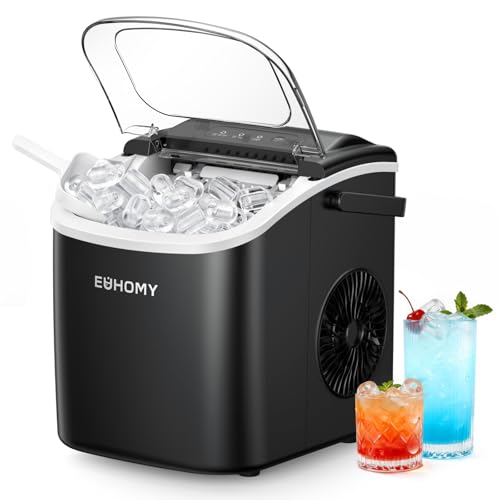 EUHOMY EUHOMY Countertop Ice Maker Machine with Handle, 26lbs in 24Hrs,…
View on Amazon ↗
 ANTARCTIC STAR Antarctic Star Countertop Ice Maker Machine, 26Lbs/Day Fastest 6‑Min Ice…
View on Amazon ↗
 SILONN Silonn Ice Maker Countertop, 8 Cubes in 6 Mins, 26.5…
View on Amazon ↗
Listing names and images come from Amazon and are rechecked against the live listings; last checked Nov 8, 2026. No prices shown; the current price is on the listing.
What this guide is. This guide covers portable ice makers as a category, using general knowledge of how the machines work and what to check on a listing. It does not draw on reviews, tests, or any individual model documents, so always confirm the batch size, dimensions, and drain style on the product page before buying.