Start with the room size and the heater's wattage. A 1,500 watt heater typically covers about 150 square feet, so a large garage needs a different approach. Then choose between radiant heat for quiet, targeted warmth and fan forced heat for faster, wider coverage. The main tradeoff is speed versus silence.
Match the Wattage to the Room
Portable heaters are almost always 750 or 1,500 watts on high. A 1,500 watt heater is the realistic maximum for a standard US wall outlet, so that number appears everywhere. As a rough rule, 10 watts per square foot gives comfortable warmth. That means a 1,500 watt model suits a sealed room of about 150 square feet.
A small bedroom or a home office fits that budget easily. A basement, a drafty garage, or an open plan living area does not. In those spaces the heater runs constantly, the air stays lukewarm, and the electricity bill climbs. For a large or poorly insulated area, either choose a heater designed for higher output on a dedicated circuit or accept that a portable unit only warms the zone right around you.
Check the listing for the wattage on each setting, not just the maximum. Some heaters run at 1,500 watts on high but only 750 on low, which changes how often the thermostat cycles. Also confirm the plug type. A few high output models require a 20 amp outlet, which looks different from the standard 15 amp socket.
| Room size | Recommended wattage | Heater style that fits | What to watch |
|---|---|---|---|
| Up to 100 sq ft | 750 to 1,000 W | Infrared, small ceramic | May overheat if blocked |
| 100 to 150 sq ft | 1,500 W | Ceramic, oil filled | Standard outlet limit |
| 150 to 300 sq ft | 1,500 W plus insulation | Oil filled, forced air | Slow recovery in drafts |
| Over 300 sq ft | Multiple units or fixed heat | Two portable units | One heater will not keep up |
These ranges assume a room with closed doors and normal ceiling height. A room with a stairwell, high ceiling, or large single pane window behaves like a much larger space.
Radiant Heat Warms You, Fan Heat Warms the Air
The biggest design split is between radiant and convection heating. Radiant heaters, including infrared panels and quartz models, send heat directly to people and objects in their line of sight. They work almost instantly, make little or no noise, and feel warm even in a cool room. But move out of the beam and the warmth disappears.
Convection heaters warm the air, which then rises and circulates. Oil filled radiators are the quiet, steady version. Ceramic and coil fan heaters are the fast, audible version. A fan forced heater can raise the temperature of a small closed room in minutes, but the fan runs the whole time and the moving air can feel dry on skin and eyes.
For a bedroom where you sleep, an oil filled radiator or a low wattage infrared panel is usually the better match. For a garage or a cold bathroom you use for ten minutes at a time, a fan heater makes more sense. The same heater is rarely the right answer for both.
The Safety Circuit That Should Be Non Negotiable
Every portable heater sold in the US should have two basic protections: a tip over switch that cuts power when the unit falls, and an overheat sensor that shuts it off if the internal temperature climbs too high. Check the listing for both. A heater without either is not worth the risk.
Look beyond those basics for the room you plan to heat. A cool touch exterior matters in a home with children or pets. A grounded three prong plug matters in a damp basement or garage. A heater with a built in GFCI plug is a safer choice near a sink or in a bathroom, though it is not a substitute for keeping the unit away from water.
The cord is easy to overlook. Most portable heaters have a 6 foot cord, which means you need an outlet close to where you sit or sleep. Extension cords are a bad idea with high wattage heaters because they can overheat. If the listing warns against an extension cord, believe it, and plan your outlet placement before you buy.
The Bedroom Heater You Will Actually Sleep With
A bedroom heater has to be quiet enough to ignore at 2 a.m. That rules out most fan forced ceramic models for light sleepers. An oil filled radiator is effectively silent after it warms up, with only the occasional click from the thermostat. An infrared panel is even quieter and can be wall mounted out of the way.
Dryness is the other bedroom complaint. Fan heaters blow warm air across the room, which accelerates moisture evaporation from your skin and nasal passages. Oil filled radiators and infrared panels do not move air, so the room feels less dry. If you already wake up with a dry throat in winter, choose a non fan design.
For a child's room, add a cool touch housing and a stable base. Small ceramic heaters with a narrow footprint tip more easily than a wide oil filled radiator. Place the heater at least 3 feet from bedding and curtains, and never on a carpet with a deep pile that can block the intake.
Garages and Basements Need a Different Math
A garage is usually the worst case for a portable heater. Concrete floors pull heat out of the air, the door leaks, and the space is large. A single 1,500 watt heater will not warm a two car garage from freezing to comfortable. It will warm the air immediately around a workbench, which is sometimes all you need.
For a garage, favor a radiant heater aimed at the spot where you stand or work. A quartz or infrared model gives instant heat without waiting for the air to warm. A forced air heater can take the chill off faster when you first walk in, but it will run constantly and cost more to operate.
Basements are different because they are often smaller and better sealed, but they stay damp. A heater with a grounded plug and overheat protection is the minimum. Avoid extension cords entirely. If the basement has a sump pit or a history of water, keep the heater on a shelf or a stand, never directly on the floor.
Humidity Changes How Heat Feels
In a humid climate, a portable heater can make a room feel stuffy before it feels warm. Warm air holds more moisture, so a fan heater in a damp space can raise the perceived mugginess. Radiant heat feels more comfortable because it warms your skin without heating the moist air as much.
That said, a dehumidifier and a heater together often work better than either alone. Drier air feels warmer at the same temperature, so removing moisture lets you run the heater on a lower setting. If you heat a basement or a coastal bedroom, consider pairing the two appliances. See five checks before buying a dehumidifier for what to look for in the other half of that setup.
Do not buy a heater with a built in humidifier unless you actually need added moisture. The combination is rare and usually adds cost without improving the heating. In a dry winter climate, a separate humidifier gives you more control.
Mistakes That Turn a Heater Into a Paperweight
The most common mistake is buying by physical size or brand reputation instead of wattage. A small, pretty heater is still a 1,500 watt device. If the room is too large, the heater runs nonstop and still disappoints.
Another mistake is ignoring the floor under the heater. Oil filled radiators are heavy and can dent soft wood. Ceramic heaters with small feet can tip on thick carpet. Check the base design and the unit's weight before you place it on a surface you care about.
Some buyers assume a thermostat means the heater will hold a precise temperature. Most portable heater thermostats are approximate. They cycle the unit on and off within a few degrees, which is fine for comfort but not for keeping a room at an exact temperature. If you need precision, look for a model with a digital thermostat and a temperature display rather than a simple dial.
When to Skip a Portable Heater Entirely
If you need to heat a whole apartment or an entire floor, a portable heater is the wrong tool. Running two or three 1,500 watt heaters on the same circuit will trip the breaker, and the operating cost will rival a central system. A fixed wall heater, a ductless mini split, or a baseboard upgrade makes more sense.
Skip a portable heater if your main problem is drafts. No heater fixes a leaky window or an uninsulated wall. You will pay to heat air that immediately escapes. Seal the drafts first, then size the heater to the now smaller effective room.
Also skip it if you cannot place it safely. A room with no outlet within 6 feet, a floor covered in clutter, or a curious pet that chews cords means a portable heater creates more risk than warmth. In those cases, a wall mounted panel heater with a short cord or a heated throw for personal warmth is a better fit.
Portable Heater Questions Buyers Ask Before Adding to Cart
How many watts should a portable heater be?
For most rooms, 1,500 watts is the standard maximum and covers roughly 150 square feet when the room is sealed and insulated. Smaller spaces under 100 square feet can use a 750 watt setting or a lower wattage model. Large or drafty spaces need more than one unit or a different heating approach.
Is a portable heater worth it for one room?
Yes, if you spend most of your time in one room and want to lower the central thermostat. A portable heater can warm that room for less than heating the whole house, especially with a thermostat and a timer. The savings shrink in a very large or poorly insulated room where the heater runs constantly.
Which portable heater is quietest?
Oil filled radiators and infrared panels are the quietest because they have no fan. Oil filled models may click when the thermostat cycles, while infrared panels are nearly silent. Fan forced ceramic and coil heaters are the loudest and run a fan whenever they produce heat.
Can I leave a portable heater on overnight?
Only if the heater has a tip over switch, overheat protection, and a stable placement away from bedding and curtains. Many oil filled radiators and infrared panels are designed for overnight use in a bedroom. Fan heaters are riskier because the intake can become blocked, and the noise often disrupts sleep anyway.
What makes a portable heater safe for a bathroom?
Look for a GFCI plug and a grounded three prong cord, and keep the heater away from the tub, sink, and shower. A wall mounted infrared panel is a common choice because it stays out of the splash zone. Never place a standing heater on a wet floor or use an extension cord in a bathroom.
The Heater to Pick for Your Space
For a bedroom or small home office, choose a 1,500 watt oil filled radiator with a timer and a tip over switch. It runs silently, keeps the air from feeling dry, and holds warmth after it cycles off. For a garage or workshop where you want heat the moment you walk in, choose a quartz or infrared radiant heater instead. That model warms you directly, skips the long warm up, and does not waste energy heating the whole space.
Real portable heater listings, so you can check the points in this guide against actual products. These are affiliate links: as an Amazon Associate we earn from qualifying purchases, at no extra cost to you.
 SWEETCRISPY Sweetcrispy Oil Filled Radiator Heater for Indoor Use 1500W Quiet…
View on Amazon ↗
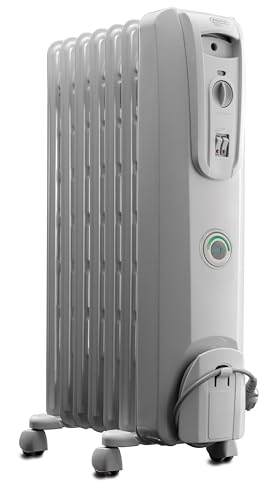 DE'LONGHI De'Longhi Oil filled Radiator Heater, 1500W Electric Space Heater for…
View on Amazon ↗
 AMAZON BASICS Amazon Basics Portable Oil Space Heater with 7 Oil-Filled Fins,…
View on Amazon ↗
Listing names and images come from Amazon and are rechecked against the live listings; last checked Nov 8, 2026. No prices shown; the current price is on the listing.
What this guide is. This guide describes the portable heater category in general, not any specific model. It is written from common knowledge about how heaters work; no individual product documents, reviews, or tests were used. Check the listing for exact wattage, cord length, and safety features before you buy.