Two decisions matter most: how the dispenser sits in your hand, and how the blade cuts. A pistol grip gives you leverage for long tape runs. A low profile frame gives you control around box corners. Choose the grip that matches your daily volume, then check the blade angle so the tape parts cleanly instead of snagging.
Tape Speed Against Control in One Hand
A packing tape dispenser sits between your wrist and the box. The shape of the handle decides how much force reaches the tape. The blade decides whether the tape parts cleanly or folds back on itself.
You choose this tool for speed or for control. A pistol grip gives you a full hand wrap and a long pull. A low profile frame keeps your fingers close to the tape line, which helps you steer around box corners.
The tradeoff is real: a grip built for long fast runs feels clumsy on a small box. A compact frame built for precision slows you down when you are taping a dozen large cartons. Match the grip to your main box size and daily volume.
How the Blade Dictates Your Cuts
The blade on a packing tape dispenser is a serrated metal edge. Its angle and sharpness decide whether the tape tears with one motion or snags and stretches. A sharper, more angled blade parts the tape with less force but leaves a rougher edge.
A shallow blade angle holds the tape longer before cutting, which can help you set the tape down exactly where you want it. A steeper angle cuts sooner, which is faster but less forgiving on thin tape.
Check the blade material in the listing. Stainless steel resists adhesive buildup better than coated steel. Some blades are replaceable; others are fixed for the life of the tool. A fixed blade can go dull after heavy use, and a dull blade is the main cause of tape tears.
Finger safety matters too. A recessed blade sits behind a guard so your finger cannot slide into the teeth during a pull. A fully exposed blade cuts faster but asks for more care.
Grip Shape Sets Your Wrist Angle
The grip is the part you hold for hours if you ship daily. A pistol grip angles your wrist like a power tool handle, which suits long pulls across a table. A straight or low profile grip keeps your wrist flatter and closer to the tape, which suits small boxes and corner work.
A contoured grip with a soft overmold reduces hand fatigue. Hard plastic is lighter and easier to wipe clean but slips when your hands get sweaty. Consider where you work: a warehouse desk and a home dining table put different demands on the same hand.
The grip also decides how much downward pressure you can apply. A pistol grip lets you press the tape into the box while you pull. A low profile frame relies more on the tape's own adhesive to start the bond.
Tape Width Is a Hard Limit
Most packing tape dispensers fit a specific tape width, usually 2 inches or 3 inches. A 2 inch dispenser handles standard clear and brown packing tape. A 3 inch dispenser handles wider tape for heavier cartons or pallet wraps.
Check the core size too. The core is the cardboard ring inside the roll. A dispenser built for a 3 inch core will not hold a 1 inch core roll without an adapter. Some dispensers include an adapter; others do not.
The tape tension matters. A good dispenser has an adjustable tension knob or a built in brake so the roll does not spin freely and unspool when you set the tool down. Without a brake, the tape can unwind and stick to your work surface.
Tabletop Units Suit a Fixed Station
A tabletop packing tape dispenser mounts to a desk or shelf. It holds the tape roll in a fixed position while you pull the box or the tape across the blade. This suits a dedicated shipping station where boxes come to the tape, not the other way around.
These units are heavier and sturdier. They often accept wider tape and longer rolls, which means fewer roll changes. The tradeoff is reach: you cannot carry the dispenser to a box on the floor or across the room.
If you pack at a standing desk or a packing table, a tabletop unit can be faster than a handheld because the blade stays put. If you move between shelves and boxes, a handheld dispenser is the practical choice.
Reading a Listing Before You Buy
Start with the tape width and core size. Those two numbers decide whether your current tape rolls fit. Then check the blade material and whether the blade is replaceable.
Look for the grip material and shape in the product photos. A listing that shows the dispenser in someone's hand tells you more than a spec sheet. Check whether the tension is adjustable and whether the tape roll is easy to load.
Ask the seller two questions if the listing is unclear: what tape widths and core sizes does this dispenser accept, and is the blade replaceable? Those answers eliminate most bad fits.
Ignore marketing phrases like 'ergonomic' or 'pro grade' unless the listing shows a specific shape or material. The real features are the grip angle, the blade design, and the tape width limit.
Comparing the Main Design Types
| Design type | Grip feel | Blade cut | Tape width | Suits |
|---|---|---|---|---|
| Pistol grip | Full hand, angled wrist | Fast, moderate control | 2 or 3 inch | Daily volume, long runs |
| Low profile | Close to tape, flat wrist | Precise, slower | 2 inch | Small boxes, corners |
| Tabletop | None, fixed base | Very consistent | 2 or 3 inch | Dedicated station |
| Two wheel | Full hand, heavier | Even pressure, fast | 2 or 3 inch | Large cartons, pallets |
A two wheel dispenser adds a second roller that presses the tape down as you pull. This gives a smoother bond on long seams but makes the tool heavier and bulkier. Choose it only if you tape many large cartons per day.
A low profile frame is the easiest to carry in a pocket or tool belt. A pistol grip is easier on the wrist for long sessions. A tabletop unit is the least flexible but the most consistent.
Who Should Skip a Handheld Dispenser
If you ship only a few boxes a month, a handheld packing tape dispenser may be more tool than you need. A roll of tape and a pair of scissors work, though they are slower and leave more waste.
If you tape very large or very heavy cartons, a tabletop unit or a wide tape dispenser with a two wheel design may serve you better than a compact handheld.
If you work in a tight space with no room to store a tool, a simple tape roll with a built in cutter strip can handle light duty. But that cutter strip dulls quickly and tears tape at odd angles.
For Etsy sellers and small ecommerce shops, a low profile handheld dispenser is often the right balance. For a warehouse desk that processes dozens of boxes daily, a pistol grip or tabletop unit saves real time.
Mistakes That Slow Down a Packing Table
Buying a dispenser that fits the wrong tape width is the most common error. A 2 inch dispenser cannot hold a 3 inch roll, and forcing it damages the tool and the tape.
Ignoring the blade angle leads to tape that snags and folds. A shallow angle is better for thin tape. A steeper angle is better for thick tape. Match the blade to your tape thickness, not just the width.
Overlooking the tension adjustment means the tape roll spins too freely and unwinds between uses. A simple friction brake or tension knob prevents this.
Choosing a grip based on looks instead of wrist angle leads to hand fatigue. Hold the tool in your mind's eye: does your wrist bend up or stay straight? Straight is better for long sessions.
Forgetting to check the core size means the roll wobbles on the spindle. A wobbly roll wanders and tapes crooked lines.
Packing Tape Dispenser Questions Before You Buy
Is a packing tape dispenser worth it for a small Etsy shop?
Yes, if you ship more than a few packages a week. A low profile handheld dispenser speeds up each box and cuts straighter lines than scissors. It also reduces tape waste because the blade cuts at the same place every time. For very low volume, a tape roll with a built in cutter strip can work for a while.
Which packing tape dispenser is best for a home shipping table?
For a home shipping table, choose a low profile or pistol grip handheld that fits 2 inch tape. Check that the grip feels comfortable in your hand and that the blade is recessed for safety. A tabletop unit makes sense only if you have a dedicated packing station and ship many boxes a week.
What is the difference between a 2 inch and a 3 inch packing tape dispenser?
A 2 inch dispenser holds standard packing tape used on most small and medium boxes. A 3 inch dispenser holds wider tape for heavier cartons or pallet wraps. The width is a hard limit: a 2 inch frame cannot hold a 3 inch roll. Check your tape roll width before you buy.
How do I choose a packing tape dispenser that cuts cleanly?
Look at the blade angle and material. A stainless steel blade with a steeper angle cuts thick tape cleanly but can tear thin tape. A shallower angle is gentler on thin tape. A recessed blade is safer for your fingers. Replaceable blades extend the tool's life.
Can a packing tape dispenser reduce hand fatigue?
Yes. A pistol grip with a soft overmold spreads pressure across your palm and keeps your wrist in a natural angle. A low profile frame keeps your wrist straight, which helps on long packing sessions. Avoid hard plastic grips if you ship daily or have weak wrists.
Which Packing Tape Dispenser Fits Your Shipping Flow
A low profile 2 inch handheld dispenser with a stainless steel blade and adjustable tension is the right starting point for most home shippers and small Etsy sellers. It handles standard tape, fits in a drawer, and gives good corner control. If you process dozens of large cartons a day at a warehouse desk, choose a pistol grip or a tabletop unit with a 3 inch tape width instead. That wider tape and fixed blade speed up long seams and reduce roll changes.
Real packing tape dispenser listings, so you can check the points in this guide against actual products. These are affiliate links: as an Amazon Associate we earn from qualifying purchases, at no extra cost to you.
 MR. PEN Mr. Pen- Heavy Duty Packing Tape Dispenser Gun, 2 Inch…
View on Amazon ↗
 IDHM PROSUN 2 Pack Heavy Duty Metal Packing Tape Dispenser Gun…
View on Amazon ↗
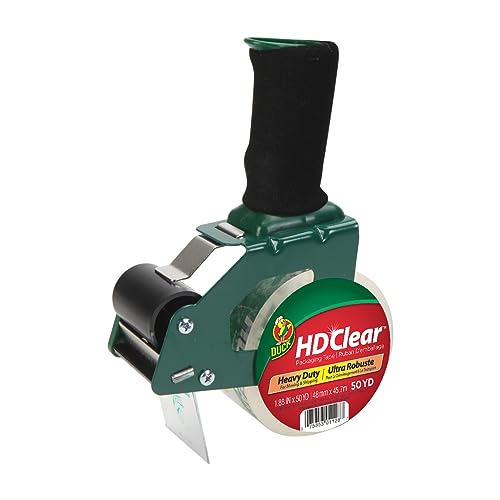 DUCK Duck HD Clear Packing Tape Dispenser Heavy Duty Packaging Tape…
View on Amazon ↗
Listing names and images come from Amazon and are rechecked against the live listings; last checked Nov 8, 2026. No prices shown; the current price is on the listing.
What this guide is. This guide covers the packing tape dispenser category, not specific models. It is written from general knowledge of how these tools work, without reading reviews or handling any units. Check the tape width, core size, and blade details on the listing before you buy.