Start with how much room sound reaches the back of your microphone. A thick multipanel shield helps the most for bare walls and podcast speech, while a thin single panel only cleans up a little reflection. Buyers with heavy background noise should skip a shield and treat the room instead. The main tradeoff is reflection control against desk space and mounting weight.
What a Shield Actually Changes
A microphone isolation shield sits behind or around a microphone and absorbs sound that would otherwise bounce off nearby walls, shelves, or a desk surface. It shortens the echo tail in a recording. That makes a voice sound closer and less hollow.
It does not block noise that travels directly to the front of the microphone. A refrigerator hum, keyboard clatter, or street traffic still enters the capsule. Think of a shield as a reflection damper, not a soundproof booth.
The effect is most obvious with condenser microphones, which pick up more room tone than dynamic mics. If your recording already sounds dry, a shield may make little difference. Compare a raw recording in the same spot with and without a shield to hear the change.
Panel Thickness Sets the Ceiling
Dense acoustic foam absorbs high frequencies easily, but low mid frequencies around 250 to 500 Hz need more material depth. A panel under 1 inch thick mostly tames sibilance and a little room ring. Panels around 2 inches or thicker reach down into vocal muddiness.
Check the listing for panel thickness, not just the outer dimensions. Some shields look thick because of a plastic shell but hold only a thin foam layer inside. A heavier shield often means denser foam, but weight also strains a lightweight boom arm.
For spoken word and singing that sits in a mix, a 2 inch panel is a good middle ground. Thinner panels work for a quick podcast voiceover if the room already has carpet and curtains. Thicker panels help in a bare room with drywall on three sides.
Panel Count Shapes the Quiet Zone
A single flat panel only absorbs reflections from directly behind the microphone. Sound bouncing off a side wall still reaches the capsule. Curved shields with three or five panels wrap around the mic and catch more of those side reflections.
More panels do not always mean better sound. A five panel shield on a small desk can crowd the microphone and make the performer lean back, which changes the vocal tone. A three panel curve is often enough for a home setup where the mic faces away from the nearest wall.
For guitar recording, a wider five panel shield can help because the instrument radiates sound over a larger area. For a single speaking voice close to the mic, three panels usually cover the rear and side angles that matter.
Mounting Without a Sag
Most shields clamp onto a microphone boom arm or a straight stand. The clamp must grip the stand shaft tightly, or the whole assembly slowly tilts forward. A shield with a metal clamp and a locking knob holds better than a plastic friction clamp.
Check the weight of the shield and the weight limit of your stand. A heavy five panel shield can overwhelm a lightweight desk boom arm, even if the arm holds the microphone fine. Some shields include a tabletop stand, which avoids the arm issue but uses desk space.
For a microphone boom arm that already carries a heavy condenser mic, a lighter shield is a safer match. For a floor stand with a wide base, a heavier shield is less of a problem.
Where a Shield Fails
A shield cannot fix a room with a loud air conditioner, thin windows, or a neighbor's dog. Those sounds arrive at the front of the mic, where the shield does not reach. A better fix is to move the mic away from the noise source or use a dynamic microphone with a tighter pickup pattern.
A shield also does not replace a pop filter. Plosive sounds like P and B come from the mouth straight into the mic, so a separate pop filter still matters. Some shields include a pop filter arm, but many do not.
If the room has a strong flutter echo between two parallel walls, a shield behind the mic helps only a little. Acoustic panels on the side walls or a heavy curtain do more. Think of the shield as one tool among several.
Reading the Listing Before You Buy
Look for three numbers: panel thickness, panel count, and total weight. A listing that hides thickness often means thin foam. A listing that hides weight may mean a stand that tips over.
Check the clamp diameter range. Some shields fit only a standard 5/8 inch mic stand shaft, while others include adapters for smaller desk arms. If you use a clamp on arm, measure the tube diameter first.
Ask the seller whether the foam is open cell acoustic foam or just packaging foam. Open cell foam has a rough, porous surface. Smooth closed cell foam reflects more than it absorbs. The difference is visible in close up photos.
Also confirm whether the shield folds flat for storage. A fixed curve shield is fine on a permanent desk setup, but a folding shield is easier to slide into a drawer or carry to a session.
| Panel style | Reflection control | Desk footprint | Best for |
|---|---|---|---|
| Single flat panel | Rear only, light echo cut | Smallest | Close speech in a soft room |
| Curved three panel | Rear and some side | Moderate | Home vocals and podcasts |
| Five panel wrap | Rear and wide sides | Larger | Guitar and louder sources |
| Thick studio booth | Strongest, most even | Largest, needs sturdy stand | Untreated rooms, critical takes |
A larger shield changes the visual of a streaming setup too. If you record on camera, a tall five panel shield can cover your face or block a ring light. A shorter three panel shield is easier to frame around.
Care and Long Term Costs
Acoustic foam collects dust, and a dusty shield sheds particles onto the microphone. Vacuum the foam lightly with a brush attachment every few weeks. Do not use water or cleaning sprays, which break down open cell foam.
The fabric covering on some shields can fray at the edges. A frayed edge is mostly cosmetic, but loose threads can catch on a mic clip. Trim loose threads rather than pulling them.
There are no consumable parts, so the main long term cost is replacement if the foam crumbles or the clamp cracks. Cheaper shields sometimes use a plastic hinge that snaps after repeated folding. A metal hinge costs more up front but avoids that failure.
Shield Questions Buyers Ask Before Recording
Is a microphone isolation shield worth it for a podcast?
For a podcast recorded in an untreated room with bare walls, yes, a shield often makes the voice sound noticeably drier and closer. If the room already has carpet, curtains, and bookshelves, the improvement is smaller. Compare a raw recording before buying to hear how much room tone you already have.
What is the difference between a shield and a reflection filter?
The terms mean the same thing. A reflection filter is a panel or set of panels placed behind a microphone to absorb room reflections. Sellers sometimes use one term for a single panel and the other for a multipanel curve, but the function is identical.
Which shield works for streaming with a camera?
A shorter three panel shield is easier to keep out of the camera frame than a tall five panel wrap. Look for a shield that sits just above the microphone and does not block a ring light placed behind the camera. A single panel also works if the streamer sits close to a treated back wall.
Can a shield block noise from a loud keyboard?
No. The shield sits behind the microphone, while keyboard clatter comes from in front or to the side. A shield reduces echo from the room but not direct noise. A quieter keyboard, a dynamic microphone, or moving the keyboard further away helps more.
Does a thicker shield always sound better?
Not always. A very thick shield on a small desk can push the performer too far back from the mic, which adds room tone back into the recording. Thicker foam helps in a bare room, but in a soft room a 1 to 2 inch panel is often enough and easier to mount.
The Shield Pick for a Home Recording Corner
A podcaster recording speech in an untreated bedroom should start with a curved three panel shield with foam at least 1.5 inches thick and a metal clamp. It cuts the worst rear reflections without taking over the desk. A guitarist recording louder takes in a bare, echoey room should instead choose a five panel wrap with 2 inch panels, even though it needs a sturdier stand.
Real microphone isolation shield listings, so you can check the points in this guide against actual products. These are affiliate links: as an Amazon Associate we earn from qualifying purchases, at no extra cost to you.
 DEEVOKA Deevoka Microphone Isolation Shield, 3-Panel Foldable Foam Sound Absorbing Panel…
View on Amazon ↗
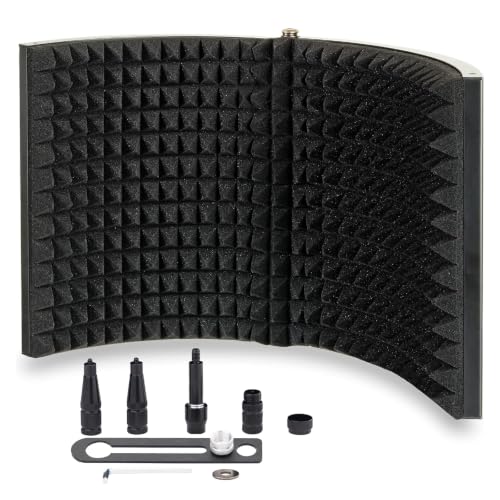 HUPPER Microphone Isolation Shield - Foldable Microphone Reflection Filter for Recording…
View on Amazon ↗
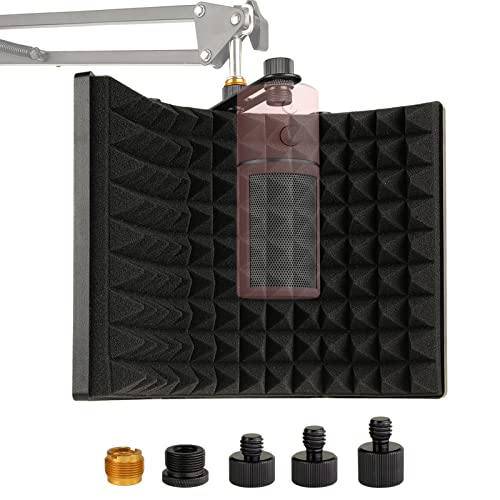 FRGYEE Microphone Isolation Shield, Foldable 3-Panel Sound Absorbing Foam for Condenser…
View on Amazon ↗
Listing names and images come from Amazon and are rechecked against the live listings; last checked Nov 8, 2026. No prices shown; the current price is on the listing.
What this guide is. Use this guide as a checklist against any shield listing you open, not as a judgment of a specific model. The advice comes from general knowledge of how acoustic foam and microphone stands behave, so verify panel thickness, weight, and clamp size on the listing before ordering.