Three factors decide most of the result: how much height the cushion adds, how dense the foam is, and whether the shape matches your sitting surface. People under about 150 pounds and people who want a soft, sinky feel should choose lower density foam. Heavier people and anyone with tailbone pain should choose firmer, higher density foam. The main tradeoff is between plush comfort and stable support.
Height Changes the Chair Before the Cushion Does
Adding a cushion raises your hips by its compressed thickness, not its listed height. A 3 inch cushion often compresses to about 1.5 to 2 inches under body weight. That change shifts your knee angle and the position of your lower back against the chair.
Check the seat depth you have left. If the chair seat already ends close to the back of your knees, a thick cushion can push you forward and reduce thigh support. For most desk chairs, 1.5 to 2 inches of compressed height works without making the chair feel like a different piece of furniture.
Car seats and firm dining chairs tolerate more height than deep office chairs. In a car, a small lift can improve the view and reduce pressure on the backs of the thighs. In a deep sofa or recliner, a cushion often fights the existing softness and slides around.
Density Decides Whether You Sink or Sit
Memory foam density is measured in pounds per cubic foot, but many listings do not state it. Lower density foam, often around 2 to 3 pounds per cubic foot, feels plush on first contact and compresses quickly. It suits lighter people and shorter sitting sessions.
Higher density foam, often 4 to 5 pounds per cubic foot, pushes back more and keeps its shape longer. That matters for heavier people or anyone in the chair for 6 to 10 hours. The tradeoff is less immediate softness and a warmer seat.
Density is not the same as firmness. A high density foam can still have a soft top layer, but it will not collapse the way a cheap low density pad does after a few weeks.
The Shape Does Either Tailbone Relief or Thigh Squeeze
A U shaped or cutout cushion removes pressure directly under the tailbone. That design helps people with coccyx pain or anyone who sits with a posterior pelvic tilt. The cutout has to line up with your tailbone, not just sit under the middle of the seat.
A contoured or wedge shape tilts the pelvis slightly forward, which can reduce lower back slouching. A flat slab shape is the most versatile but provides the least targeted relief.
Look at the front edge. A waterfall or rounded front edge reduces pressure behind the knees, especially for shorter people whose feet do not reach the floor. A square front edge can dig into the thighs.
What to Check in a Listing Before You Buy
Start with the compressed thickness, not the advertised height. If the listing gives only one number, assume it compresses by 30 to 50 percent. Ask the seller for the foam density and the cover material if those are missing.
Check whether the cover is removable and machine washable. A non removable cover means you will be spot cleaning only. Look for a non slip bottom or at least a textured base, because smooth foam slides on leather and polished wood.
A carry handle or strap matters if you plan to move the cushion between a home office and a car. A zippered cover with a mesh panel helps with heat, but mesh wears faster than plain polyester.
- Compressed height, not listed height
- Foam density in pounds per cubic foot
- Removable, washable cover
- Non slip or textured base
- Cutout position for tailbone relief
The Cover Makes or Breaks Daily Use
A cover made from a knit or velour feels soft but holds heat and lint. A mesh or athletic fabric breathes better but can feel rough against bare legs. A waterproof or water resistant cover is useful for people with incontinence or for use in a car where spills happen.
Zippers fail before foam wears out. A full length zipper that opens on three sides makes the cover easier to remove and wash. A small zipper on one edge means fighting the foam every laundry day.
The bottom surface matters as much as the top. Rubberized dots or a silicone web keep the cushion in place on smooth chairs. A smooth fabric bottom will slide on leather and vinyl.
Who Should Skip a Memory Foam Cushion
If your chair already fits well and your pain comes from poor posture rather than pressure, a cushion can make the problem worse by changing the seat angle. People who run hot often find memory foam too warm, even with gel infusions.
Anyone who needs firm, stable support for heavy lifting or precise movements should avoid a soft cushion. Wheelchair users should choose a cushion designed for pressure redistribution, not a general office pad.
If the main issue is a worn out chair seat, replacing the chair or its original foam is more effective than stacking another cushion on top. A cushion cannot fix a broken lumbar support or an armrest at the wrong height.
Care and Long Term Costs
Memory foam does not last forever. Low density cushions often lose noticeable support within a year of daily use. High density cushions can last several years but still compress permanently over time.
Wash the cover every few weeks if you use the cushion daily. Sweat and skin oils break down the fabric and the top layer of foam. Air dry the cover; machine drying shrinks most covers and can melt mesh panels.
Expect to replace the cushion when you can feel the chair seat through the foam, or when the cutout no longer lines up with your tailbone. A cushion that has hardened in a cold room will soften again after a few minutes of body heat.
Home Office and Older Adults Need Different Checks
In a home office, the cushion has to work with a chair that may already have lumbar support and armrests. A thick cushion changes the armrest height relative to your elbows, which can cause shoulder tension.
For older adults, a cushion with a firm edge and a non slip base matters more than plushness. Getting in and out of a chair becomes harder if the cushion slides or compresses unevenly at the front edge.
For long sitting hours, prioritize density over cutout shape. Firmer foam keeps blood flowing better than soft foam, which can create pressure points after two or three hours.
Small bathrooms rarely need a seat cushion, but a waterproof cover and a compact size help if the cushion is used on a bath bench. Check the listing for mold resistance if the cushion will live in a damp room.
Design Types Compared
| Design | Best for | Main drawback | Typical height |
|---|---|---|---|
| Flat slab | Everyday desk use, travel | No targeted relief | 1 to 2 inches |
| U shaped cutout | Tailbone pain, long sitting | Cutout can miss the spot | 2 to 3 inches |
| Wedge contour | Slouching, lower back strain | Feels odd at first | 2 to 4 inches |
| Gel infused | Hot seaters, car use | Heavier, pricier | 1.5 to 3 inches |
The table shows why a cutout design is not automatically better. If the cutout does not line up with your tailbone, it creates a ridge that presses into the wrong spot. A flat slab with high density foam often outperforms a poorly placed cutout.
Memory Foam Cushion Questions Buyers Ask First
Is memory foam good for a seat cushion?
Memory foam works well for pressure relief because it conforms to your shape. The catch is that it also traps heat and loses support over time. A high density memory foam cushion with a breathable cover is good for daily desk use. A low density one feels nice for a week, then compresses into a flat pad.
Which memory foam seat cushion is best for tailbone pain?
Look for a U shaped or coccyx cutout design. The cutout removes direct pressure under the tailbone. Make sure the cutout is wide enough for your hips and deep enough that your tailbone actually floats over the gap. Pair it with a medium to high density foam so the surrounding area does not collapse.
What is the difference between a 2 inch and a 3 inch memory foam cushion?
The listed height is not what you sit on. A 2 inch cushion compresses to about 1 to 1.5 inches under body weight. A 3 inch cushion compresses to about 1.5 to 2 inches. The thicker cushion gives more lift and more sink, but it also changes your knee angle more. Choose based on how much seat depth you can afford to lose.
Should I buy a memory foam cushion with a gel layer?
A gel layer or gel infused foam helps with heat, but it does not make the cushion cool. It slows down heat buildup rather than eliminating it. If you run hot, a mesh cover matters more than a gel layer. If you like a firm seat, gel infused foam often feels slightly firmer than plain memory foam of the same density.
Is a memory foam seat cushion worth it for an office chair?
It depends on what is wrong with your current chair. If the seat is too hard or too low, a cushion can help. If the chair lacks lumbar support or the armrests are too high, a cushion will not fix that and may make it worse. For a worn out office chair, replacing the chair or the seat foam is often a better use of money.
The Cushion That Fits Most Desks
A desk worker of average build who sits 6 to 8 hours a day gets the most from a medium density U shaped cushion with a removable mesh cover and a non slip base. That combination handles tailbone pressure and heat without changing the chair height too much. For a car seat or a dining chair with a firm, flat surface, a thinner high density slab cushion works better because it adds less height and stays put during turns and stops.
Real memory foam seat cushion listings, so you can check the points in this guide against actual products. These are affiliate links: as an Amazon Associate we earn from qualifying purchases, at no extra cost to you.
 CUSHZONE CushZone Seat Cushion Memory Foam Chair Pad for Office &…
View on Amazon ↗
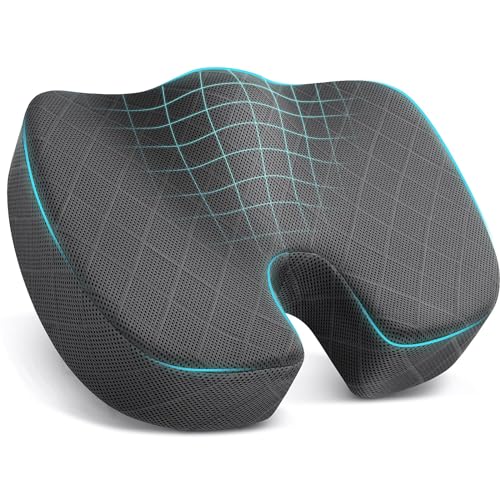 TUSHGUARD TushGuard Seat Cushion, Memory Foam Office Chair Cushion - Grey,…
View on Amazon ↗
 DIVGUF Divguf Memory Foam Seat Cushion, U-Shaped for Office Chair, Black…
View on Amazon ↗
Listing names and images come from Amazon and are rechecked against the live listings; last checked Nov 8, 2026. No prices shown; the current price is on the listing.
How to read this guide. This guide covers memory foam seat cushions in general, not any specific model. It is written from general knowledge of foam, covers, and chair mechanics, without reading reviews or handling individual units. Always check the listed height, density, and cover details on the product page before ordering.