Start with the bowl shape and how visible the brush will be. A brush with a long, angled head reaches under the rim, while a compact head fits narrow pans. Next, choose between a caddy that drips into a tray and a holder that lets the brush dry fully. The main tradeoff is scrubbing power against hygiene: stiff bristles clean better but hold residue, while silicone sheds water but may need more elbow grease.
Match the Head to the Bowl
Most toilet bowls hide grime under the rim, where water enters. A brush with a long, angled head reaches that ledge, while a short round head may only polish the visible pan. Check the listing for the head length and the angle of the bristle tufts.
Narrow pans or compact toilets in small apartments need a slim head. If the head is too wide, it cannot twist into the trapway, and you end up scrubbing the same spot. Compare the head width to the bowl opening before buying.
A brush with a separate rim cleaning lip, often a small ridge of bristles at the top, helps without extra effort. This is a real feature for bowls with a deep overhang, but it adds bulk, so skip it if your bowl is open and shallow.
Storage Decides the Smell
The biggest mistake is buying a brush with a closed caddy that traps water. After you rinse the brush, water drips down and pools at the bottom, breeding odor and bacteria. Look for a holder with vents or an open base that lets air circulate.
A drip tray solves the wet floor problem but adds a second piece to clean. If you choose a tray, make sure it is deep enough to catch all the drips and easy to pull out. Some holders have a built in tray that slides off, which is simpler than two separate parts.
Wall mounted brushes keep the floor clear and work well in shared kitchens or bathrooms where floor space is tight. However, they need a drill or strong adhesive, and the brush hangs over the floor, so drips land where you walk. Check the mounting style before you commit.
If the brush lives in a guest bathroom that is rarely used, a closed holder may be fine because it dries between visits. In a busy household with daily use, an open or vented holder is the safer choice.
Bristle Material Sets the Cleaning Limit
| Bristle type | Scrubbing power | Odor resistance | Best for |
|---|---|---|---|
| Stiff nylon | High | Low | Hard water stains, heavy use |
| Mixed nylon and silicone | Medium | Medium | Most homes, weekly cleaning |
| Silicone | Low | High | Light cleaning, humid bathrooms |
| Disposable cleaning pad | Low | High | Travel, shared spaces, quick touch ups |
Nylon bristles are the workhorse. They flex enough to get under the rim but stay stiff enough to break up mineral deposits. The downside is that they hold moisture and debris, so they need a rinse and a dry spot after every use.
Silicone bristles do not absorb water or trap hair as easily, and they dry quickly. The tradeoff is that they are softer, so you may need to scrub longer on stubborn stains. For a light weekly clean, silicone is enough.
Disposable wands with cleaning pads are the most hygienic because you throw away the dirty part. They fit travel kits and shared kitchens where no one wants to store a wet brush. The pads cost more over time and do not scrub as hard as a stiff brush.
Handle Length and Grip
A longer handle keeps your hand away from the water and gives more leverage for scrubbing. Most brushes have a handle between 12 and 18 inches, which works for standard toilets. If you have a tall or elongated bowl, a longer handle prevents splashing.
The grip matters more in a busy household where several people use the brush. A textured or rubberized grip stays put when wet, while a smooth plastic handle can slip. Check the listing for a non slip coating or a contoured shape.
A short handle brush is easier to store in a small apartment but forces you to bend closer to the bowl. This is fine for a quick clean, but it makes deep scrubbing awkward. Decide how often you will use it before choosing a compact model.
Features That Matter and Marketing That Does Not
A replaceable head is a real long term cost saver. Instead of throwing away the whole brush, you snap on a new head and keep the handle. Check that replacement heads are easy to find and not priced like a new brush.
Antimicrobial claims on the handle or bristles are often marketing. The material may slow bacteria growth, but it does not replace rinsing and drying the brush. Focus on the drying design first.
A brush that advertises a 'no touch' or 'hands free' caddy usually means the holder opens when you lift the brush. This is convenient but adds a moving part that can break. In a shared bathroom, a simple open holder is more reliable.
Color and finish are personal choices, but a light colored brush shows stains and grime more clearly. A dark or clear brush hides buildup, which can be good or bad depending on whether you want a visual reminder to rinse it.
How to Read the Listing
Start with the dimensions. The head width, head length, and overall height tell you if the brush fits your bowl and storage spot. A listing that omits these numbers is a red flag.
Check the material of the bristles, the handle, and the holder. Avoid listings that only say 'durable' or 'high quality' without naming the plastic or metal. Stainless steel handles resist rust, while chrome plated plastic can peel.
Look for a photo of the holder from the side or bottom. If you cannot see vents or a drip tray, assume the water pools inside. Ask the seller about drainage if the listing is unclear.
For a wall mounted brush, confirm whether it comes with screws, adhesive strips, or both. Adhesive may fail on textured tile, so check your wall surface before relying on it.
When a Brush Is the Wrong Tool
If you clean a toilet in a vacation home or RV that sits unused for months, a traditional brush will dry out and get dusty. A disposable wand or a toilet cleaning tablet may serve better.
Pet homes with long haired animals may find that hair wraps around nylon bristles and is hard to remove. A silicone brush sheds hair more easily, or you can use a separate small brush just for the rim.
For a shared kitchen with a toilet that is rarely deep cleaned, a brush can become a source of odor. In that case, a disposable cleaning system or a bleach based toilet cleaner used with a paper towel may be more hygienic than a stored brush.
Care and Replacement
Rinse the brush in the clean water after flushing, then let it drip dry over the bowl before returning it to the holder. This small step prevents most odor and staining.
Soak the brush head in a bleach solution or white vinegar once a month to dissolve mineral buildup. Rinse the holder at the same time, since grime collects there too.
Replace the brush or the head when the bristles start to splay or flatten. A worn brush takes more effort and may scratch the bowl. For most homes, that means every six to twelve months, but a busy household may need a new head sooner.
Toilet Brush Questions, Answered
How often should I replace a toilet cleaning brush?
Replace the brush or the head when the bristles splay, flatten, or hold an odor even after cleaning. For a typical household, that is every six to twelve months. A busier home or one with hard water may need a new head sooner. If you use a disposable wand, follow the pad count on the package.
Which toilet brush is best for a small apartment?
A compact brush with a short handle and a slim head fits a small bathroom and a narrow storage spot. Look for a wall mounted holder to keep the floor clear, or a vented caddy that tucks behind the toilet. A silicone brush is a good choice because it dries quickly in a small, humid room.
Is a silicone toilet brush better than a nylon one?
Silicone resists buildup and dries fast, so it stays cleaner between uses. But it is softer than nylon and may not scrub off hard water stains as easily. If your toilet gets heavy staining, a stiff nylon brush works better. For light weekly cleaning, silicone is enough.
What should I look for in a toilet brush holder?
Choose a holder that lets air reach the bristles, either through vents or an open base. A drip tray catches water but needs emptying. Avoid closed caddies that trap moisture, which leads to odor and bacteria. Wall mounted holders save floor space but require secure mounting.
Can I use a toilet brush in a pet home?
Yes, but pet hair can wrap around nylon bristles and make the brush hard to clean. A silicone brush sheds hair more easily, or you can use a separate brush just for the rim. Rinse the brush thoroughly after each use to remove fur and dander.
Which Toilet Brush Fits Your Bathroom
For a standard toilet in a busy home, a brush with stiff nylon bristles, an angled head, and a vented holder with a drip tray gives the best balance of cleaning power and hygiene. If the bathroom is small or shared, switch to a wall mounted silicone brush that dries fast and stays off the floor. That second pick is also right for pet homes where hair clings to nylon.
Real toilet cleaning brush listings, so you can check the points in this guide against actual products. These are affiliate links: as an Amazon Associate we earn from qualifying purchases, at no extra cost to you.
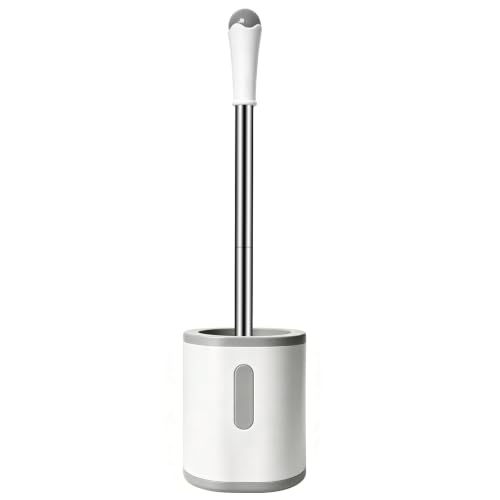 AONEZ AONEZ Compact Toilet Brush & Holder, Stainless Steel Handle, Space…
View on Amazon ↗
 HOLALOHA Holaloha Toilet Brush and Holder Set, Space Saving, 3 Pack,…
View on Amazon ↗
 SETSAIL SetSail Toilet Brush and Holder, Toilet Bowl Brushes Holde, White…
View on Amazon ↗
Listing names and images come from Amazon and are rechecked against the live listings; last checked Nov 8, 2026. No prices shown; the current price is on the listing.
About this guide. Use this guide as a checklist to hold against any toilet brush listing before you buy. It covers the category in general, not individual models, so check the dimensions and drainage details on the product page.