Drive size is the first decision: 1/4 inch for tight spots, 3/8 inch for general work, 1/2 inch for high torque. Socket count matters less than having the sizes your vehicles actually use, including deep and six point sockets. Chrome vanadium steel resists wear, while a good case keeps the set usable in a compact garage.
Drive Size Sets the Limits
Socket sets come in three common drive sizes: 1/4 inch, 3/8 inch, and 1/2 inch. The number refers to the square post on the ratchet and the matching hole in each socket. A smaller drive fits into tighter spaces and works with smaller fasteners, but it cannot apply much torque before the tool flexes or breaks. A larger drive handles lug nuts and suspension bolts but cannot reach under a dashboard.
For most home mechanics, a 3/8 inch set covers the widest range of tasks. It works for oil changes, battery terminals, interior trim, and many under hood fasteners. If you work on small engines, electronics, or tight interior panels, add a 1/4 inch set. If you rotate tires or replace brake calipers, a 1/2 inch set with a breaker bar is the safer choice.
Check the drive size before you check the socket count. A 200 piece set with the wrong drive size will not help you remove a wheel. A smaller set in the right drive size will do more real work.
Six Point Sockets Protect Your Fasteners
Sockets come in six point and twelve point shapes. A six point socket contacts the flat sides of a hex fastener, spreading force across six surfaces. A twelve point socket contacts the corners, which lets it engage at more angles but concentrates force on a smaller area. On a rusty or over tightened bolt, a twelve point socket is more likely to round the head.
For general car repair, six point sockets are the safer default. They grip better on worn fasteners and are less likely to slip. Twelve point sockets matter mainly for twelve point fasteners, which appear on some head bolts, drive shafts, and aircraft parts. Most home mechanics will never see one.
A set with all six point sockets is not a limitation for typical weekend work. A set with only twelve point sockets is a risk on old, corroded hardware.
Deep Sockets Reach What Shallow Ones Cannot
A deep socket is taller than a shallow one, with a recess that lets it slide over a long stud or bolt. This matters for spark plugs, some suspension bolts, and any fastener where the threaded end sticks out past the nut. A shallow socket cannot reach those, and using an extension is not always possible in a tight wheel well.
Many sets include both shallow and deep sockets in the most common sizes. If a set only has shallow sockets, check whether you can buy deep sockets separately in the sizes your car uses. For spark plugs, you may also need a dedicated spark plug socket with a rubber insert that holds the plug.
Deep sockets add bulk and cost, but they prevent the frustration of having the right size and still not being able to reach the bolt.
The Case Changes How You Work
A socket set lives in its case, and the case decides whether the set stays organized or becomes a jumble. Blow molded cases have a fixed spot for each piece, which makes it easy to see when a socket is missing. But they are bulky and often do not fit in a tool chest drawer. Soft bags and roll up pouches pack smaller but offer less protection.
In a compact garage, a set that comes in a slim case or on a socket rail may be easier to store. Some mechanics buy a set with a case and then transfer the sockets to rails in a drawer. That works if the rails are labeled with sizes.
Check the case before you buy. A set with a broken latch or a flimsy hinge will spill sockets every time you move it. A set with a clear size marking on each socket and a labeled case saves time on every job.
How to Read a Socket Set Listing
Start with the drive size and the socket count. Then look at the size range, not just the total number. A 40 piece set that covers 8 mm to 19 mm in 1 mm steps is more useful than a 100 piece set full of duplicate sizes and bits you will never use. Check whether the sizes are metric, SAE, or both.
Look for the material. Chrome vanadium steel is the standard for hand sockets. Some premium sets use chrome molybdenum, which is tougher but usually costs more and matters more for impact use. Avoid sockets with a dull, rough finish or visible burrs, as those are signs of poor plating that will rust.
Check whether the set includes extensions, a universal joint, and a ratchet. A ratchet with a high tooth count, often 72 teeth or more, needs less swing arc to engage, which helps in tight engine bays. Ask the seller about the warranty and whether individual sockets are available if you lose one.
| Drive size | Typical socket range | Best for | Torque limit |
|---|---|---|---|
| 1/4 inch | 4 mm to 14 mm | Interior trim, small engines, electronics | Low |
| 3/8 inch | 8 mm to 19 mm | General car repair, oil changes, battery work | Medium |
| 1/2 inch | 10 mm to 32 mm | Lug nuts, suspension, brake calipers | High |
| Mixed set | 4 mm to 32 mm | Multiple vehicles, varied repairs | Medium to high |
A mixed drive set seems like the obvious choice, but it costs more and takes more space. If you only work on one car, a 3/8 inch set with a few deep sockets may be all you need. If you have a truck or an older vehicle with larger fasteners, add a 1/2 inch set for those specific sizes.
Metric Versus SAE: One Set Rarely Needs Both
Most cars made after the 1980s use metric fasteners. SAE sizes, measured in fractions of an inch, appear on older American vehicles, some lawn equipment, and household items. Buying a set with both metric and SAE sockets increases the piece count but leaves many sockets unused.
Check your vehicle before you buy. If everything you work on is metric, a metric only set is cheaper and easier to organize. If you have a classic car or a mix of equipment, a combined set saves you from buying two separate ones.
Do not pay extra for SAE sockets you will never use just because the piece count is higher. A focused metric set with deep and six point sockets beats a bloated dual system set.
Who Should Skip a Full Socket Set
A socket set is not the right first purchase for everyone. If you only need to assemble furniture or tighten a few screws, a basic screwdriver and bit set is cheaper and takes less space. If you work on bicycles or electronics, a small 1/4 inch set or a precision bit set is more appropriate.
If you have a very small apartment with no garage, a full set in a blow molded case may be hard to store. A compact 3/8 inch set in a slim case or a set of individual sockets on a rail can fit in a drawer.
For occasional tire changes only, a lug wrench and a torque wrench are simpler and lighter than a full socket set. Consider what you actually repair before you buy a large kit.
Long Term Care Keeps the Set Working
Sockets last a long time if you keep them dry and clean. Wipe off grease and brake fluid after each job, and store the set in a dry place. A light coat of oil on the ratchet mechanism once a year keeps it smooth.
Do not use chrome sockets on an impact wrench. Impact sockets are thicker and made of a softer steel that absorbs shock without shattering. A chrome socket on an impact gun can crack and send fragments flying.
If you lose a socket, many brands sell individual replacements. Check the brand and drive size before ordering, and match the six point or twelve point style to the rest of your set.
Socket Set Questions Home Mechanics Ask
How many sockets do I need for home car repair?
A 3/8 inch drive set with metric sizes from 8 mm to 19 mm covers most oil changes, battery work, and interior repairs. Add a few deep sockets and a 1/2 inch set for lug nuts if you rotate tires. A 40 to 60 piece set is often enough; a 200 piece set includes many sizes you will never touch.
What is the difference between 6 point and 12 point sockets?
A 6 point socket grips the flat sides of a hex fastener, spreading force evenly and reducing the chance of rounding. A 12 point socket engages at more angles but contacts the corners, which can slip on rusty or over tightened bolts. For general car repair, 6 point sockets are the safer choice.
Should I buy metric or SAE sockets?
Check what your vehicles and equipment use. Most cars made after the 1980s are metric. SAE sizes appear on older American vehicles and some lawn equipment. If everything you work on is metric, buy a metric only set. If you have a mix, a combined set saves space and money over two separate sets.
Can I use chrome sockets with an impact wrench?
No. Chrome sockets are hardened and can shatter under impact force, sending sharp fragments flying. Impact sockets are thicker and made of a softer steel that absorbs shock. Use impact sockets with any impact wrench, and keep chrome sockets for hand ratchets.
Is a bigger socket set always better?
Not necessarily. A larger set often adds duplicate sizes, SAE sockets you do not need, and bits that duplicate what you already own. A smaller set with the right drive size, six point sockets, and deep sockets in your vehicle's sizes will do more useful work and fit better in a compact garage.
Which Socket Set Fits Your Garage
A home mechanic who works on one modern car and does oil changes, battery swaps, and interior repairs should start with a 3/8 inch drive metric set that includes six point sockets from 8 mm to 19 mm, a few deep sockets, and a ratchet with at least 72 teeth. If you also rotate tires or own a truck, add a 1/2 inch drive set in the larger sizes for lug nuts and suspension bolts. Someone with only a small apartment and no car work should skip the full set and buy a compact bit driver instead.
Real mechanic socket set listings, so you can check the points in this guide against actual products. These are affiliate links: as an Amazon Associate we earn from qualifying purchases, at no extra cost to you.
 DEWALT DEWALT 192 Pcs. Mechanics Tool Set, 1/2, 1/4, 3/8 Socket…
View on Amazon ↗
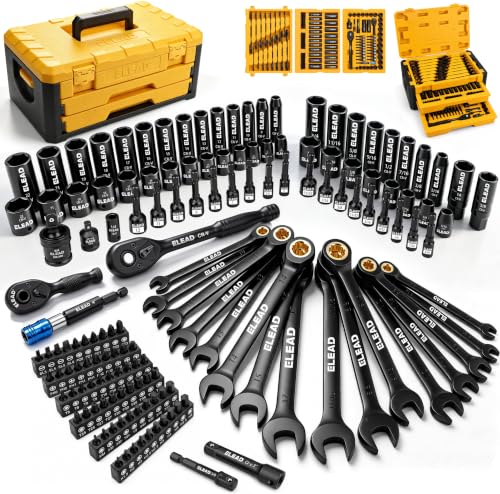 ELEAD ELEAD 148-Piece Mechanics Tool Set, SAE/Metric 1/4" & 3/8" Drive…
View on Amazon ↗
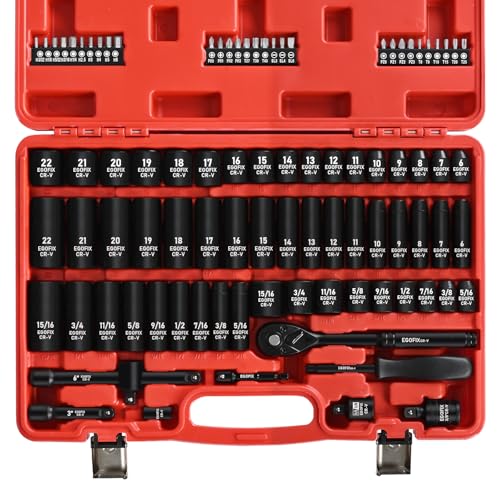 EGOFIX EGOFIX 3/8" Drive Impact Socket Set, 90 Piece Metric Socket…
View on Amazon ↗
Listing names and images come from Amazon and are rechecked against the live listings; last checked Nov 8, 2026. No prices shown; the current price is on the listing.
How to read this guide. This guide covers socket sets as a category, not any individual model. It is written from general knowledge of tool design and mechanics' needs, without reading product documents, reviews, or tests, so verify the drive size, socket range, and case dimensions on the listing before you buy.