The Canon RF35mm F1.8 is the pick for EOS R mirrorless shooters who want a native autofocus macro lens with image stabilization. Phone users get more magnification per dollar from clip on kits: the KEYWING 3in1 reaches 20x, the MIAO LAB 2 in 1 offers 12.5x with a wide angle, and the Kase Master Macro gives a longer 40 to 85mm working distance for insects. The main tradeoff is between camera integration and higher phone magnification.

Canon RF35mm F1.8 Macro STM
Best for: EOS R mirrorless shooters wanting autofocus and stabilization.
- Gives 0.5x magnification with a minimum focus distance of 0.56 ft or 0.17m.
- Optical image stabilization corrects up to 5 stops of shake.
- Control ring allows direct setting changes on the lens.
Keep in mind: Only mounts on Canon RF cameras, not other systems.
Check price on Amazon ↗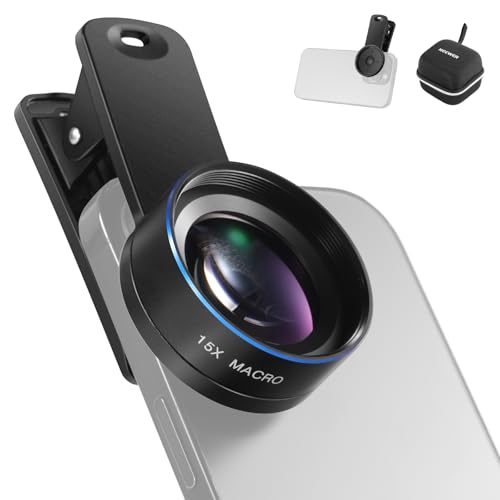
NEEWER Basics LS 69 15x Macro Phone Lens
Best for: Phone users who want 15x close ups with a 37mm clamp.
- 15x magnification with an optimal shooting distance of 2 to 4 cm.
- HD optical glass with 2 elements reduces glare and ghosting.
- 37mm clamp fits many current iPhones and Samsung Galaxy models.
Keep in mind: Vignetting may appear on some phones; zoom to 1.1x or higher if it does.
Check price on Amazon ↗
Kase HD Master Macro Lens for Phones
Best for: Insect and flower close ups needing a longer 40 to 85mm working distance.
- Working distance of 40 to 85mm lets you shoot without disturbing insects.
- 5 elements in 4 groups give clear images without distortion.
- Multicoated glass reduces reflection, glare, and ghosting.
Keep in mind: Focus requires keeping the subject 4 to 8.5cm from the lens.
Check price on Amazon ↗
MIAO LAB 2 in 1 Phone Lens Kit
Best for: Phone shooters who want a 12.5x macro plus a 0.45x wide angle.
- 12.5x macro focuses at an optimal distance of 2 to 4 cm.
- Unscrew the wide angle to use the macro lens alone.
- Includes travel bag and cleaning cloth.
Keep in mind: Wide angle and macro are combined; you unscrew one to use the other.
Check price on Amazon ↗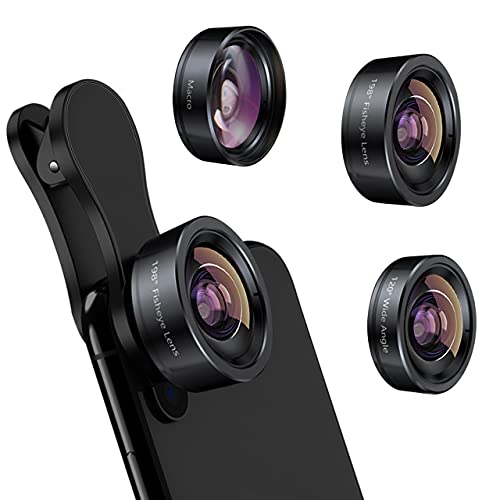
KEYWING 3in1 Phone Lens Kit
Best for: A 20x macro, 120 degree wide, and 198 degree fisheye in one clip.
- 20x macro focuses best at 1.18 to 3.54 inches from the subject.
- Each lens can be used separately with the included clip.
- Soft rubber on the clip helps avoid scratching the phone.
Keep in mind: Do not use with a phone case for the best effect.
Check price on Amazon ↗
Ailun 3 in 1 Phone Lens Kit
Best for: A budget 10x macro, 0.65x wide, and 180 degree fisheye set.
- 10x macro lens suggests keeping 1 to 2cm from the object for clarity.
- Wide angle lens must be used together with the macro lens.
- Clip fits phones with camera lenses up to 13mm in diameter.
Keep in mind: Manual distance adjustment is recommended; some phones may show vignetting.
Check price on Amazon ↗Product names and images come from the Amazon listings and are rechecked against them (last checked Nov 8, 2026). The highlights restate each listing's own bullet points as published on Nov 8, 2026. Prices change often, so we do not show them. These are affiliate links: as an Amazon Associate we earn from qualifying purchases, at no extra cost to you.
Confirm These Details Before You Buy
Macro lenses differ in how close you must get and how much they magnify. A phone clip on lens states its magnification as 10x, 12.5x, 15x, or 20x, and each has an optimal distance. The Kase Master Macro works from 40 to 85mm, which is farther than the NEEWER Basics 15x at 2 to 4 cm. That distance changes how you shoot insects or jewelry.
Check the mount and compatibility. The Canon RF35mm F1.8 is a native RF lens for EOS R cameras, not a clip on. Phone kits use a clip or a 37mm thread, and some list phone models or camera lens diameter limits. The Ailun kit fits camera lenses up to 13mm in diameter, while the NEEWER clamp lists current iPhone and Samsung models.
Look at the lens construction and coatings. Listings mention optical glass, number of elements, and multicoating to reduce glare and ghosting. The NEEWER uses 2 elements in 2 groups with protective coatings, while the Kase uses 5 elements in 4 groups. If you shoot in bright light, coatings matter more.
Finally, note what is included in the box. Some kits add a wide angle or fisheye lens, a clip, a bag, or a cleaning cloth. The MIAO LAB includes a travel bag and cleaning cloth, while the KEYWING includes a storage bag and manual. Decide if you want a single macro lens or a multilens kit.
- Magnification and optimal working distance
- Mount type: phone clip, thread, or camera mount
- Optical glass and coating quality
- Included accessories and extra lenses
Who Should Skip These Picks
If you shoot with a DSLR or a mirrorless camera other than Canon RF, the Canon RF35mm F1.8 will not mount. You would need an adapter or a different native macro lens. Phone clip on lenses are designed for smartphones and tablets, not interchangeable lens cameras.
Phone clip on lenses require a flat area around the camera lens. If your phone has a large camera bump or a case that cannot be removed, the clip may not seat well. The KEYWING listing says not to use a phone case for the best effect.
If you need true 1:1 or greater magnification on a camera, the Canon RF35mm gives 0.5x, which is half life size. For higher magnification on a camera, you would look at a dedicated macro lens with 1x or more. Phone lenses advertise 10x to 20x, but that is relative to the phone's normal field of view, not the same as camera macro ratios.
If you want autofocus, the Canon RF35mm has STM autofocus, while all phone clip on lenses are manual focus. You move the phone or adjust distance to focus. That can be fine for still subjects but harder for moving insects.
How the Picks Compare on Stated Specs
The table below lists the magnification, optimal working distance, mount type, and key construction detail each listing states. Where a listing does not state a spec, the cell says Not listed. Phone clip on lenses state their magnification as a multiple, while the Canon states a reproduction ratio of 0.5x.
Working distance is the distance from the lens to the subject for sharp focus. The Kase Master Macro has the longest at 40 to 85mm, which helps with skittish insects. The Ailun 10x suggests 1 to 2 cm, which is very close and can block light.
Mount type separates the Canon RF from the phone kits. The NEEWER uses a 37mm clamp, the Kase uses a clip or 17mm thread, and the others use a universal clip. If you have a phone case with a threaded mount, the Kase or NEEWER may attach more securely.
| Product | Magnification | Optimal working distance | Mount type | Construction stated |
|---|---|---|---|---|
| Canon RF35mm F1.8 Macro STM | 0.5x | 0.56 ft / 0.17m minimum focus | Canon RF mount | Not listed |
| NEEWER Basics LS 69 15x | 15x | 0.8 to 1.6 in / 2 to 4 cm | 37mm clamp | 2 elements in 2 groups, HD optical glass |
| Kase HD Master Macro | Not listed as a multiple | 40 to 85mm | Clip or 17mm thread | 5 elements in 4 groups, multicoated |
| MIAO LAB 2 in 1 | 12.5x | 0.8 to 1.6 in / 2 to 4 cm | Universal clip | Multielement coated glass |
| KEYWING 3in1 | 20x | 1.18 to 3.54 in | Universal clip | Lanthanide optical glass |
| Ailun 3 in 1 | 10x | 1 to 2 cm suggested | Universal clip | Lanthanide optical glass |
How This Shortlist Was Put Together
The picks come from real Amazon listings for macro camera lenses. We compared only the details each listing states: magnification, working distance, mount, construction, and included items. No units were handled or used by us.
The shortlist includes a spread of designs and sizes. One is a native Canon RF lens for mirrorless cameras, while five are phone clip on kits. Among the phone kits, magnification ranges from 10x to 20x, and working distance ranges from 1 to 2 cm to 40 to 85mm.
We did not rank by price, reviews, or brand reputation. The order reflects which buyer each listing's stated specs fit best, from the camera integrated Canon to the most flexible phone kits. The selection guide linked below explains common magnification traps to avoid.
Read the magnification trap guide before you choose, especially if you are comparing phone lens multiples to camera macro ratios. That guide covers what the numbers mean in real shooting.
Questions That Come Up Before Choosing
What does 10x or 15x mean on a phone macro lens?
It is the magnification relative to the phone's standard wide camera field of view. It is not the same as a camera lens's reproduction ratio like 0.5x or 1x. A 15x phone lens makes a small subject appear 15 times larger on your screen than the phone's normal lens would.
Why does working distance matter for macro?
Working distance is how far the lens must be from the subject to focus. A longer distance, like the Kase's 40 to 85mm, lets you shoot insects without scaring them and leaves room for light. A short distance, like 1 to 2 cm, can block light and make framing harder.
Can I use a phone clip on macro lens on any phone?
Most clips are universal but have limits. Check the listing for camera lens diameter limits, such as 13mm for the Ailun, or specific model lists like the NEEWER. Remove thick cases and align the lens over the main camera, not the zoom or ultrawide.
Which One Should You Get?
A Canon EOS R shooter who wants a native macro lens with autofocus and image stabilization should get the Canon RF35mm F1.8 Macro STM. It focuses to 0.56 ft and corrects up to 5 stops of shake, which no phone clip on offers. For a phone photographer who wants the highest magnification in this list, the KEYWING 3in1 Phone Lens Kit reaches 20x and includes a wide angle and fisheye. Choose based on your camera system first, then your working distance needs.
How to read this guide. The picks were chosen by comparing the stated magnification, working distance, mount, and construction details from each real listing, and by including a spread of designs from a Canon RF lens to five phone clip on kits. The limit is that only listing text was used; no units were handled or used by us.