Start with firmness and shape. A firm, contoured cushion pushes your spine into a healthier curve and suits most desk workers. A soft or flat one adds comfort but little support. Chair fit matters just as much: a cushion that sits too high or too wide for your seat will arch your lower back the wrong way. Skip it only if your chair already has adjustable built in lumbar support.
Firmness Decides Whether It Supports or Just Softens
A lumbar cushion works by filling the gap between your lower back and the chair. If the filling is too soft, your spine sinks back into a slouch and the cushion becomes a pillow. If it is too hard, it can press into the vertebrae and make you arch away from it.
Most useful cushions use high density foam that gives slightly but rebounds. Check the listing for foam density or firmness language. Words like "plush" or "cloud" usually mean the cushion will flatten under body weight.
Memory foam is common and works well when it is dense enough. A memory foam cushion that is two inches thick will compress more than a three inch contour. Compare thickness and firmness in the specifications rather than relying on photos.
Shape Matters More Than Brand or Cover Fabric
A curved or contoured shape follows the natural inward curve of the lower spine. Flat rectangular cushions can add a little padding but rarely change sitting posture. Look for a profile that is thicker at the bottom and tapers toward the top, or a shape that has a central ridge.
Some designs have a cutout or groove down the middle. This can reduce pressure directly on the spine, which helps people with tailbone or sacral sensitivity. A solid curved surface spreads pressure more evenly across the back muscles.
Height and width also matter. A cushion that reaches above your belt line can push into your mid back. One that is narrower than your torso leaves the edges of your back unsupported. Compare the cushion's dimensions with the width of your chair's backrest.
Straps and Chair Fit Keep It in the Right Place
Most lumbar cushions attach with one or two elastic straps that wrap around the chair back. A single strap lets the cushion slide sideways or drop down during the day. Two straps, one high and one low, hold it more securely.
Chair shape changes how a cushion fits. On a chair with a deeply curved backrest, a flat backed cushion may rock. On a mesh chair, the straps can cut into the mesh. On a car seat, the side bolsters may push a wide cushion forward into your back.
Before buying, measure the width of your chair back and the height from the seat to the point where you want support. Many listings give strap length, but that only tells you if the strap wraps around. The cushion's own width is what decides whether it fits between armrests or side bolsters.
| Design type | Firmness feel | Support level | Best chair fit | Main limitation |
|---|---|---|---|---|
| Contoured memory foam | Medium firm | High | Standard office chairs | Can feel warm |
| Firm foam wedge | Very firm | Very high | Flat backed chairs | Can dig into spine |
| Soft fiberfill pad | Soft | Low | Short sitting, soft chairs | Flattens quickly |
| Inflatable adjustable | Adjustable | Medium | Chairs with odd curves | Needs refilling |
Choose a design type based on how many hours you sit and how much your chair already supports you. A firm wedge can overcorrect a chair that already has some lumbar curve. A soft pad adds nothing to a chair with a flat, unsupportive backrest.
When a Cushion Is the Wrong Tool
A lumbar cushion cannot fix a chair that is the wrong height or a desk that forces you to hunch. If your feet do not rest flat on the floor, adjust the chair or add a footrest before adding back support.
People with certain spinal conditions should be careful. A cushion that pushes the lower back forward can increase pressure on a herniated disc or aggravate spinal stenosis. If you have a diagnosed back condition, ask a physical therapist which support shape is safe.
For some situations an alternative works better. A rolled towel or small firm pillow can test whether lumbar support helps before you spend money. An ergonomic chair with built in adjustable lumbar support often works better than a cushion on a poor chair, but costs more. For car seats, a thin wedge style often fits better than a thick office cushion.
Use Cases Change What You Should Look For
For long sitting hours at a home office, choose a firm contoured cushion with two straps. It needs to hold its shape for eight hours and stay put when you shift in the chair.
Older adults often prefer a slightly softer surface that still supports. A cushion with a removable, washable cover helps with everyday comfort. Look for one that is light enough to move between an armchair and a dining chair.
If you plan to use the cushion in a car, measure the seat back first. Car seats have side bolsters and often a flatter back angle. A slim wedge shape with a single center strap tends to fit better than a wide office cushion.
Reading a Listing Before You Buy
Check the foam type and thickness in the specifications, not the marketing copy. Look for a stated foam density, often given in pounds per cubic foot. A density around 3 to 5 pounds per cubic foot is typical for supportive cushions, though many listings omit this.
Look at the cover material and whether it is removable. A non removable cover means you cannot wash it, which matters for daily use. A zippered cover is easier to clean. Mesh covers breathe better than solid fabric covers.
Ask the seller for the cushion's uncompressed height and width if the listing does not show them. Also ask whether the straps are adjustable and how long they stretch. Some straps fit only chairs with a backrest thinner than a few inches.
Watch for marketing claims that do not match the product. "Ergonomic" is used loosely and does not guarantee a specific shape. "Doctor recommended" without a named study or organization means little. "Cooling gel" layers are often too thin to change temperature meaningfully.
Care and What Wears Out
Foam loses firmness over time, especially memory foam. A cushion used daily may soften noticeably within a year or two. If you start feeling the chair through the cushion, the foam has compressed and the cushion no longer supports you.
Wash the cover regularly, at least every few weeks if you sit for long hours. Sweat and skin oils break down fabric and make the surface feel unpleasant. Air dry the foam core if it ever gets wet; do not machine wash it.
Check the straps for stretching. Elastic straps lose tension and the cushion starts to slide. Some straps can be replaced, but on many cushions they are sewn in. A cushion that no longer stays in place is not doing its job even if the foam looks fine.
What You Can Skip
Massage motors and heat pads inside lumbar cushions add cost and weight but rarely add meaningful support. The vibration is weak on most designs and the heat is often a small pad that warms unevenly. A separate heating pad works better if you want warmth.
Extra straps, buckles and adjustment knobs sound useful but create more points of failure. A simple cushion with two elastic straps and a firm foam core is more reliable. Fancy covers with decorative stitching do not change how the cushion supports your back.
Do not pay extra for a "universal" fit claim. No cushion fits every chair. A cushion that is too wide for your car seat or too tall for your office chair will end up unused.
Lumbar Cushion Questions Worth Asking
How firm should a lumbar support cushion be?
Firm enough that it does not flatten when you lean back, but not so hard that it digs into your spine. High density foam, often 3 to 5 pounds per cubic foot, gives the right balance for most people. If you can squeeze the cushion to less than half its thickness with one hand, it is probably too soft.
Is a lumbar support cushion worth it for a home office?
Yes, if your chair lacks built in lumbar support or the built in support hits the wrong spot. A cushion lets you move the support up or down to match your lower back curve. But if your chair already has adjustable lumbar support that fits you, a cushion adds little.
Which shape of lumbar cushion is best for lower back pain?
A contoured shape with a thicker lower section and a slight central groove often works best for lower back pain. It supports the natural inward curve without pressing directly on the spine. Flat cushions and soft pillows tend to make slouching worse.
Can a lumbar support cushion make back pain worse?
Yes. A cushion that is too firm, too tall, or placed too high can push your spine into an exaggerated arch. This can strain the lower back muscles or irritate a disc. If pain increases after adding a cushion, stop using it and try a different position or firmness.
What should I check before buying a lumbar cushion online?
Check the cushion's width and height against your chair's backrest. Confirm the strap length and whether there are one or two straps. Look for a removable, washable cover and a stated foam type or density. Avoid listings that show no dimensions.
Which Lumbar Support to Pick
A desk worker who sits six or more hours a day in a standard office chair should pick a firm contoured memory foam cushion with two straps and a washable cover. This type holds the spine in a neutral curve and stays put through a full workday. A driver who needs support in a car seat with side bolsters should instead choose a slim, firm wedge with a single strap. That shape slips between the bolsters and does not push the back away from the seat.
Real lumbar support cushion listings, so you can check the points in this guide against actual products. These are affiliate links: as an Amazon Associate we earn from qualifying purchases, at no extra cost to you.
 QUTOOL Lumbar Support Pillow for Office Chair, Office Home Essentials,Gifts for…
View on Amazon ↗
 SAMSONITE Samsonite Lumbar Support Pillow for Office Chair, Lower Back Support…
View on Amazon ↗
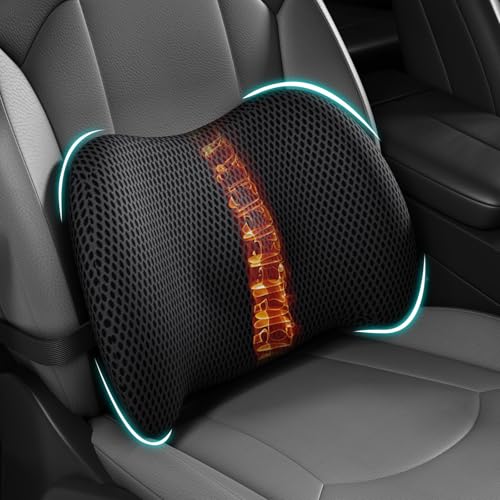 BYMECOST BYMECOST Lumbar Support Pillow for Car, Memory Foam Car Back…
View on Amazon ↗
Listing names and images come from Amazon and are rechecked against the live listings; last checked Nov 8, 2026. No prices shown; the current price is on the listing.
What this guide is. This guide draws on general knowledge about how lumbar cushions, foam and chair geometry work together. It does not evaluate any specific model, and no product listings or reviews were consulted. Dimensions and strap lengths vary between products, so check the listing before ordering.