Fit and flotation decide a life jacket before anything else. Check the chest size, the weight range, and the US Coast Guard approval for your activity. Inland, flatwater paddlers can choose a lower profile vest. Open water, offshore, or nonswimmers need more flotation and a brighter color. The main tradeoff is comfort against security: a bulky high flotation vest is safer in rough water but hot and restrictive for a long paddle.
Start With the Water, Not the Rack
A life jacket built for a calm lake does not behave the same way on a coastal inlet. Flat, warm, inland water lets you choose a lower profile vest that you can wear for hours without chafing. Open water with waves, cold temperatures, or boat traffic calls for more flotation, a high collar, and reflective panels.
Check the water you actually visit most. A family on a pontoon boat needs a different label than a solo kayaker on a river. If you paddle in cold water, look for a vest with a crotch strap or a high collar that keeps your head up if you are shocked by the temperature.
Swimming ability changes the choice too. A strong swimmer on a calm lake can accept a slimmer cut. A nonswimmer or a child should have a vest with more buoyancy and a grab handle on the back, even if it feels bulkier.
The label on the inside panel tells you the type and the weight range. Compare that label, not the marketing copy, because the copy often overstates how versatile one vest can be.
The US Coast Guard Label You Cannot Skip
Every life jacket sold for boating in the US must carry a US Coast Guard approval number. The label also states the type, the intended water, and the weight range. A vest without that label is not a life jacket for boating, no matter what the listing says.
Type I vests are the bulkiest and turn an unconscious person face up. They suit offshore use and long rescues. Type II vests are cheaper and less bulky, but they may not keep an unconscious person face up in rough water. Type III vests are the most common for paddling and water sports because they allow more arm movement, but they require the wearer to be conscious and able to help themselves.
Type V vests are special use designs: some are inflatable, some are for boardsailing or kayaking, and some are hybrid foam and air. A Type V is only approved when worn, and some must be worn at all times to count as a life jacket on a boat.
For most lake and bay beginners, a Type III foam vest is the right starting point. It balances mobility with enough flotation for a short swim to shore.
| USCG type | Buoyancy feel | Mobility | Best water |
|---|---|---|---|
| Type I | Very high, turns you face up | Low, bulky and hot | Offshore, rough, nonswimmers |
| Type II | High, face up in calm water | Moderate, less bulky | Near shore, small boats |
| Type III | Moderate, you must help yourself | High, arm room for paddling | Lakes, rivers, water sports |
| Type V inflatable | High when inflated, nothing before | Very high until you pull the cord | Strong swimmers, calm water |
The table shows the tradeoff clearly: more flotation costs you mobility and comfort. Match the type to the worst water you expect, not the calmest day you picture.
Fit Is the Safety Feature You Cannot See in a Photo
A life jacket only works if it stays on your body. The chest size on the label is a starting point, but the straps decide the real fit. A vest that is too large rides up over your chin in the water. A vest that is too small cannot close properly and may not provide the stated flotation.
Check the weight range on the label, not the age range in the listing. A child who weighs 80 pounds may need an adult small vest, while a light adult may fit a youth large. The weight range is the legal and practical guide.
Try the vest on over the clothes you will actually wear. A vest that fits over a T-shirt may not close over a wetsuit or a rain jacket. Buckle every strap, tighten the side straps, and then lift the shoulders: the vest should not slide up past your ears. If it does, tighten more or choose a smaller size.
For children, look for a crotch strap and a grab handle. The crotch strap stops the vest from sliding off over the head. The grab handle lets an adult pull the child back into a boat without yanking on the vest itself.
A common mistake is buying a vest with room to grow. A loose vest on a child is more dangerous than a snug one. Buy the size that fits now, and replace it when the weight range no longer matches.
Paddlers and Boaters Need Different Cuts
Kayaking, canoeing, and stand up paddleboarding all require repeated arm motion. A bulky general boating vest rubs under the arms and makes each stroke shorter. A paddle specific vest has large armholes, a high back panel that clears the seat, and thinner foam panels around the shoulders.
A kayak vest often has a mesh lower back so it does not press against the seat. A stand up paddleboard vest may have a front zipper and a slim profile so you can fall and climb back on without snagging. These details matter more than pockets or color.
Boaters who sit on a deck or a pontoon need a different set of features: a front zipper for quick removal, pockets for a whistle or a phone, and a high collar for neck support. Some boating vests have a strap on the back to attach to a kill switch lanyard on a personal watercraft.
If you split time between a kayak and a small boat, choose a Type III vest with a front zipper and moderate armholes. It will not be perfect for either, but it will be wearable for both. If you paddle most days, buy a paddle specific vest and borrow a boating vest when you go out on a motorboat.
Foam, Inflatable, or Hybrid: What the Listing Does Not Say
Foam vests are always buoyant, need no inflation, and work even if you hit the water unconscious. They are the safest choice for children, nonswimmers, and rough water. The tradeoff is bulk and heat: foam traps warmth against your chest and restricts some movement.
Inflatable vests are slim and comfortable until you need them. A pull cord or a water activated mechanism fills a bladder with CO2. They only work if you are conscious enough to pull the cord, or if the automatic mechanism fires correctly. They also need regular inspection and rearming after use, which is an ongoing cost.
Hybrid vests combine a small amount of foam with an inflatable bladder. They offer some flotation even if the bladder fails, but they are heavier than pure inflatables and bulkier than pure foam. They suit boaters who want a less bulky vest but some passive safety.
Check the rearming kit cost before choosing an inflatable. A CO2 cylinder and a bobbin need replacement after every inflation or after a set period. Foam vests have no such cost, but they wear out from sun and compression over years.
For lake beginners and family outings, foam is the right default. It is simple, always ready, and inexpensive to replace. Inflatables are for experienced boaters on calm water who will maintain them.
Check the Listing for These Specifics Before You Buy
The listing photos rarely show the label, the straps, or the back panel. Before you buy, find the weight range, the USCG type, and the chest size. If the listing does not state the weight range, ask the seller or move on.
Look for the materials in the description. Nylon shells dry faster than polyester and resist abrasion better. Closed cell foam is more durable than kapok or air only designs. Check whether the buckles are plastic or metal: plastic is lighter but can crack in cold weather, while metal is heavier but more durable.
Ask the seller about the chest size in inches, not just the size label. A medium from one brand may fit a 36 inch chest, while another medium fits a 42 inch chest. The inches decide the fit.
If you will use the vest in salt water, check for corrosion resistant zippers and buckles. Salt water eats cheap metal parts quickly. Rinse any vest after salt water use, and hang it to dry out of direct sun.
For travel, a foam vest is bulky in a suitcase. Some vests compress only slightly. If you fly with a life jacket, check the airline rules: some allow a CO2 cylinder for an inflatable, others do not. A foam vest avoids that problem entirely.
Long Term Costs You Do Not See at the Register
A cheap foam vest can cost more over five years if the fabric tears, the buckles crack, or the foam compresses. Sunlight and heat break down nylon and foam. Store a vest out of direct sun and out of a hot car trunk.
Inflatable vests need a rearming kit after every inflation and an annual inspection. The kit costs a fraction of the vest price, but over several years it adds up. If you rarely use the vest, a foam vest is cheaper to own.
Check the zippers and buckles before each season. A corroded zipper or a cracked buckle means the vest may fail when you need it. Replace a vest if the foam is stiff, the fabric is faded and brittle, or the straps no longer hold tension.
A life jacket has no expiration date in US regulations, but the materials degrade. A vest that has been in a garage for ten years should be checked carefully. If the label is unreadable or the foam is compressed to half its original thickness, replace it.
Who Should Skip a Traditional Life Jacket
A strong swimmer doing a short swim in a guarded pool or a calm, shallow cove may not need a life jacket at all. But in most open water, even strong swimmers wear one because cold shock, cramps, or boat traffic can change the situation in seconds.
A stand up paddleboarder on flat water may prefer a belt pack inflatable over a full vest. It leaves the torso free, but it only works for a conscious swimmer who can pull the cord and put on the belt in the water. It is not a substitute for a vest for a child or a nonswimmer.
A boater who only rides on a large commercial vessel does not need to buy a personal life jacket; the vessel provides them. But if you ever go out on a small private boat, you need your own vest that fits.
A child who has outgrown a youth vest should not use an adult small as a hand me down unless the weight range matches. A vest that is too large is not a life jacket; it is a hazard.
Life Jacket Questions Buyers Ask Before Opening the Box
How do I know if a life jacket fits properly?
Put on the vest, fasten every buckle, and tighten the side straps. Lift the shoulders straight up. If the vest slides up past your ears, it is too loose or too large. Check that the chest size on the label matches your measured chest over your usual boating clothes. A snug fit that still lets you breathe deeply is right.
What is the difference between Type I, II, and III life jackets?
Type I has the most flotation and turns an unconscious person face up, but it is bulky. Type II has less flotation and may turn some people face up in calm water. Type III has moderate flotation, allows the most arm movement, and is meant for conscious wearers who can help themselves. Choose by the worst water you expect.
Can I use an inflatable life jacket for kayaking?
Only if you are a strong swimmer and the vest is approved for paddling. Inflatable vests must be manually or automatically inflated, and they do not work if you are unconscious. They also need regular inspection and rearming. For most kayakers, a foam Type III vest is safer and simpler.
Is a more expensive life jacket safer?
Not necessarily. Safety comes from the USCG type, the fit, and the condition, not the price. A premium vest may have better fabric, more comfortable straps, and more pockets, but a budget foam vest with the same USCG type and a correct fit is equally safe for the same water. Compare the label, not the price.
Does a life jacket expire?
US regulations do not set an expiration date, but the materials degrade. Sunlight, heat, and salt water break down foam, fabric, and buckles. Check for stiff foam, faded or brittle fabric, and cracked buckles. If the label is unreadable or the vest no longer fits snugly, replace it.
The Pick for a Calm Lake Is Not the Pick for Open Water
A family on a calm lake or a beginner kayaker should start with a Type III foam vest that fits the chest and weight range exactly. It is always ready, needs no rearming, and allows enough arm room for a paddle. A strong swimmer on a stand up paddleboard in flat, warm water is the one case where a belt pack inflatable makes more sense, because it frees the torso and still meets the legal requirement when worn. For everyone else, foam wins on simplicity and safety.
Real life jacket listings, so you can check the points in this guide against actual products. These are affiliate links: as an Amazon Associate we earn from qualifying purchases, at no extra cost to you.
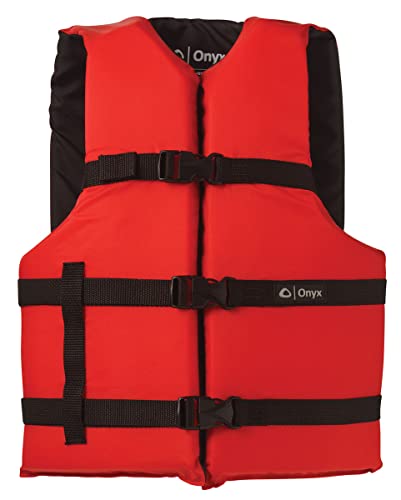 ONYX ONYX 103000-100-004-12 General Purpose Boating Life Jacket Universal, Red
View on Amazon ↗
 STOHLQUIST Stohlquist® Adult Life Jacket PFD 4-Pack. US Coast Guard Approved…
View on Amazon ↗
 BLUESTORM BLUESTORM Universal General Boating Life Jacket for Adults | US…
View on Amazon ↗
Listing names and images come from Amazon and are rechecked against the live listings; last checked Nov 8, 2026. No prices shown; the current price is on the listing.
About this guide. This guide covers the life jacket category as a whole: the labels, materials, and fit checks that apply across all models. It does not evaluate individual life jackets, and no product documents, reviews, or tests were used. Always confirm the weight range and USCG type on the listing before you buy.