Focus on three decisions: closure type, material, and where you will stow it. Roll tops and valves suit rough water and full submersion; zipper bags open faster but need more care. A bag that fits your hatch or deck keeps gear dry without fighting you. Match the bag to the worst water you will actually meet.
Closure Style Is the First Fork in the River
Roll tops are the workhorse. You fold the opening down three or more times and clip the ends together. That folded collar creates a barrier water has to climb. A well sealed roll top can sit underwater for a short time and stay dry inside. The cost is access: each time you want a snack or a camera, you unclip, unfold, reach in, then seal again.
Zipper bags use a water resistant zipper instead of folding. They open across the top like a duffel, which makes them fast when you need a dry layer or a phone. The zipper must stay clean and lubricated. Grit or sand in the teeth can break the seal. Most zipper bags are splash proof, not submersible. Check the listing for a rating such as IPX6 or IPX7 before trusting one in a capsize.
Valve bags start as roll tops but add a one way valve on the body. After you roll the top, you squeeze the bag to push out air. Removing air makes the bag smaller and easier to pack, and it can add a little buoyancy. The valve is one more part to keep clean. A valve does not replace a proper roll; it only helps with packing.
If you paddle calm lakes and want fast access, a zipper bag works. If you paddle moving water, surf, or open crossings, a roll top or valve bag is the safer default.
Material Decides Weight, Packing, and How Long It Lasts
Most dry bags use PVC, TPU, or a coated nylon. PVC is common on budget bags. It is heavy, stiff in cold weather, and can crack after years of sun. PVC works for occasional lake days where the bag lives in a hatch most of the time.
TPU is lighter and stays flexible when cold. It resists punctures well for its weight and often costs more. TPU suits paddlers who carry the bag on portages or pack it tight. Coated nylon, sometimes with a laminated film, splits the difference: a fabric outer for abrasion resistance and a waterproof layer inside. Nylon bags fold flat and pack small when empty.
Look at the seams. Welded or taped seams hold up better than sewn seams with a coating over them. A sewn seam can wick water through the thread holes once the coating wears. The listing or photos should show whether seams are welded. If the bag has a clear window, check what the window is made from; cheaper windows cloud or crack faster.
Hatch Size and Deck Space Decide What You Can Actually Carry
A dry bag only helps if it fits where you plan to put it. Measure the hatch opening on your kayak before shopping. A 20 liter bag may be too wide to slide through a small round hatch even if it would hold your gear. Oval hatches accept wider bags. If you paddle a sit on top, you may strap the bag to the deck instead.
For deck carry, a bag with lash points or a daisy chain helps. You can clip it to bungee cords or straps. Deck bags take more sun and spray, so material matters more. For hatch storage, a softer bag with no rigid frame packs easier. Some bags have a purge valve so you can squeeze air out and fit them through a tight opening.
Think about what you carry. A phone, keys, and a snack need a 5 to 10 liter bag. A full change of clothes, towel, and lunch need 20 to 30 liters. Bigger is not always better: an oversized bag flops around and is harder to seal tightly.
A Clear Window and a Shoulder Strap Change How You Use It
A clear window lets you see a phone screen through the material. That is handy for navigation or checking messages without opening the bag. The window is usually a flexible TPU panel. It is one more seam to trust and one more surface to scratch. If you want a window, check that it is bonded, not glued, to the main body.
Some dry bags come with a removable shoulder strap. That turns a hatch bag into a carry bag for the walk from the car to the launch. The strap clips should be plastic or coated metal to avoid rust. A bag with a strap often has a heavier fabric floor, which helps when you set it down on gravel.
Small loop or handle on the bottom helps you pull a wet bag out of a hatch. A top handle alone means you have to reach deep to grab it. If you use a sit inside kayak, a bottom grab loop is worth checking for.
How to Read a Dry Bag Listing Without Getting Soaked
Start with the closure type and material, then check the capacity in liters. A listing that says 'waterproof' without naming the closure or seam type tells you little. Look for words like 'welded seams', 'IPX7', or 'three roll minimum'. If the listing says 'splash proof', treat it as a bag that keeps light spray off, not one that survives a capsize.
Ask the seller two questions. First, what is the fabric denier or thickness? Thicker fabric resists punctures but weighs more. Second, are the seams welded or sewn and taped? The answer tells you how long the bag will last before water finds a way in.
Check the dimensions, not just the capacity. A bag listed as 20 liters may be long and narrow or short and wide. Compare that shape to your hatch or deck. If the listing shows the bag rolled closed, the capacity often refers to the open, unrolled size. A bag loses a few liters of usable space once you fold the top three times.
When a Dry Bag Is the Wrong Choice
A dry bag is not a dry box. If you carry electronics that must survive a full capsize in moving water, a hard sided dry box or a dedicated waterproof case offers more protection. Dry bags flex, and a sharp edge inside can poke through the fabric under pressure.
Paddlers who only go out for an hour on a calm lake may not need a dry bag at all. A simple zip pouch inside a hatch stays dry enough for keys and a phone in those conditions. A dry bag adds bulk and a little fiddle every time you open it.
For multi day trips where every liter counts, a set of smaller dry bags beats one large one. Separate bags let you pack clothes, food, and electronics independently. One big bag means every stop opens everything to the weather.
Closure, Material, and Fit Compared
| Design type | Water protection | Access speed | Best for |
|---|---|---|---|
| Roll top | Submersible if sealed right | Slower | Rough water, open crossings |
| Zipper | Splash proof to light spray | Fast | Calm lakes, frequent access |
| Valve | High with proper roll | Moderate | Packing tight, adding buoyancy |
| Roll top with window | High, window seam is weak point | Slower | Phone use without opening |
A zipper bag fails differently than a roll top. A roll top leaks slowly if the fold is too loose. A zipper fails suddenly if grit breaks the seal. For beginners on calm water, a zipper is tempting. For anyone who might tip, the roll top is the lower risk choice.
Care That Keeps the Bag Dry Season After Season
Rinse the bag with fresh water after saltwater or sandy trips. Salt crystals and grit work into seams and zippers. Let it dry completely before storing, inside and out, or mildew grows in the folds. Store it unrolled in a cool, dry place. Leaving it rolled tight for months can crease the material and weaken the fold line.
Zipper bags need a little silicone lubricant on the zipper every few trips. Do not use petroleum jelly; it attracts grit. For roll tops, check the clip and the fold line for cracks. A cracked clip can pop open in rough water. If the bag develops a pinhole, a patch kit made for the material works better than duct tape.
Long term, the material breaks down from UV exposure. A bag left on a deck all summer fades and stiffens. Store it in a hatch or a gear bin when not in use. Most dry bags last several seasons with basic care, but the seams are usually the first part to fail. Inspect them before a big trip.
Lake Days, Beach Holidays, and Family Outings Change the Math
A lake beginner often carries a phone, keys, and a towel. A small 5 to 10 liter roll top fits in a hatch or behind the seat. Look for a grab loop and a bright color so it is easy to spot. Avoid bags with lots of extra straps that snag on the cockpit rim.
A beach holiday adds sand and sun. Zipper bags suffer in sand; the teeth jam and the seal fails. A roll top with a purge valve packs down small for travel. Rinse it daily. Sand works into the fold line, so shake it out before rolling.
Family outings mean multiple small bags, not one big one. Give each person a 5 liter bag for their own things. That stops one child from opening the shared bag and leaving it unrolled. Bright colors help you see which bag belongs to whom.
For travel beyond the water, a lightweight nylon roll top with a shoulder strap doubles as a day bag. It packs flat in luggage and keeps a change of clothes dry in a rainstorm. The same bag that works in a kayak hatch works on a ferry deck or a beach walk.
Kayak Dry Bag Questions Before You Buy
Is a kayak dry bag really waterproof?
A properly sealed roll top dry bag can survive brief submersion. Zipper bags are usually only splash proof. Check the listing for an IPX rating or the words 'submersible'. Even the best bag fails if the top is not rolled at least three times and clipped.
What size dry bag do I need for a kayak?
A 5 to 10 liter bag holds a phone, keys, and a snack. A 20 liter bag holds a change of clothes and a towel. A 30 liter bag suits a full day trip with lunch and a layer. Measure your hatch before buying, since a wide bag may not fit a small round opening.
Should I choose a roll top or a zipper dry bag?
Choose a roll top for rough water or any chance of a capsize. Choose a zipper for calm lakes where you open the bag often. Zippers are faster but fail in grit and sand. Roll tops are slower but more reliable when submerged.
Does a purge valve make a dry bag better?
A purge valve lets you squeeze air out after rolling the top, so the bag packs smaller and may float a little higher. It does not replace a proper roll. The valve is one more part to clean and can leak if it gets clogged with sand.
How do I clean a kayak dry bag?
Rinse with fresh water after each saltwater or sandy trip. Dry it fully inside and out before storing. Store it unrolled in a cool, dry place. For zipper bags, use a silicone lubricant on the teeth every few trips.
Which Dry Bag Fits Your Kayak and Your Water
A paddler on calm lakes who wants quick access to a phone will be happiest with a small zipper bag, around 5 to 10 liters, with a clear window. A paddler on moving water or open crossings should instead choose a 20 liter roll top with welded seams, a purge valve, and a bright color. The zipper is easier day to day, but the roll top is the one that stays dry when the boat goes over.
Real kayak dry bag listings, so you can check the points in this guide against actual products. These are affiliate links: as an Amazon Associate we earn from qualifying purchases, at no extra cost to you.
 EARTH PAK Earth Pak 20L Waterproof Dry Bag - Marine Roll Top…
View on Amazon ↗
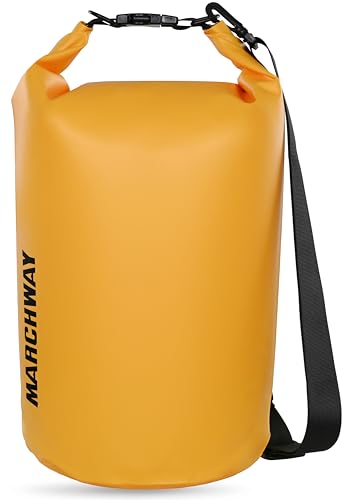 MARCHWAY MARCHWAY Floating Waterproof Dry Bag Backpack, Roll Top, 5L/10L/20L/30L/40L |…
View on Amazon ↗
 UNIGEAR Unigear Dry Bag Waterproof, Floating and Lightweight Bags for Kayaking,…
View on Amazon ↗
Listing names and images come from Amazon and are rechecked against the live listings; last checked Nov 8, 2026. No prices shown; the current price is on the listing.
What this guide is. Hold this guide up against any listing as a checklist of what to verify: closure type, material, seam construction, and whether the bag fits your hatch. The guide covers the dry bag category in general, not individual models, so check any dimensions on the listing before you order.