For most families, the deciding factors are rope length, handle size, and the surface where kids will jump. Preschoolers in small backyards need shorter ropes, thicker handles, and a flat surface. Older kids or group play may push you toward adjustable ropes and a set with multiple handles. The main tradeoff is between a simple rope that is easy to swing and a set with extra pieces that may just clutter the yard.
Rope Length Sets the Ceiling
A jump rope that is too long will drag on the ground, slow the swing, and trip a preschooler. A rope that is too short will hit their ankles before they can clear it. For a preschooler, the rope should reach from the floor to about the armpit when the child stands on the middle of it.
Many sets list a rope length, often 7 to 9 feet. That length suits a school age child or adult. For a preschooler, look for a rope around 6 to 7 feet, or one that is clearly adjustable. Adjustable ropes let you shorten the rope by moving a knot or a clip inside the handle.
Check the listing for a length range, not just a single number. A set that includes one short rope and one longer rope can cover two ages, but only if the shorter rope actually fits the child using it today.
Handle Size Determines Control
Preschool hands are small and still developing grip strength. A thin, hard handle is harder to hold and can slip out of a sweaty hand. A thicker handle, around 3/4 inch or more in diameter, gives small fingers more to wrap around.
Soft foam or molded plastic handles are easier to grip than smooth wood or metal. Some handles have a textured surface or a slight curve. Those details help a child keep the handle oriented while the rope swings.
A handle that is too heavy makes the rope harder to turn. A very light handle can feel flimsy in an adult hand but is often fine for a child. Compare the handle material and shape in the listing photos before you buy.
Surface Decides Where the Set Actually Gets Used
A jump rope works best on a flat, hard surface like a driveway, a paved path, or a gym floor. On grass, the rope loses speed and the child has to jump higher, which is harder for a preschooler. On uneven ground, the rope catches and the child trips.
In a small backyard, the usable surface is often a patch of concrete or a short stretch of packed dirt. Measure that space before buying. A preschooler needs about 6 feet of clear length and 4 feet of clear width to jump without hitting a fence, a bush, or another child.
If the backyard is mostly grass or mulch, a jump rope set may not get much use. In that case, a different outdoor toy may be a better fit. You can read about other small backyard options in small backyard play ideas for preschoolers.
Beaded Ropes Are Easier to See and Control
A beaded rope has plastic segments strung on a cord. The beads make the rope heavier and easier for a child to feel as it swings. The rope also holds its arc better than a thin speed rope, so a preschooler can time the jump more easily.
A thin speed rope, often made of vinyl or coated wire, is designed for fast jumping. It is harder for a preschooler to control and can sting if it hits bare skin. For a young child, a beaded rope or a soft fabric rope is a safer first choice.
Some sets include a mix of beaded and non beaded ropes. That is fine if one rope is clearly meant for the preschooler and the others are for older siblings or adults. If all the ropes are thin speed ropes, the set is probably not a good fit for a preschooler.
Group Play Changes What a Set Needs
A family picnic or birthday party may call for several ropes at once. A set with four or more ropes lets several kids jump at the same time, which keeps a group moving. But more ropes also means more tangles, more missing pieces, and more storage space.
For a small family, a set with two ropes is often enough. One rope can be the child's main rope, and the second can be a spare or a rope for a visiting friend. A set with four or more ropes makes more sense if you regularly host groups or if you teach a preschool class.
Think about where the ropes will be stored. A set with a carrying bag or a hanging loop is easier to keep together. If the set is just a bundle of ropes, they will likely end up in a pile and get tangled.
How to Read a Jump Rope Set Listing
Start with the length. The listing should state the rope length or length range. If it only says 'adjustable,' find out how the adjustment works and what the shortest length is. A rope that adjusts from 7 to 9 feet is still too long for most preschoolers.
Next, look at the handle. The material, diameter, and weight are the key details. A photo of a child holding the handle can help, but compare the handle to the child's hand in the photo. If the handle looks like a thin pencil in an adult hand, it will be hard for a preschooler to grip.
Finally, check the rope material. Beaded plastic, soft fabric, or a thick vinyl cord are all reasonable for a preschooler. Avoid thin wire or coated cable ropes, which are designed for speed and can hurt if they whip against a leg. If the listing does not state the material, ask the seller before you buy.
Mistakes That End in a Rope Left in the Garage
The most common mistake is buying a rope that is too long. A 9 foot rope is standard for adults, but a preschooler will drag it on the ground and get frustrated. Always check the length or the minimum adjustable length.
Another mistake is buying a set based on the number of ropes rather than the fit. A set with six thin speed ropes is not better than one beaded rope that actually fits the child's height and hand. More pieces do not make a better set for a preschooler.
A third mistake is ignoring the surface. A jump rope set bought for a grassy backyard will sit unused because the rope does not swing well on grass. If the only outdoor space is grass, consider a different active toy, such as a foam rocket launcher that works on soft ground.
Long Term Care and What Wears Out
Beaded ropes last a long time outdoors, but the cord inside the beads can fray if the rope is dragged on rough concrete. Fabric ropes can get dirty and start to smell if they are left outside in the rain. Vinyl ropes can crack in cold weather or direct sun.
Handles are usually the first part to break. A plastic handle can crack if stepped on, and a foam handle can tear. Check whether the set includes replacement handles or whether the handles can be removed from the rope. Most sets do not, so a broken handle usually means a new rope.
There are no ongoing consumables for a jump rope set. The main long term cost is replacing a rope when it wears out or is lost. For that reason, a single quality rope may be a better value than a cheap set with several ropes that all break at once.
When a Jump Rope Set Is the Wrong Toy
A jump rope set is not a good fit for a child who cannot yet jump with both feet. Most preschoolers can do this around age 4, but some need more time. If the child is still learning to hop, a jump rope will only frustrate them.
A set is also a poor choice for a family with no flat surface. A small backyard that is all grass, mulch, or uneven ground will make jumping nearly impossible. In that case, a different outdoor toy will get far more use.
Finally, skip a jump rope set if the child is already frustrated by coordination tasks. Jumping rope requires timing, balance, and repeated practice. A child who gets upset easily may do better with a toy that offers faster success, such as a backyard obstacle kit that lets a toddler win right away.
Comparing the Main Design Types
The table below summarizes the four main design types you will see in jump rope sets. Use it as a quick reference when you compare listings.
| Design type | Rope length | Handle feel | Best surface | Suits |
|---|---|---|---|---|
| Single beaded rope | Fixed, often 7 ft | Thick plastic or foam | Concrete or pavement | One preschooler at home |
| Adjustable rope | 6 to 9 ft range | Thicker grip | Any flat surface | A child who is still growing |
| Set with 2 ropes | Mixed lengths | Varies | Flat backyard or driveway | Siblings or a playdate |
| Set with 4+ ropes | Mixed lengths | Often thin | Large paved area | Parties or group classes |
A single beaded rope is the simplest choice for a preschooler. An adjustable rope is the best value if you want one rope to last several years. A set with many ropes is only worth it if you regularly have a group of kids in a large flat space.
Jump Rope Set Questions Before You Buy
What length jump rope does a preschooler need?
A preschooler usually needs a rope around 6 to 7 feet long. To check, have the child stand on the middle of the rope and pull the handles up. The handles should reach about armpit height. Most standard ropes are 8 to 9 feet, so look for an adjustable rope or a set that includes a shorter rope.
Is a beaded jump rope better for a preschooler?
Yes, for most preschoolers a beaded rope is easier to control. The beads add weight, so the rope holds its arc and the child can feel where it is. A thin speed rope is harder to time and can sting if it hits the skin. A soft fabric rope is also a good first choice.
Can a preschooler jump rope on grass?
Grass makes jumping rope much harder. The rope loses speed on the soft surface, so the child has to jump higher and swing harder. A flat, hard surface like a driveway or a paved path is much easier. If the only outdoor space is grass, a jump rope set may not get much use.
How many jump ropes should a set have?
For one preschooler, one or two ropes is enough. A second rope is useful for a sibling or a playdate. A set with four or more ropes makes sense only if you host parties or teach a group. More ropes means more tangles and more pieces to keep track of.
What makes a jump rope set worth buying?
A set is worth buying if the rope length fits the child, the handle is easy to grip, and the surface where the child will jump is flat and clear. If those three things line up, even a simple set will get used. If the rope is too long or the surface is grass, the set will likely sit in a closet.
Which Jump Rope Set Fits a Preschooler in a Small Backyard
A family with one preschooler and a small paved patio should start with a single adjustable beaded rope that can shorten to about 6 feet. That one rope will fit the child now and can grow for a few years. For a family that hosts birthday parties or group playdates in a larger flat area, a set with four or more beaded ropes is the better pick, as long as the ropes can be shortened enough for the youngest jumpers.
Real jump rope set listings, so you can check the points in this guide against actual products. These are affiliate links: as an Amazon Associate we earn from qualifying purchases, at no extra cost to you.
 GRAWUN GRAWUN 12 Pack Jump Rope For Kids,Soft Beaded Jump Rope…
View on Amazon ↗
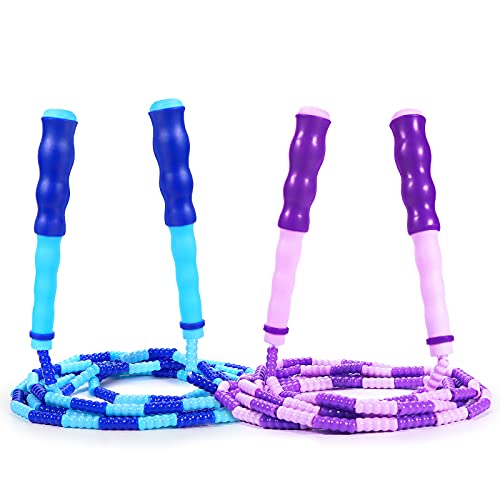 SUPERTRIP Supertrip Jump Rope Kids-Soft Beaded Skipping Rope Adjustable Tangle-Free Segmented…
View on Amazon ↗
 KENAEOOE Jump Ropes Bulk 20 Pcs Beaded Skipping Rope 9.2 ft…
View on Amazon ↗
Listing names and images come from Amazon and are rechecked against the live listings; last checked Nov 8, 2026. No prices shown; the current price is on the listing.
About this guide. Use this guide as a checklist to hold against any jump rope set listing. It describes the product type in general, not any individual model, so verify the rope length and handle size on the listing before you buy.