Focus on the child's age and your yard size first. Preschoolers need low, stable, soft obstacles; older kids want height and challenge. A small yard calls for compact pieces that pack flat, while a large yard can handle tunnels and crawl throughs. The main tradeoff is quick setup versus richer play: fewer pieces set up faster but hold attention for less time.
Match the Kit to the Child's Age
Preschoolers do best with obstacles under knee height, wide bases, and soft edges. Look for foam or fabric covered hoops, low hurdles, and tunnels they can see through. Avoid anything a child can tip or trip over when running at full speed.
School age kids can handle higher hurdles, balance beams, and agility rings. At this stage, the kit should allow a sequence: jump, crawl, balance, sprint. Check that pieces stay put on grass and do not slide when a child lands.
For mixed age groups, choose a kit with adjustable hurdle heights or pieces that can be used two ways. A tunnel works for a toddler and a middle schooler, while a single height hurdle does not.
Small Yard Kits Need a Flat Pack Plan
A small backyard changes the purchase. Measure the usable run before you buy. Many kits list a full setup footprint that assumes a long straight line, which a city yard cannot offer.
Look for pieces that stack or fold flat. Cones, rings, and collapsible hurdles disappear into a deck box. Tunnels with a pop up frame flatten to a disc. Solid plastic crawl throughs do not pack down and will dominate a small space.
For a small yard, fewer pieces arranged in a circle or zigzag often work better than many pieces in a line. A kit with five versatile pieces beats a ten piece kit you can only half set up.
If you are shopping for a city yard or patio, a balance and jump set may fit where a full course cannot. Compare the storage picture, not just the play picture.
Design Types Split on Setup and Play Value
Most kits fall into four groups. A pop up tunnel and a few cones is the fastest to set out and the cheapest, but it is really one activity, not a course. A hurdle and cone set adds jumping and weaving but still sets up in minutes.
A modular crawl, jump, and balance kit is the middle ground. It usually has six to ten pieces: a tunnel, hurdles, balance pods, and rings. Setup takes five to ten minutes but the course can change each time, which keeps it fresh.
A full themed course, often with ten or more pieces like a sack, flags, and a crawl net, creates the richest play. It also takes the longest to lay out and needs the most storage. Think about how often you will actually set up the whole thing before paying for it.
| Design type | Setup time | Storage space | Play variety | Suits |
|---|---|---|---|---|
| Pop up tunnel and cones | Under 2 minutes | Small flat disc | Low: one crawl plus weave | Toddlers, tiny yards |
| Hurdle and cone set | 3 to 5 minutes | Stackable bin | Medium: jump, weave, sprint | Preschool to early school |
| Modular crawl, jump, balance | 5 to 10 minutes | Large bin or shelf | High: reconfigurable course | School age, medium yards |
| Full themed course | 10 to 15 minutes | Multiple bins | Highest: many stations | Parties, large yards |
The table shows the core split: faster setup means a smaller kit and less variety. A themed course is great for a birthday party, but a parent who wants a quick after school burn will leave it in the garage.
The Features That Matter Are Physical, Not Printed
Weight and base design matter more than a kit's color or theme. A hurdle that a running child can knock over with a shin is a hazard. Check the listing for the base width and the material: a wide, weighted base or ground stakes hold better on grass.
Fabric tunnels need a frame that springs open and stays open. A cheap frame collapses when a child bumps the side, which ends the game. Look for a fiberglass or steel hoop frame with fabric that can be wiped down.
Ignore most marketing words. 'Ninja warrior' or 'adventure' in the title does not change the plastic. Instead, check the pieces you can count: how many hurdles, how many rings, whether the balance beam is textured on top.
UV resistance matters if the kit lives outside. Untreated plastic fades and gets brittle in one summer. A listing that says 'indoor and outdoor' is not the same as one that says 'UV resistant' or 'fade resistant'.
How to Read a Backyard Obstacle Kit Listing
Start with the full setup footprint and the piece count, not the photo. A photo can make five pieces look like twenty. Write down the dimensions of the longest run and compare them to your yard before you buy.
Check the material for each piece. 'Plastic' is not enough: you want to know if it is hollow, solid, or foam filled. A hollow hurdle can crack when a child steps on it, while a foam filled one gives a little.
Ask the seller two questions if the listing is thin. First, what is the weight of the heaviest piece and the total kit weight? Second, can the tunnel or hurdles be used on concrete or only grass? The answer tells you about stability and your own surface.
Look at the age range, but treat it as a starting point. A kit labeled '3 to 12' rarely fits a three year old and a twelve year old equally. The lower end of the range is usually the honest one.
The Storage Decision Decides the Long Term Cost
Think about where the kit lives in November. A kit that cannot be stored dry will mold, fade, or crack. If you have no garage or shed, skip fabric tunnels and foam pieces unless you can bring them inside.
A deck box is the simplest add on, but measure it against the folded tunnel and the tallest hurdle. Some kits include a carry bag, which helps, but a bag is not waterproof on its own.
Consumables are rare in this category, but replacement parts are not. Ground stakes snap, tunnel poles bend, and cones get chewed by dogs. Before you buy, check whether the seller lists spare parts. If not, a broken piece often means replacing the whole kit.
For a family that uses the kit once a month for a party, a cheap kit that lasts two summers can be fine. For a daily backyard toy, pay for thicker plastic and a real storage solution.
Who Should Skip a Backyard Obstacle Kit
If you have no grass or soft surface, most kits do not work safely. A concrete patio makes falls harder and stakes useless. In that case, a set of foam balance pods or a doorway swing might serve better than a full course.
A child under three will outgrow and outrun most kits within a season, and the smallest pieces are still a trip hazard for unsteady walkers. Wait a year or choose a single pop up tunnel instead.
If you want a permanent structure, a kit is the wrong product. A wooden playset or a dedicated ninja line with a frame costs more but stays up. A kit is for people who want to pack it away.
If your yard is a slope, most hurdles and balance pieces will not sit level. Check the listing for adjustable legs, or accept that you will be shimming pieces with wood blocks.
Mistakes That Lead to a Kit That Sits in the Garage
Buying for the party, not the Tuesday afternoon. A ten piece themed course is amazing once a year and a chore the other 51 weeks. If you will not set it up alone in under ten minutes, you will not set it up at all.
Ignoring the folded size. A tunnel that pops open to six feet can fold to a disc the size of a car tire or a bundle the size of a sleeping bag. Before buying, find a photo of the kit folded, not just assembled.
Trusting the photo's scale. Kids in photos are often younger and smaller than yours, which makes the obstacles look bigger. Check the actual hurdle height in inches against your child's knee and hip.
Choosing a kit with no variation. A set of six identical hurdles is a track drill, not an obstacle course. Look for at least three different movement types: jump, crawl, balance, weave, or throw.
Backyard Obstacle Kit Questions Before You Buy
What age is a backyard obstacle kit for?
Most kits fit ages 3 to 10, but the sweet spot is 4 to 8. Preschoolers need low, soft pieces under knee height, while older kids want taller hurdles and balance challenges. For a mixed age group, pick a kit with adjustable heights or pieces that work for both a crawl and a jump.
Is a backyard obstacle kit worth it for a small yard?
Yes, if you choose collapsible pieces and a compact layout. A pop up tunnel, a few cones, and a low hurdle can create a zigzag course in a space the size of a parking spot. Avoid large crawl throughs and full themed courses, which need a long straight run and a big storage bin.
How do I keep a backyard obstacle kit from blowing away or sliding?
Choose pieces with wide bases, ground stakes, or sand fillable bases. On grass, stakes work best; on concrete, you need weighted bases or nonslip feet. Check the listing for the base style before you buy, because a lightweight hurdle will slide the first time a child hits it.
Can a backyard obstacle kit stay outside all summer?
Only if the materials are UV resistant and the fabric is mold resistant. Untreated plastic gets brittle in direct sun, and fabric tunnels hold moisture. If the listing does not say UV or fade resistant, plan to store the kit in a deck box or shed between uses.
Which backyard obstacle kit is easiest to set up and put away?
A pop up tunnel with a few cones or hurdles is the fastest, often under two minutes to set out and fold flat. A modular kit with six to ten pieces takes five to ten minutes. If quick setup is your priority, choose the smallest piece count that still offers a jump, a crawl, and a balance challenge.
The Right Backyard Obstacle Kit for Your Yard
For a family with a preschooler or early school age child and a small to medium yard, a modular crawl, jump, and balance kit with five to eight pieces is the sweet spot. It sets up in under ten minutes, packs into one bin, and offers enough variety to hold attention. If you are buying for a birthday party or a large yard with older kids, step up to a full themed course with ten or more pieces and plan for real setup time.
Real backyard obstacle kit listings, so you can check the points in this guide against actual products. These are affiliate links: as an Amazon Associate we earn from qualifying purchases, at no extra cost to you.
 TRAILBLAZE Ninja Warrior Obstacle Course Kids Outside - 2x55ft Backyard Slackline…
View on Amazon ↗
 GENTLE BOOMS SPORTS Ninja Warrior Obstacle Course for Kids Backyard-65ft Slackline Kit with…
View on Amazon ↗
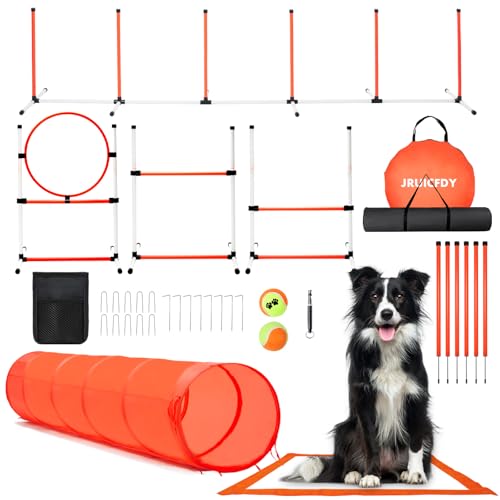 JRUICFDY Dog Agility Course Backyard Set, Dog Agility Equipment, Pet obstacle…
View on Amazon ↗
Listing names and images come from Amazon and are rechecked against the live listings; last checked Nov 8, 2026. No prices shown; the current price is on the listing.
What this guide is. This guide covers the backyard obstacle kit category as a whole, not any single model. It is written from general knowledge of how these kits are designed and used, without reading reviews or handling the units, so confirm the exact dimensions and materials on the listing before you buy.