Two factors decide an ink tank printer: your monthly print volume and your tolerance for ink handling. High volume homes and classrooms win big on per page costs, while occasional printers risk dried ink and wasted refills. The main tradeoff is a higher upfront price against far cheaper ink over time.
Print Volume Turns the Tank Into a Saving
Ink tank printers earn their price only above a certain page count. A family printing a few forms a month rarely recovers the extra upfront cost before the ink expires. A classroom or ecommerce seller printing dozens of pages a day sees the savings within weeks.
Estimate your real volume over a month, not a busy week. Count school packets, shipping labels, invoices, and photos. Below roughly 150 pages a month, a cartridge printer often stays cheaper because you pay less at purchase and replace ink less often.
Ignore the advertised page yield per bottle as a daily promise. That number comes from standardized test pages with light coverage. Photos, full color flyers, and borderless prints drain ink much faster than the yield suggests.
For sellers printing address labels, the math shifts quickly. A single label run can use a surprising amount of black ink, and tanks make those runs painless. Compare the cost per label, not just the price of the printer.
Refill Design Sets the Mess and Mistake Level
All ink tank printers share one idea: you pour ink from bottles into internal tanks instead of swapping cartridges. The difference is how the bottle meets the tank. Some use plain open holes, some use keyed nozzles that only fit the correct color, and a few use semi sealed cartridges that you snap in.
Open hole tanks are the cheapest to run but the easiest to overfill. Ink can drip onto hands, desks, or the printer case. Keyed bottles stop you from putting magenta into the yellow tank, which is the most common and most expensive refill mistake.
Check the tank window before you buy. A clear, front facing window lets you see ink levels without opening the printer. A dark or rear mounted tank turns refills into guesswork and leads to air bubbles in the print head.
Refilling is a skill, not a one time event. You will do it every few weeks or months depending on volume. If the idea of handling liquid ink bothers you, a cartridge hybrid or a cartridge printer removes that chore.
Paper Handling Beats Speed Claims
Manufacturers quote pages per minute, but that number matters less than how the printer takes paper. A rear feed tray handles cardstock, labels, and envelopes without bending them. A front cassette is neater but often struggles with thick media.
Duplex printing, printing on both sides automatically, saves paper and makes long documents manageable. Not every ink tank model includes it. If you print contracts, worksheets, or manuals, duplex is worth the extra cost.
Check the input tray capacity. A 100 sheet tray works for a home office, but a classroom or small business can empty it several times a day. A larger tray or a second paper path keeps jobs moving without constant refilling.
For label sheets, the feed path matters more than the print resolution. A straight through rear feed prevents labels from peeling inside the machine. Curved paths often jam with adhesive sheets, and a jammed label is hard to remove.
Ink Cost Per Page, Not Bottle Price
Bottle prices look low, but the real number is cost per page. Divide the bottle yield by its price, then compare across brands. A cheap bottle with a low yield can cost more per page than a pricier bottle that lasts twice as long.
Black ink is the workhorse for text documents. Color bottles matter only if you print charts, photos, or school projects. A seller printing mostly black labels should weight black ink cost heavily. A teacher printing color worksheets should average all four colors.
Pigment black ink resists water and smudging better than dye black. If your prints go into binders, get handled often, or face rain on shipping boxes, pigment black is a real advantage. Check the listing for the word pigment.
Long term, the printer's print head can clog if left unused. Ink tanks reduce but do not eliminate this risk. Running a nozzle check page every week or two keeps the head clear and costs almost nothing.
Who Should Skip the Tank
A person who prints fewer than 50 pages a month should likely buy a cartridge printer. The ink tank saves money only through volume, and low volume means the ink sits in the tank for months. Over time, that ink can settle or dry.
Anyone who prints only for a few weeks a year, a seasonal seller or a teacher on summer break, faces the same problem. A cartridge printer can be stored with less risk, and a dried cartridge is cheaper to replace than a clogged print head.
A shared office with multiple users should consider a managed cartridge printer instead. Ink tanks need one person who owns the refill routine. Without that owner, tanks run dry at the worst moment and nobody knows how to refill them.
If you need photo lab quality, an ink tank printer is rarely the right tool. Dye based tanks produce decent snapshots, but dedicated photo printers with more ink colors give smoother gradients and deeper blacks.
Reading the Listing Before You Pay
The listing should state the ink yield for black and each color, not just the bottle size. If the yield is missing, ask the seller. A printer with no published yield is impossible to compare on running cost.
Check whether the printer comes with full bottles or starter bottles. Some listings include bottles that only fill the tank partway. You will need to buy full bottles sooner, which changes the first year cost.
Look at the warranty length and what it covers. A two year warranty with on site service matters more than a longer one that requires shipping the printer away. Print heads are the expensive part and can fail.
Confirm the connection type. USB is fine for a single computer, but a classroom or small office needs Wi-Fi or Ethernet so several devices can print. Check that the printer works with your phone or tablet if you print from those.
Ask the seller about spare parts and ink availability. A discontinued ink tank printer becomes a paperweight when you cannot buy its bottles. Popular models from major brands have the safest long term supply.
The Tank Versus Cartridge Math
The table below shows how the main designs compare on the things buyers feel daily. Use it after you know your monthly volume, because that number decides which row is right for you.
| Design | Upfront cost | Ink cost per page | Refill mess | Suits |
|---|---|---|---|---|
| Open hole tank | Mid to high | Lowest | High | High volume, budget focused |
| Keyed bottle tank | Mid to high | Low | Low | High volume, spill averse |
| Cartridge hybrid | Low to mid | Mid | Lowest | Moderate volume, clean hands |
| Cartridge printer | Lowest | High | None | Low volume, occasional use |
Open hole tanks win on pure ink cost but demand care. Keyed bottles cost about the same to run and remove the color mixing risk. Cartridge hybrids are the middle ground for people who want cheaper ink without pouring.
Remember that a high upfront cost pays back only through pages. If your volume is low, the bottom row, a cartridge printer, is not a compromise. It is the cheaper and more sensible choice.
Mistakes That Turn a Saving Into a Regret
Buying for a future volume that never comes is the biggest error. A person who plans to start a side business but never does has paid extra for a printer they use twice a month.
Ignoring refill spill risk leads to stained hands and ruined clothes. Look for keyed nozzles and a drip tray if you care about your workspace. Open tanks are fine on a garage shelf, less so on a white desk.
Buying the cheapest model with a tiny input tray creates a new chore. Refilling paper every few pages is as annoying as replacing cartridges. A 250 sheet tray changes the daily rhythm.
Assuming all ink tank printers are equal on software. Some have clunky apps that make scanning or mobile printing frustrating. Check that the app supports your phone's operating system and your preferred cloud storage.
Ink Tank Questions Worth Asking Before You Buy
Is an ink tank printer worth it for home use?
For a home that prints over 150 pages a month, yes. The per page ink cost drops sharply compared to cartridges, and you refill every few weeks instead of every few days. For a home printing under 50 pages a month, a cartridge printer is usually cheaper because the tank's upfront premium never pays back before the ink ages.
What is the difference between ink tank and cartridge printers?
An ink tank printer has large internal reservoirs that you refill from bottles, so the ink itself costs far less per page. A cartridge printer uses small replaceable cartridges that include the print head or feed it. Tanks cost more to buy but much less to run at high volume. Cartridges cost less upfront but more per page.
Which ink tank printer is best for a small business?
Look for a model with automatic duplex printing, a 250 sheet or larger input tray, and pigment black ink if you print labels or invoices. Keyed refill bottles reduce spills in a busy office. Wi-Fi and Ethernet let several employees print without a shared computer. Avoid models with only a rear feed if you print long documents daily.
Can ink tank printers dry out if not used?
Yes, the print head can clog if the printer sits unused for weeks. Run a nozzle check or a small test page every week or two. Keep the printer in a room with stable humidity. If you will be away for a month or more, consider a cartridge printer instead, since a dried cartridge is cheaper to replace than a clogged print head.
How do I choose an ink tank printer for a classroom?
Prioritize a high capacity paper tray, fast black text printing, and cheap black ink. Duplex printing cuts paper use for worksheets. A keyed refill system prevents a student or aide from mixing colors. Check that the printer supports Wi-Fi so teachers can print from laptops without cables. Ignore photo quality specs unless you print many color projects.
The Tank That Fits Your Desk and Your Volume
A home office printing school packets, forms, and the occasional photo every week should look for a keyed bottle ink tank with duplex and a front tank window. That design keeps ink costs low without turning refills into a mess. A seller who runs address label sheets by the hundreds each week needs the same tank but with a straight through rear feed and pigment black ink, even if it costs more upfront.
Real ink tank printer listings, so you can check the points in this guide against actual products. These are affiliate links: as an Amazon Associate we earn from qualifying purchases, at no extra cost to you.
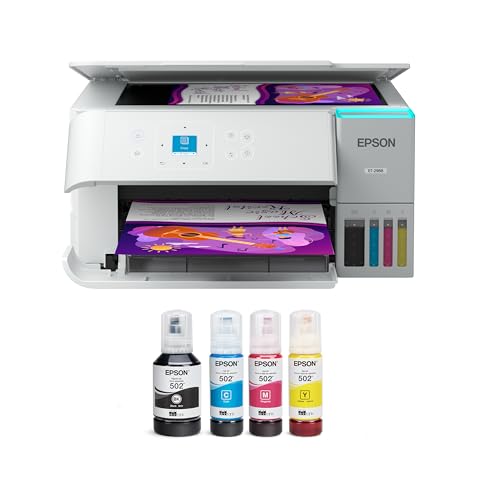 EPSON Epson EcoTank ET-2988 Wireless All-in-One Color Supertank Printer with up…
View on Amazon ↗
 CANON Canon MegaTank MAXIFY GX2020 All-in-One Wireless Color Printer – Print,…
View on Amazon ↗
 HP HP Smart Tank Plus 570 Tank Printer | 2 Years…
View on Amazon ↗
Listing names and images come from Amazon and are rechecked against the live listings; last checked Nov 8, 2026. No prices shown; the current price is on the listing.
About this guide. This guide covers the ink tank printer category as a whole, not any specific model. It draws on general knowledge of printer designs and ink systems, without reading individual product documents, reviews, or in person testing. Check any dimension or yield figure on the listing before you buy.