Two factors decide most hiking daypacks: how the harness carries weight and how much airflow reaches your back. Beginners and hot weather call for a ventilated suspension. Trail runners and minimalist hikers want a close, bounce free fit. Skip packs with laptop sleeves if you are buying for trail use.
Start With the Harness, Not the Pockets
A hiking daypack lives on your shoulders and hips for hours. Check how the shoulder straps curve and whether the hip belt sits over your iliac crest, not your stomach. A pack that rides too high dumps weight onto your shoulders. One that rides too low rubs at the lower back.
Look for load lifter straps at the top of the shoulder straps. These small straps pull the pack closer to your body and shift weight forward. Hip belts with a firm foam core and a wide webbing strap carry more than a thin nylon belt. If the listing does not mention torso length or adjustable torso, assume a one size fit that may not work for shorter or taller hikers.
Gender specific packs are not marketing. They change shoulder strap spacing, hip belt angle, and torso length for different body shapes. A unisex pack can work, but compare the strap curve and belt width against your own build before buying.
Ventilation Decides Hot Weather Comfort
A pack pressed flat against your back traps sweat. Three designs solve this: a suspended mesh panel that holds the pack body off your back, foam with cut channels, or a running vest style that hugs close but uses thin, breathable fabric.
Suspended mesh gives the most airflow but moves the load farther from your spine, which increases sway on rocky trails. Channeled foam keeps the pack closer while letting some air move. Running vests sacrifice air channels for zero bounce, which matters on descents.
If you hike in humid heat, prioritize ventilation over a lower weight. If you scramble or jog sections, a closer fit may be worth the sweat. Compare the back panel photo: a visible gap or deep channels mean real airflow, while a flat fabric panel will not breathe.
| Back design | Airflow | Stability | Suits |
|---|---|---|---|
| Suspended mesh | High | Moderate | Hot, slow hikes |
| Channeled foam | Medium | Good | Mixed terrain |
| Running vest | Low | High | Trail running, scrambles |
| Flat foam | Minimal | Very good | Cool, short walks |
A pack that feels airy in a store can still trap heat after an hour. Check for mesh on the shoulder straps and hip belt too, since those contact points hold sweat against the body.
Volume: What a 20 Liter Pack Actually Carries
Daypack volume ranges from about 10 liters for a fast hike to 35 liters for a full winter day. A 20 to 25 liter pack fits a rain jacket, two liters of water, snacks, a first aid kit, and a puffy layer. Below 15 liters forces hard choices about layers and food.
Pack volume numbers are not standardized across brands. A 22 liter pack from one company may hold more than a 25 liter from another because of pocket shapes and fabric stiffness. Use the listed dimensions and compare the main compartment shape rather than trusting the number alone.
For marathon training walks or long gentle hikes, a larger pack with compression straps works better than an overstuffed small pack. Compression straps let you cinch a half empty pack down so it does not flop. For trail running, stay under 12 liters and look for stretch mesh pockets that hold gear without zippers.
Which Features Matter and Which Are Just Weight
Some features earn their weight on every hike: a hydration sleeve with a hose port, stretch side pockets tall enough to reach while walking, a hip belt pocket for snacks, and a trekking pole loop that holds poles without digging into your back. Rain covers are useful but often add bulk; a pack liner or dry bag does the same job for less weight.
Other features rarely matter on a day hike: laptop sleeves, luggage pass through straps, shoe compartments, and built in USB ports. These add fabric and zippers you will not use on trail. If a listing leads with laptop fit or travel organization, it is probably a commuter pack wearing hiking colors.
Check the zipper pulls and buckles. Small zipper pulls are hard to use with gloves or cold fingers. Buckles that click loosely can pop open when a jacket is stuffed under the lid. These small parts fail before the fabric does.
When a Hiking Daypack Is the Wrong Tool
A hiking daypack is not a running vest. If you run most of your miles, a vest with front bottle pockets and a snug fit will bounce less and let you drink without stopping. A daypack is also not a summit pack: for technical climbs with a helmet and rope, look for a pack with dedicated ice axe loops and a stiffer frame.
For long walks on pavement, a light pack with a ventilated back still works, but a simple hydration pack may be enough. If you carry a laptop or change of clothes daily, a commuter bag with a padded sleeve and a luggage sleeve will serve better than a trail pack with no organization.
Skip a hiking daypack entirely if you mostly walk a dog around the neighborhood or carry only a water bottle and keys. A small lumbar pack or a running belt weighs far less and will not trap heat on your back.
Read the Listing Like a Hiker, Not a Shopper
Start with the harness photo. If the listing shows only the front or a flat lay, you cannot tell how the straps curve or whether the hip belt is padded. Look for a side view with the pack on a person. Check whether the hip belt sits over the model's hip bones or rides up near the ribs.
Ask the seller about torso fit if the listing does not state it. Many daypacks come in one size that fits a 16 to 19 inch torso, which leaves out shorter and taller hikers. Ask for the pack weight too: a daypack over about 2.5 pounds is heavy for a 20 liter bag unless it has a full suspension.
Ignore words like 'ergonomic' and 'breathable' unless the photos show the mechanism. A mesh back panel with no gap behind it is just fabric. A hip belt with no foam is just a strap. The materials list should name the fabric, such as ripstop nylon or polyester, and the coating, such as a DWR finish.
Fit Mistakes That End a Hike Early
Buying the pack that looks good on a store mannequin instead of measuring your torso. A torso length that is off by an inch or two causes shoulder pain after a few miles. Measure from your C7 vertebra to the top of your hip bones, then match it to the pack's stated range.
Choosing a pack with no hip belt pockets because they seem small. On a long day, reaching behind you for a snack or phone gets old fast. Hip belt pockets keep small items within reach and add almost no weight.
Overloading a frameless pack with three liters of water and a heavy camera. Frameless packs collapse and sag when the load is heavy or lumpy. If your gear list is heavy, choose a pack with a framesheet or a foam back panel that holds its shape.
Ignoring the shoulder strap width. Narrow straps dig into the collarbone and cut off circulation. Wide, curved straps spread the load, but too wide can rub under the arms. The strap shape should match your shoulder slope.
Long Term Costs Hide in Foam and Fabric
A cheap pack may use open cell foam that flattens after one season. Squeeze the shoulder strap and hip belt in a store: if the foam feels soft and spongy, it will compact. Firm, dense foam keeps its shape for years. The same goes for the back panel foam.
Zippers are the first thing to fail on a daypack. Coil zippers with small teeth jam on grit and snag on fabric. Look for chunky, molded zipper teeth and a garage at the top of the main zipper to keep rain out. A pack with replaceable buckles or a lifetime warranty may cost more up front but avoids a full replacement.
Water resistance fades. A DWR coating wears off after months of rubbing against rocks and branches. Reapplying a spray on treatment costs a few dollars and restores beading. If the pack has taped seams, check whether they are fully sealed or just stitched, because stitched seams leak in sustained rain.
Daypack Questions Hikers Actually Ask
What size hiking daypack do I need for a day hike?
For a three season day hike, 20 to 25 liters covers water, a rain layer, food, and a first aid kit. In winter or for long summit days, 30 to 35 liters fits extra insulation and a headlamp. Stay under 15 liters only for fast, minimal hikes where you know the weather and the route.
Is a hiking daypack worth it over a regular backpack?
Yes, if you hike for more than an hour at a time. A hiking daypack has a shaped hip belt, load lifter straps, and a ventilated back panel that a school or commuter pack lacks. Those parts keep the weight on your hips and stop your back from sweating, which a regular backpack cannot do.
How do I compare two hiking daypacks?
Compare four things: torso length range, pack weight, back panel design, and hip belt padding. If one pack has a suspended mesh back and a padded hip belt while the other has a flat foam panel and a thin belt, the first will feel cooler and carry better even if it weighs a few ounces more.
Which hiking daypack is best for hot weather?
A pack with a suspended mesh back panel keeps the pack body off your back, letting air move through the gap. Channeled foam works too but moves less air. Avoid a flat, padded back panel in humid heat unless you are only out for a short walk.
Which Daypack Fits Your Trail Style
A hiker who walks moderate trails in warm weather should pick a 20 to 25 liter pack with a suspended mesh back and a padded hip belt; the airflow and carrying comfort outweigh the extra few ounces. A trail runner or someone who jogs every descent should instead choose a running vest style under 12 liters, accepting a sweaty back for zero bounce and front bottle access.
Real hiking daypack listings, so you can check the points in this guide against actual products. These are affiliate links: as an Amazon Associate we earn from qualifying purchases, at no extra cost to you.
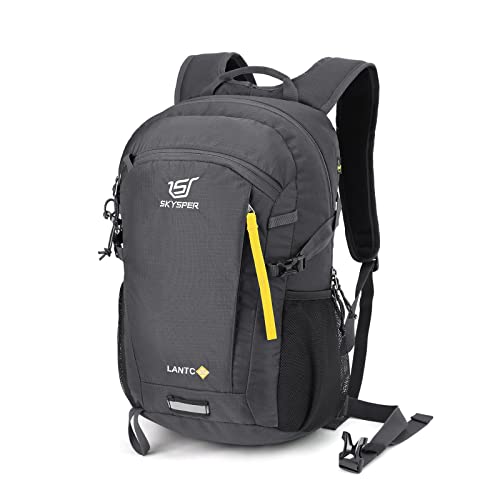 SKYSPER SKYSPER Small Hiking Backpack, 20L Lightweight Travel Backpacks Hiking Daypack…
View on Amazon ↗
 UTIAMIAOGONGO UtiaMiaoGonGo 15L Small Hiking Backpack Travel Daypack Colorful Lightweight Packable…
View on Amazon ↗
 OSPREY Osprey Talon 22L Men's Lightweight Hiking Backpack, Gray OS |…
View on Amazon ↗
Listing names and images come from Amazon and are rechecked against the live listings; last checked Nov 8, 2026. No prices shown; the current price is on the listing.
How to read this guide. This guide is written from general knowledge of hiking daypack design and does not describe any specific model. It cannot tell you whether a particular listing's dimensions or materials match the written description, so verify torso length and pack weight on the product page before buying.