Frame shape and material decide nearly everything about a hammock stand. A wide steel tube base holds a gathered end hammock steady with little sway, while a lighter folding frame suits a spreader bar hammock on a compact balcony. Match the stand's length and hook height to the hammock you already own or plan to buy, then check the weight rating against the people who will actually use it.
The frame shapes that actually fit different hammocks
Two frame shapes cover most stands. A long horizontal bar with angled legs is made for gathered end hammocks, the kind that bunch up at each end with no spreader bar. That style needs a stand roughly 2 to 3 feet longer than the hammock itself, measured from ring to ring.
A curved arc frame holds a spreader bar hammock flat and open. The spreader bar keeps the fabric wide, so the stand only needs to be slightly longer than the hammock. If you put a gathered end hammock on an arc frame, the fabric will sag into a deep pocket and your back will feel the curve.
Check the listing for the recommended hammock length, not just the stand length. A stand that says it fits hammocks up to 13 feet will not work well with a 9 foot hammock unless the hooks adjust inward.
Steel, aluminum, and the rust question
Powder coated steel is the most common material because it resists rust and costs less than aluminum. The coating matters more than the metal type: a thin paint layer will chip at the joints and invite rust within a season or two. Look for a listing that names powder coating or a weather resistant finish.
Aluminum tube stands weigh noticeably less, which helps if you move the stand to mow or store it for winter. Aluminum will not rust, but a light frame can flex more when two people sit in the hammock. If the stand will live on a shaded porch and rarely move, steel is the safer pick.
Stainless steel hardware is worth checking on any stand left outside. Hooks, bolts, and chain links are the first parts to rust, even when the frame is coated.
Base width and hook height stop the two big failures
Most hammock stand problems come down to two numbers: how wide the base sits and how high the hooks ride. A narrow base tips sideways when someone rolls over or when two people climb in. A wide stance, often 4 feet or more across, keeps the stand planted.
Hook height controls how low the hammock hangs. If the hooks are too low, the hammock scrapes the ground when you get in. If they sit too high, climbing in becomes awkward. Aim for a hook height that leaves the lowest point of the hammock about 18 to 24 inches off the ground once you are inside.
Weight ratings are not all measured the same way. Some listings rate the stand alone, others rate the hammock and stand together. Check whether the number covers one person or two, and leave a margin of at least 50 pounds beyond your actual combined weight.
What the listing photos do not tell you
Photos show a hammock stand in a perfect yard, but they rarely show the ground underneath. A stand with small round feet sinks into soft grass or sand, especially after rain. Flat oval feet or wide plastic caps spread the load and keep the legs from digging in.
Ask the seller for the assembled footprint, not just the packed box size. A stand that looks compact in the photo may need a 13 by 4 foot rectangle of clear space. Measure your patio or balcony before ordering, and leave room to walk around at least one side.
Check whether the hammock in the photo is included. Some stands ship with a hammock, others show one for display only. The listing title and the box contents list will tell you which you are buying.
- Assembled footprint, not just folded size
- Whether the hammock in the photo is included
- Foot style: flat caps for grass, points for hard ground
- Hook height and whether it adjusts
Small balconies and shaded porches change the math
A balcony stand needs a smaller footprint than most full size frames. Look for an arc or compact folding design that fits within your railing height and leaves room for a chair or planters. A 9 foot gathered end hammock on a 10 foot arc stand can work on a balcony, but only if the hooks sit low enough.
On a shaded porch, rust is less of a concern than on open grass, so a lighter steel frame can last for years. The bigger issue is ceiling clearance: a stand with tall upright posts may hit porch beams or ceiling fans. Measure the height from floor to ceiling before you choose a tall arc frame.
Rental gardens often mean you cannot stake anything into the ground. A freestanding stand solves that, but it must be easy to disassemble when the lease ends. Folding steel frames with snap together joints are easier to move than welded one piece bases.
Stand size against hammock style
| Hammock style | Frame shape | Stand length | Sway level | Suits |
|---|---|---|---|---|
| Gathered end | Horizontal bar | 2 to 3 ft longer than hammock | Low to moderate | Backyards, two people |
| Spreader bar | Curved arc | Slightly longer than hammock | Moderate | Porches, one person |
| Double wide gathered | Heavy steel bar | 3+ ft longer than hammock | Low | Family patios |
| Camp style | Compact arc | Close to hammock length | Higher | Balconies, rental gardens |
A wide gathered end hammock on a heavy steel bar stand gives the flattest, most stable lie for two people. The tradeoff is that the stand takes up a large rectangle of patio space. A spreader bar hammock on an arc frame uses less length but sways more and can feel tippy with two adults.
Mistakes that end with a hammock on the ground
Buying the stand before the hammock is the most common error. A stand built for a 13 foot gathered end hammock will not hold a 9 foot spreader bar hammock at the right tension. Decide on the hammock first, then match the stand to its length and end style.
Ignoring the ground surface leads to wobbly stands. Round metal feet sink into lawn, and the whole frame leans. Wide feet, plastic caps, or a rubber pad under each leg keeps the stand level on grass, sand, or a wooden deck.
Overloading a stand rated for one person is another avoidable failure. A double hammock with two adults can exceed a 250 pound single rating quickly. Check the combined weight of the people, plus any kids or pets that climb in.
When a hammock stand is the wrong purchase
If you have two sturdy trees or posts at the right distance, a simple hammock with tree straps costs less and takes up no floor space. A stand only earns its place when you need to move the hammock, rent the space, or have no anchor points.
For a very small balcony, even a compact arc stand may crowd out a chair and table. A hanging chair or a folding camp chair might fit better. If outdoor dining matters more than lounging, skip the hammock stand and keep the floor clear.
In a windy exposed yard, a light folding stand can blow over when the hammock is empty. A heavy steel frame or a stand with sandbag anchor points is the safer choice there.
Long term care and what wears out
A powder coated steel frame will last many seasons if you touch up chips with outdoor paint as soon as they appear. Wipe down the frame after heavy rain and check the bolts at the start of each summer. Loose bolts let the frame flex and crack the coating.
The hardware, not the frame, is what usually fails first. Hooks, S hooks, and chain links rust or bend under load. Replace them with stainless steel parts from a hardware store rather than buying a whole new stand.
The hammock fabric itself will fade and thin in direct sun. If the stand lives in full sun, look for a hammock made from solution dyed polyester or Sunbrella style fabric. A cotton hammock will rot faster in humid climates.
For more on how outdoor furniture weathers in different conditions, see a garden bench durability checklist and other patio and lawn guides.
Hammock Stand Questions Worth Asking Before You Order
Is a hammock stand worth it over hanging from trees?
A stand is worth it when you have no suitable trees at the right distance, you rent and cannot drill or stake, or you want to move the hammock between sun and shade. It costs more and uses floor space, but it gives you a consistent hang height and removes the risk of damaging tree bark with straps.
Which hammock stand is best for a small balcony?
Look for a compact arc or folding frame with an assembled footprint under 10 feet long and 3 feet wide. Check the hook height against your railing and ceiling clearance. A stand rated for one person will be lighter and easier to move on a balcony than a double wide frame.
What is the difference between a gathered end and a spreader bar hammock stand?
A gathered end hammock bunches at the ends and needs a stand 2 to 3 feet longer than the hammock itself, usually a horizontal bar frame. A spreader bar hammock stays flat and open, so it fits an arc frame only slightly longer than the hammock. The two styles are not fully interchangeable.
Should I buy a hammock stand with a hammock included?
A bundle is convenient if the included hammock matches the size and weight you want. Check whether the hammock fabric is rated for outdoor use and whether the stand's weight limit covers the hammock plus the people. Buying separately gives you more control over fabric and length.
How do I compare hammock stand weight ratings?
Look for a clear number like 450 pounds or 250 pounds, and check whether it means one person or the combined load. Compare the stand's rating to the hammock's own rating, and leave at least a 50 pound margin. Steel frames typically rate higher than aluminum or compact folding frames.
Which Hammock Stand Fits Your Space and Hammock
A backyard owner with a gathered end hammock and room for a long frame should pick a powder coated steel stand with a wide base and adjustable hooks. It stays steady for two people and handles years of weather. On a compact balcony or rental patio, a folding arc frame that matches a spreader bar hammock is the smarter pick: lighter, easier to move, and sized for one person.
Real hammock stand listings, so you can check the points in this guide against actual products. These are affiliate links: as an Amazon Associate we earn from qualifying purchases, at no extra cost to you.
 ONCLOUD ONCLOUD 9 FT Hammock Stand Only, Heavy Duty Adjustable Indoor…
View on Amazon ↗
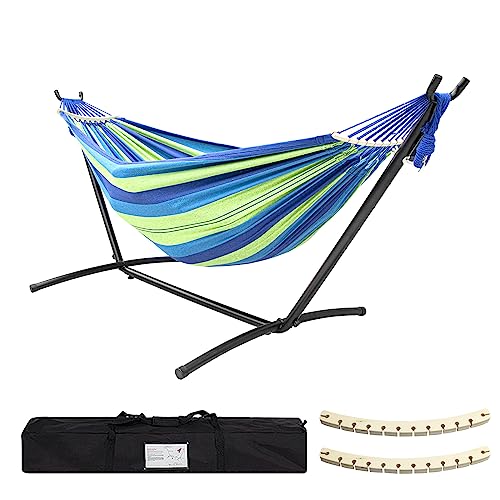 SZHLUX SZHLUX Double Hammock with Stand Included 450lb Capacity Steel Stand,…
View on Amazon ↗
 G TALECO GEAR G TALECO GEAR Hammock Chair Stand Heavy-Duty 300LBS Swing Stand…
View on Amazon ↗
Listing names and images come from Amazon and are rechecked against the live listings; last checked Nov 8, 2026. No prices shown; the current price is on the listing.
Scope and limits. This guide is written from general knowledge of hammock stand design and outdoor furniture, not from testing individual models. It can explain frame shapes and material tradeoffs, but it cannot tell you whether a specific listing's dimensions or weight rating are accurate, so check those numbers on the product page before ordering.