Start with the frame material and joinery: metal, wood, and resin each handle weather differently. Then check seat comfort and portability. A bench that resists rot and rust usually weighs more and costs more. Buyers with small balconies or shaded porches should favor lighter, rust resistant designs. Those with open gardens should prioritize weatherproof joinery and a finish that ages well.
Frame Material Sets the Lifespan
The frame is the first thing to check because it decides how the bench handles rain, sun, and temperature swings. Aluminum resists rust and stays light, which suits small balconies and rental gardens where you may move often. Hardwoods like teak or acacia resist rot and insects, but they are heavy and need occasional oiling. Resin or recycled plastic benches shrug off moisture, yet they can flex and feel less stable on uneven ground.
Steel and wrought iron look classic and hold up to wind, but they rust unless the coating stays intact. Check the listing for a powder coated or galvanized finish if you choose metal. Wood benches should name the species. Softwoods like pine cost less but rot faster unless pressure treated. If the listing only says 'wood', ask the seller which species it is.
For shaded porches or covered patios, almost any material works because direct rain is rare. For open gardens, prioritize rot and rust resistance over appearance. A bench that lives under trees will collect sap and debris, so a smooth, sealed surface saves cleaning time.
Joinery and Finish Decide Tightness
How the parts connect matters as much as what they are made of. Bolted joints can be tightened over time. Glued or stapled joints cannot. On wood benches, mortise and tenon joints stay tight for years, while simple butt joints with screws often loosen after a few seasons of expanding and shrinking.
Look at the underside in product photos. Cross braces and corner blocks add rigidity. A bench with only four leg bolts and no bracing will wobble on anything but a flat patio. For metal benches, welded joints are stronger than folded or riveted ones, but welds can crack if the frame flexes.
Finish is not decoration. A penetrating oil finish on wood allows the grain to breathe and is easy to refresh. A thick film finish, like polyurethane, can peel and trap moisture. Powder coating on metal resists chips better than wet paint. If the listing does not name the finish, assume it is the cheapest option and plan to maintain it.
Seat Comfort Is About More Than Cushions
A bench you never sit on is just garden clutter. Seat depth should match your leg length. A depth around 16 to 18 inches fits most adults, but if you are tall, a shallower seat cuts into your thighs. Check the listed seat depth, not the overall depth, which includes the backrest.
Back angle changes how long you can sit. A slight recline, around 10 to 15 degrees from vertical, supports your lower back. A completely straight back feels fine for ten minutes, then you start shifting. Slatted seats drain water and stay cooler than solid panels, but wide gaps can pinch. Look for gaps under half an inch.
Armrests are not just for style. They help you stand up, which matters for older users or anyone with knee trouble. If the bench will face a dining table, skip armrests or choose a bench with low, narrow arms so people can slide in and out.
Placement Changes What to Buy
A small balcony bench needs to be light enough to move and narrow enough to leave walking room. A two seater around 42 to 48 inches wide often fits, while a three seater over 55 inches crowds the space. Foldable designs help if you store the bench in winter or use the balcony for other things.
For family patios and outdoor dining, choose a bench with a flat, stable seat and no sharp edges. A bench paired with a table should have a seat height around 17 to 19 inches, matching standard dining chairs. If the bench will sit on grass or gravel, wider feet or a sled base prevents sinking.
Rental gardens call for benches that do not damage the ground and can move when the lease ends. Avoid heavy concrete or built in styles. A freestanding bench with protective foot caps spares the lawn or deck. Shaded porches let you choose wood or fabric without as much weather worry, but check for mold resistance if the porch stays damp.
Portability and Storage Shape the Choice
Weight is the first portability check. An aluminum bench often weighs under 25 pounds and one person can carry it. A hardwood or iron bench can exceed 60 pounds, which means two people or a dolly. If you move the bench to follow the sun or store it each winter, lighter is better.
Some benches fold flat or have removable legs. That helps in small spaces, but folding joints are another place to loosen. Check the hinge or pin design. A simple bolt with a lock nut lasts longer than a plastic clip.
Covers and cushions are consumables. A bench that stays outside all year needs a breathable cover, not a plastic tarp that traps condensation. Cushions add comfort but must be stored when it rains unless they are quick dry foam with a weatherproof cover. Factor that storage into your decision.
How to Read a Bench Listing
Start with the dimensions. Seat height, seat depth, and overall width are the three numbers that decide fit. If the listing omits seat height, ask the seller before buying. A bench that is 18 inches high feels very different from one that is 15 inches high.
Check the weight capacity. A bench rated for 500 pounds uses stronger joinery than one rated for 250 pounds. For a family bench, err higher. Also check the assembled weight, because that tells you how hard it will be to move.
Look at what the photos do not show. A bench photographed only from the front may hide a flimsy back or missing cross brace. Ask for a photo of the underside or the back. If the seller will not provide one, that is a signal.
Marketing words like 'weather resistant' or 'all season' mean little without a named material and finish. 'Rust resistant' is not 'rust proof'. 'Solid wood' can mean soft pine. The listing should name the species, the coating, and the hardware. If it does not, ask.
- Seat height, seat depth, overall width
- Frame material and named finish
- Joint type and visible bracing
- Weight capacity and assembled weight
Common Bench Buying Mistakes
One mistake is buying for looks and ignoring the climate. A painted softwood bench left in a rainy garden starts to rot at the joints within a few seasons. Match the material to your weather, not to a photo.
Another is assuming all wood is equal. Teak and acacia behave differently from pine. If the price seems low for 'hardwood', check the species. Some listings use 'hardwood' loosely for any wood that is not a conifer.
Buyers also forget the ground. A bench with narrow legs sinks into soft lawn. On a deck, metal feet can scratch. Check the foot design and add pads or a board if needed.
Finally, do not skip assembly details. Some benches arrive with dozens of bolts and unclear instructions. Check whether the listing mentions pre drilled holes and included tools. A bench that takes an afternoon to assemble may be worth avoiding if you want it ready the same day.
Comparing Bench Types at a Glance
The table below groups the main design types by how they handle weather, weight, and upkeep. Use it to narrow your choice before you check individual listings.
| Frame type | Weather resistance | Weight | Upkeep | Suits |
|---|---|---|---|---|
| Aluminum | Rust free, wind prone | Light | Wipe clean | Balconies, shaded porches |
| Hardwood | Rot resistant if oiled | Heavy | Annual oiling | Open gardens, family patios |
| Resin or plastic | Moisture proof, fades | Light | Hose off | Rental gardens, poolside |
| Wrought iron | Rusts if coating chips | Very heavy | Touch up paint | Formal gardens, windy spots |
Aluminum and resin win on convenience. Hardwood and iron win on stability and long term looks. There is no perfect material, only the one that matches where the bench will sit and how often you will move it.
Who Should Skip a Garden Bench
A bench is not for every space. If your balcony is under 4 feet wide, a bench eats too much room and a set of folding chairs may serve better. If you want seating for outdoor dining only, a bench without a back is awkward to use for a full meal. Consider a dining set instead.
If you cannot store or cover the bench in winter and live where it snows, a cheap bench becomes a project. Some buyers are happier with a portable chair they can bring indoors. Also skip a bench if you need seating that moves often, like for yard work or events. A bench is semi permanent by nature.
For shaded porches, a bench works well, but if the porch is narrow, a porch swing or two chairs may fit the space better. Think about how many people will actually sit at once. A three seater bench often seats two comfortably because people leave a gap.
Garden Bench Questions, Answered Straight
How do I keep a wooden garden bench from rotting?
Choose a rot resistant species like teak, acacia, or cedar. Keep the bench off wet ground with feet or a gravel pad. Apply a penetrating oil once or twice a year, focusing on end grain and joints. If the bench has a film finish that peels, sand it back and switch to oil. Store the bench under cover during the wettest months if possible.
Which garden bench material lasts longest outside?
Teak and powder coated aluminum tend to last the longest with minimal upkeep. Teak resists rot and insects naturally, but it weathers to gray and needs occasional oiling to keep its color. Aluminum does not rust, but it can dent and may blow over in strong wind. Resin benches also last long, though they can fade and become brittle after many years of strong sun.
Is a garden bench worth it for a small balcony?
Yes, if you choose a two seater under 48 inches wide and under 30 pounds. It gives you a place to sit without taking the floor space of two chairs. Look for a foldable model if you need the balcony for other uses. Skip a bench if your balcony is under 4 feet wide or if you already have a bistro set.
What is a good seat height for a garden bench?
Between 17 and 19 inches is comfortable for most adults. That matches standard dining chairs and lets your feet rest flat. If the bench will be used mainly by children or shorter adults, 15 to 16 inches may feel better. Taller users often prefer 19 to 20 inches. Always check the listed seat height, not the overall height.
Should I choose a bench with a back or without?
Choose a bench with a back for lounging, reading, or watching the garden. A slight recline of 10 to 15 degrees supports your lower back for longer sits. Choose a backless bench for dining or for a spot where people enter and leave from both sides. Backless benches also look lighter and take less visual space.
The Bench to Pick for Your Garden
A buyer with a small balcony or shaded porch should start with a powder coated aluminum two seater, around 42 to 48 inches wide with a slatted seat and a slight back recline. It stays light enough to move, resists rust, and needs almost no upkeep. If the bench will sit in an open garden through rain and wind, choose a solid teak or acacia bench with bolted or mortise and tenon joinery instead. It costs more and weighs more, but it will stay tight and rot resistant for years.
Real garden bench listings, so you can check the points in this guide against actual products. These are affiliate links: as an Amazon Associate we earn from qualifying purchases, at no extra cost to you.
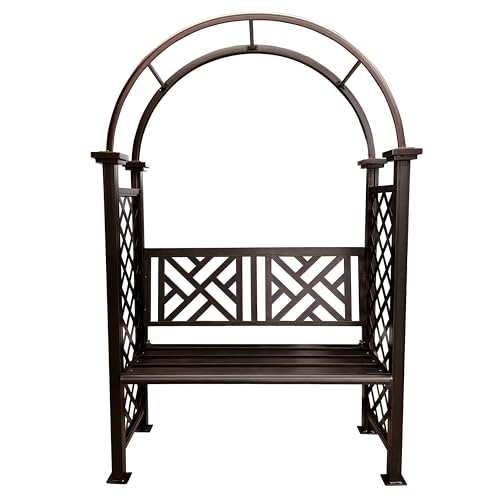 OAKLAND LIVING Oakland Living Bronze Aluminum Garden Arbor Arch with 2-Seater Bench
View on Amazon ↗
 VINGLI VINGLI 40.5" Patio Garden Bench,Anti- Rust Cast Iron Cast Aluminum…
View on Amazon ↗
 BONNLO Bonnlo 2 Seater Garden Bench Outdoor Bench Furniture Patio Bench…
View on Amazon ↗
Listing names and images come from Amazon and are rechecked against the live listings; last checked Nov 8, 2026. No prices shown; the current price is on the listing.
How to read this guide. This guide covers garden benches as a category, not any specific model. It is written from general knowledge of materials and outdoor furniture, without reading individual product documents or reviews. Check the seat height, width, and weight capacity on the listing before you buy.