Focus on two things: how much of the message is already printed and how the card will be delivered. Blank inside cards suit personal notes, while fully printed verses fit fast, low effort sending. Paper weight and envelope size decide whether it feels substantial and mails without extra postage.
What the Inside Decides Before You Buy
Check the inside before the front. A blank interior means you carry the message, so it suits thank you notes, apologies, or long updates. A short printed verse gives you a starting point, while a fully printed message asks only for a signature.
For sympathy or milestone cards, a printed verse can be safer when you do not know what to say. For close friends, a blank card with your own sentences often lands better.
Some cards print a line on the front and leave the rest empty. That hybrid works for birthdays when you want a quick joke plus a personal note.
Paper Weight Separates a Keepsake From a Receipt
Paper weight changes how the card feels in someone's hand. Light cardstock bends easily and can feel flimsy, while heavier stock stands upright on a shelf and resists creases in the mail.
Texture matters too. Smooth coated paper makes photos and bright colors pop, while cotton or linen finishes feel softer and take ink from a pen more evenly. If you plan to write a long note, avoid glossy insides that smear with gel pens.
Compare the paper specification in the listing. Terms like heavyweight, cotton, or textured are useful signals, but the actual thickness is best confirmed by the card's stated weight or GSM if the seller provides it.
Envelope Size and Extras Can Add Cost
A square card or an oversized card often requires extra postage because it does not fit standard letter sorting machines. Check the envelope dimensions against your postal service's standard size limits before mailing.
Folded cards usually mail as standard letters. Flat cards, sometimes called postcards, cost less to send but offer no privacy for the message.
Extras like foil, ribbon, or thick embellishments can make the envelope lumpy and trigger a nonmachinable surcharge. If the listing mentions a wax seal, a button, or a metal charm, assume you will pay more at the counter.
Where the Card Will Live After Opening
Think about where the card ends up. A desk, a fridge, a memory box, or a recycling bin all suit different designs. Cards that match a recipient's home style, or that carry a photo, are more likely to be kept.
For a card that must survive a year on a fridge, choose a thicker stock and avoid dark backgrounds that hide fingerprints. For a card that will be scanned or photographed, a flat design without heavy texture reproduces better.
Interactive cards with pop ups or moving parts are memorable but fragile. They work for a child's birthday or a retirement party, less so for a sympathy note that may be filed away.
Design Types and Their Tradeoffs
Cards split into a few design families. Photo cards put a personal image on the front, blank or verse inside. Illustrated cards carry an artist's style, from minimalist line work to busy patterns. Typographic cards lead with a phrase or a single word in large type.
Each family makes a different promise. A photo card says this moment mattered. An illustrated card says I picked a style I thought you would like. A typographic card says this exact phrase fits you.
Some cards combine these, but the dominant element usually sets the tone. Match that tone to the recipient's age, your relationship, and the occasion.
| Design style | Best occasion | Personal feel | Risk |
|---|---|---|---|
| Photo card | Family milestones | High, if the photo is yours | Looks dated if the photo is old |
| Illustrated | Birthdays, casual notes | Medium, reflects your taste | Style may miss the recipient's |
| Typographic | Humor, encouragement | Low, the words do the work | Can feel generic |
| Handmade or letterpress | Weddings, sympathy | Very high | Cost and fragility |
A letterpress or handmade card often uses thick cotton paper and a debossed impression. That texture signals care, but the card may cost as much as a small gift and can be damaged by a ballpoint pen.
Mistakes That Waste a Card
The most common mistake is buying a card for the occasion instead of the person. A generic birthday pun for a friend who hates puns reads as lazy, even if the card is beautiful.
Another mistake is ignoring the size. A 5 by 7 card in a standard envelope is safe, but a mini card can get lost in a gift bag, and an oversized card may not fit the recipient's storage.
Writing the message before checking the pen is a third error. Gel pens smear on coated paper, and heavy inks bleed through thin stock. Test on the back corner if you are unsure.
Reading a Listing Before You Buy
Check the inside view. If the listing only shows the front, ask the seller whether the inside is blank or printed. Many card listings include a photo of the interior, but some do not.
Confirm the folded size and the envelope size. Folded size tells you the card's footprint, while envelope size tells you whether it mails at standard rates.
Ask about the paper weight if it is not stated. A seller who cannot tell you the weight or GSM may be selling a flimsy card. Also confirm whether the envelope is included, since some cards ship without one.
Look for clues about the finish. Words like glossy, matte, uncoated, or textured describe how the card will feel and how your pen will perform.
When to Skip a Card Entirely
A card is not always the right move. For a coworker you barely know, a short email or a team signed card may be more appropriate than a personal card. For a gift that already includes a note, like a book with an inscription, a second card can feel redundant.
If you are sending a gift card, check the related guides on checking a gift card before you wrap it and the gift cards department for details that matter more than the paper card itself.
For digital gifts, a streaming card or a console card may be delivered by email, so a physical greeting card is optional. See console cards for gamers for how those fit.
Sometimes the better alternative is a handwritten note on quality stationery, which can feel more personal than a preprinted card. Or a small gift box that presents the item without a separate card.
Greeting Card Questions That Come Up Before Checkout
What size greeting card mails at standard postage?
In the US, a rectangular card that fits within 3.5 by 5 inches minimum and 4.25 by 6 inches maximum for postcards, or up to 6.125 by 11.5 inches for letters, usually mails at the standard rate. A 5 by 7 card in an A7 envelope is the most common choice. Square envelopes and cards over 6.125 inches tall often require extra postage.
Is a blank inside card better than a printed verse?
Blank inside cards work better when you have something specific to say and the time to write it. Printed verses work better when you want the card to carry the sentiment for you, or when you are sending many cards at once. For close relationships, a blank card with your own words usually feels more personal.
Can I use any pen on a greeting card?
Not always. Glossy or coated paper repels water based inks and causes smearing. Use a ballpoint or a permanent marker on coated stock. On uncoated, cotton, or textured paper, a gel or rollerball pen writes smoothly. Test the pen in a corner if the finish is unclear.
How much should I spend on a greeting card?
Budget cards under a few dollars are fine for casual occasions or when the gift is the main event. Mid range cards with better paper and original art suit birthdays and thank you notes. Premium cards, like letterpress or handmade, make sense for weddings, sympathy, or milestone anniversaries where the card may be kept.
Does a greeting card need an envelope?
Most folded cards include a matching envelope, but check the listing. Flat postcards do not need one. If you buy a card without an envelope, you can buy a pack of standard envelopes, but the card size must match. An envelope that is too tight can bend the corners.
Which Greeting Card to Pick for the Person in Front of You
For a friend's birthday or a thank you note, pick a blank inside card on medium weight, uncoated paper in a standard A7 envelope. Write three or four sincere sentences. For a sympathy card or a message to an acquaintance, switch to a fully printed verse on heavier stock, since it carries the sentiment when your own words are hard to find.
Real greeting card listings, so you can check the points in this guide against actual products. These are affiliate links: as an Amazon Associate we earn from qualifying purchases, at no extra cost to you.
 VIDABITA 60 Pack A7 Colored Blank Cards and Envelopes 5x7 inch,…
View on Amazon ↗
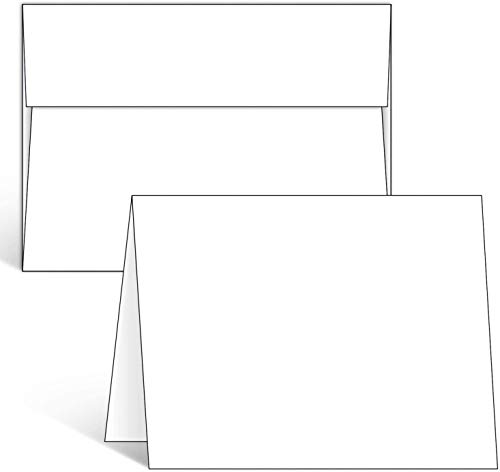 OHUHU Ohuhu 5x7 Blank White Cards and Self-Seal Envelopes 50 Pack…
View on Amazon ↗
 GOEFUN 100 Pack Goefun Cream Blank Cards and Envelopes 5x7 |…
View on Amazon ↗
Listing names and images come from Amazon and are rechecked against the live listings; last checked Nov 8, 2026. No prices shown; the current price is on the listing.
How to read this guide. Use this guide as a checklist to hold against any card listing, not as a verdict on a specific model. It is written from general knowledge of greeting card design and mailing rules, so verify dimensions and paper weight on the listing before you buy.