Start with the item's weight and shape, then match the bag's gusset and handle style. Paper bags with a flat base and reinforced handles suit boxy or midweight gifts. Fabric or laminated bags handle heavier or oddly shaped items. The main tradeoff is a crisp, recyclable paper look versus a stronger, reusable bag that costs more.
Match the Bag to What Is Going Inside
A gift bag fails when the item is heavier, taller, or pointier than the bag's design assumes. Check the listing's stated weight limit or, if absent, compare the handle attachment to the bag material. Paper handles glued flat to the inside wall suit cards, socks, or a single mug, while rope or ribbon handles threaded through reinforced holes carry more.
Shape matters as much as weight. A wide, flat board game needs a deep gusset so the side folds can open without ripping. A tall bottle needs a bag at least a third taller than the bottle so the neck does not poke through the top edge. Compare the bag's listed dimensions to the item, not to the folded bag you see in a photo.
For gifts that will sit under a desk or travel in a car, a bag with a firm cardboard base insert keeps the bottom from sagging. Some paper bags skip this insert to save cost, and the bottom can tear when the gift shifts.
Handles Are the First Thing to Fail
Handle design predicts whether the bag survives one carry or twenty. Die cut handles punched into the paper itself are the weakest, since the cut edges concentrate stress at the top corners. Twisted paper rope handles are stronger, but the knots can unravel if the rope is thin. Ribbon handles look elegant but can dig into a hand under a heavy load.
For anything over a few pounds, look for handles that pass through a metal or plastic grommet, or that are sewn into a fabric seam. A reinforced patch behind the handle on the inside of the bag spreads the load. If the listing does not show the inside, ask whether the handle is glued, stapled, or sewn.
Carry comfort also depends on handle length. Short handles force the bag against the body, which can crush tissue paper or a bow. Long handles let the bag swing and snag on door frames. A drop of 4 to 6 inches suits most adult hands.
Gussets, Bases, and the Tissue Paper Problem
The gusset is the side or bottom fold that lets a flat bag become three dimensional. A narrow gusset of 2 to 3 inches suits flat items like books or a folded shirt. A wide gusset of 4 to 6 inches suits bulky items like a blanket, a toy, or a boxed candle set. Some bags have a bottom gusset only, which works for boxy items but not for round ones.
Tissue paper changes the fit. A few sheets fluffed over the top add height and width, so a bag that looks roomy empty may be tight once filled. Size up one bag size if you plan to add tissue and a card. If the bag arrives flat, open it fully and check that the side folds lie flat, not buckled.
A base insert matters for soft gifts. Without one, a bag holding a plush toy or a scarf can collapse into a lumpy shape. Many fabric bags include a removable base board. For paper bags, a piece of cardboard cut to size works, but it may slide unless the bag has a taped or glued bottom.
Paper, Laminated, and Fabric Bags Trade Different Things
| Material | Best for | Tear risk | Reuse life | Recyclable |
|---|---|---|---|---|
| Flat paper | Light, boxy gifts | High at corners | One or two uses | Usually yes |
| Laminated paper | Midweight gifts, glossy look | Medium at handles | A few uses | Usually no |
| Nonwoven fabric | Odd shapes, medium weight | Low | Many uses | No |
| Woven or canvas | Heavy or fragile items | Very low | Years | No |
Lamination adds a plastic film that resists moisture and small snags, but it prevents the bag from breaking down in a paper recycling stream. If sustainability matters, check whether the bag is marked recyclable or compostable, and whether the handles must be removed first.
Fabric bags cost more up front but replace a wrapping paper habit. A nonwoven bag is cheaper than canvas but can pill or develop small holes at the seams after repeated use. Woven canvas or cotton duck holds its shape and takes a folded crease well.
Reading a Listing Before You Buy
Product photos flatten the bag, so check the unfolded dimensions and the gusset width in the description. A bag listed as 10 by 8 by 4 inches is 10 tall, 8 wide, and 4 deep when open. Compare that to your item with tissue added, and leave at least an inch of clearance on all sides.
Look for a stated weight capacity. Many paper bags list none, which is a signal to keep the load light. Fabric bags often list a capacity in pounds, but treat that as a maximum for a short carry, not a comfortable one.
Check whether the bag is sold flat or preassembled. Flat bags arrive in a bundle and need folding open, which can leave creases. Preassembled bags ship with the base already formed, but they take more storage space. Ask the seller about handle attachment if the listing only shows the front.
- Unfolded dimensions and gusset width
- Handle attachment: glued, stapled, sewn, or grommeted
- Base insert included or not
- Weight capacity or a note that none is listed
- Recyclability or material code for paper bags
Mistakes That Leave a Gift on the Floor
The most common mistake is matching the bag to the gift's footprint, not its volume. A bottle fits the base of a small bag but pokes out the top, so the bag tears at the side seam. Check the height and the gusset together.
Overloading a paper bag with a single heavy item is another failure point. Even if the handles hold, the bottom seam can split. For anything over about 5 pounds, move to a fabric bag or double bag with a cardboard base.
Reusing a bag without checking the handle knots or the bottom corners leads to a mid party drop. Inspect the inside of the handles and the base fold before reusing, and reinforce with clear tape on paper if needed.
Who Should Skip a Gift Bag Altogether
Gift bags work poorly for very large or very soft items. A bulky blanket or a set of pillows overfills the widest standard bags and looks strained. A soft, shapeless item like a robe or a bundle of scarves will slump unless the bag has a firm base and plenty of tissue.
For oddly shaped gifts like a floor lamp, a bicycle accessory, or a large plant, wrapping paper or a gift box may fit better. A box hides the shape and gives a stable surface for a bow. If the gift must be mailed, a rigid gift box protects better than a bag that can crush in transit.
If the recipient values the unwrapping ritual, a box with a lid and separate tissue creates more anticipation than a bag. Gift bags are faster to open and are often reused, which some gift givers see as a plus and others as a missed moment.
Care and Long Term Costs
Paper gift bags have a short life and a low cost per use, which makes them a good fit for a one time event. Laminated paper lasts a few uses but cannot be recycled, so it becomes waste sooner than fabric. Fabric bags cost more up front but replace dozens of paper bags over years.
Fabric bags can be spot cleaned with a damp cloth, but most should not go in a washing machine because the handles or base board can warp. Canvas bags without a base insert can sometimes be machine washed on gentle and air dried, but check the care tag.
Storage affects lifespan. Fold paper bags flat and keep them away from moisture and direct sun, which fades prints and weakens fibers. Hang fabric bags by the handles or fold them with the base board removed so they do not develop permanent creases.
Gift Bag Questions Worth Asking Before You Pay
How do I know if a gift bag is strong enough?
Check the handle attachment and the base. Rope or ribbon handles that pass through reinforced holes or grommets carry more than die cut paper handles. A glued or taped base with a cardboard insert supports heavier items. If no weight limit is listed, keep paper bags under about 5 pounds.
What size gift bag do I need?
Measure the gift at its tallest, widest, and deepest points, then add at least an inch on each side for tissue. The bag's listed dimensions are usually the open size, including the gusset. A bag that is 10 by 8 by 4 inches fits an item up to about 9 by 7 by 3 inches with tissue.
Can I recycle a paper gift bag?
Flat paper bags without lamination, foil, or glitter are usually recyclable, but remove any rope or ribbon handles and the base insert first. Laminated or coated paper goes in the trash in most programs. Check your local rules, since some accept only plain kraft paper.
Are fabric gift bags worth the extra cost?
For heavy or oddly shaped gifts, yes. A nonwoven or canvas bag with sewn handles holds a bottle, a book, or a set of jars without tearing. If you give gifts often or want the bag to be part of the present, fabric costs less per use than repeated paper bags.
How much tissue paper should I put in a gift bag?
Two or three sheets fluffed over the top is enough for most bags. Use more only if the gift is small and you want to hide it. Too much tissue makes the bag bulge and can tear the side seams when you try to close the top.
The Gift Bag to Reach for First
For a typical birthday or host gift under 5 pounds, a flat paper bag with a 3 to 4 inch gusset, rope handles through grommets, and a taped base insert covers most situations. It looks crisp, recycles in many areas, and costs little. If the gift is a bottle, a heavy book, or something oddly shaped, switch to a nonwoven fabric bag with sewn handles; the paper bag will tear at the handle or the bottom seam before the party ends.
Real gift bag listings, so you can check the points in this guide against actual products. These are affiliate links: as an Amazon Associate we earn from qualifying purchases, at no extra cost to you.
 TAOBARY 12 Pack Green Metallic Gift Bags with Tissue Paper and…
View on Amazon ↗
 RELITHICK ReliThick 12 Pack Paper Gift Bag with Handles & Tissue,…
View on Amazon ↗
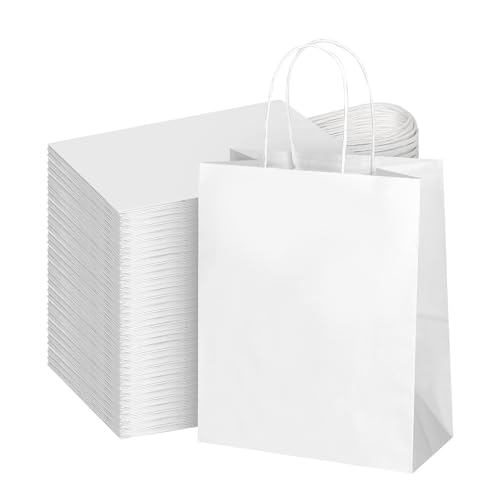 BAGMAD bagmad 100Pcs Pack 8x4.75x10 inch Medium White Kraft Paper Bags…
View on Amazon ↗
Listing names and images come from Amazon and are rechecked against the live listings; last checked Nov 8, 2026. No prices shown; the current price is on the listing.
How to read this guide. Use this guide as a checklist to hold against any listing: compare the gusset, handle attachment, and base insert to the gift's weight and shape. It is written from general knowledge of how gift bags are made and does not evaluate individual models, so check the unfolded dimensions and weight limit before you order.