Force feedback decides most of the experience. Gear driven wheels are cheap but noisy and notchy; belt driven wheels are smoother; direct drive wheels are the most detailed and the most expensive. Rotation range matters next, at least 900 degrees for realistic driving. After that, mounting and pedals separate wheels you will keep from ones you will replace.
Force Feedback Separates Wheels You Keep
The feedback system is the first thing to check. Gear driven wheels use plastic gears to transmit force. They are the least expensive, but the gears rattle and feel notchy when the game sends rapid force changes. For casual racing this is tolerable; for longer sessions it becomes tiring.
Belt driven wheels replace some or all gears with a belt. The result is quieter operation and smoother force transitions. They cost more than gear wheels but less than direct drive, and they suit players who race several times a week but do not want a full simulator rig.
Direct drive wheels mount the rim directly to a large motor. There are no gears or belts to soften the signal, so every bump and tire slip reaches your hands instantly. These wheels are heavy, often require a sturdy cockpit or stand, and cost the most. The tradeoff is a level of detail that belt and gear wheels cannot match.
Check the listing for the force feedback type before anything else. A wheel that only says vibration feedback or rumble is not the same as force feedback; it will not push back against your hands the way a real steering wheel does.
Rotation Range Changes How a Car Feels
Rotation range is how far the wheel turns from lock to lock. Real road cars often need 900 degrees or more, while race cars use less. A wheel with only 180 or 270 degrees of rotation feels like an arcade cabinet, not a car.
For most players, 900 degrees is the floor. It lets you catch slides, make hand over hand turns, and drive road cars naturally. Some wheels go to 1080 degrees, which suits truck simulators. Wheels below 900 degrees are fine for kart games or very casual play, but they limit what the wheel can do later.
Compare the rotation range in the listing, not the marketing photos. Some wheels advertise adjustable rotation, which is useful. A fixed 270 degree wheel will feel wrong the first time you try to parallel park in a simulator.
Pedal Sets Are the Hidden Half of the Cost
Pedals come with most wheels, but quality varies widely. Basic sets have two plastic pedals with no resistance. They work, but braking feels like pressing a spring. Mid range sets add a third pedal and a progressive brake, which uses foam or a load cell to get firmer as you press harder.
A load cell brake measures pressure instead of distance. This is a major upgrade for consistent braking, but it usually appears on more expensive sets. If you plan to race competitively, check whether the wheel supports a pedal upgrade later. Some entry wheels lock you into their bundled pedals.
Pedal mounting matters too. Plastic pedals slide on carpet unless they have a gripper strip or hard mount holes. Check the listing for pedal weight and base design, especially if you play on a hard floor.
Mounting Decides Where the Wheel Lives
A wheel that is hard to set up gets used less. Most wheels use a clamp that tightens onto a desk or table edge. Check the clamp depth against your desk thickness; some clamps open only so far. A wheel with a quick release clamp is easier to move when you need the desk back.
Hard mounting uses bolts through a cockpit or wheel stand. This is far more rigid and stops the wheel from flexing under strong force feedback, but it means the wheel has a permanent home. If you play in a living room or on a shared desk, a clamp is the practical choice.
Also check the wheel base weight. A light wheel with strong force feedback can tip or slide on a thin desk. A heavier base helps, but it makes setup and storage harder. For couch gaming, a dedicated stand that holds the wheel and pedals together is often worth more than a slightly better wheel.
What to Check in the Listing Before You Buy
Start with the force feedback type, rotation range, and pedal set. Those three explain most of the price difference between wheels. Then check compatibility: the wheel must list your console or PC explicitly. Some wheels work on one platform only, and a separate adapter may not exist.
Look at the rim size and material. A small 10 inch rim feels toy like; a 11 to 12 inch rim is closer to a real car. Leather or rubber grips last longer than bare plastic. Paddle shifters should be metal or firm plastic, not flimsy.
If the listing does not state the rotation range, feedback type, or pedal resistance, ask the seller before buying. A wheel that hides these specs is usually cutting corners on them.
Ignore marketing terms like pro, racing grade, or esports ready. They do not tell you anything about the mechanism. Focus on the physical specs that change how the wheel feels in your hands.
Casual Couch Play Needs Less Than a Full Rig
For casual games and short sessions, a gear or belt driven wheel with a clamp mount is enough. Look for 900 degrees of rotation and a pedal set with at least a rubber brake. You do not need a load cell or a cockpit.
If you play from a couch, a wheel stand is the best upgrade. It holds the wheel and pedals at a comfortable height and folds away when not in use. A wheel clamped to a coffee table is too low for most adults and puts strain on your wrists.
For family gaming, pick a wheel with a simple button layout and a rim that is not too heavy. Children struggle with strong force feedback, so dial it down in the game settings. A gear driven wheel is actually fine here because young players rarely notice the notchy feel.
Long flights and travel are not a good fit for a full size steering wheel. A compact gamepad or a controller with a phone clip is more practical. If you want a wheel like feel on the go, a small, clamp free wheel with low force feedback is the only realistic option, but it will feel limited compared to a desk wheel.
How the Main Wheel Types Compare
| Feedback style | Feel quality | Noise level | Setup effort | Suits |
|---|---|---|---|---|
| Gear driven | Notchy, basic | Loud rattle | Low, clamp on | Casual and family play |
| Belt driven | Smooth, moderate | Quiet | Low to medium | Regular racers on a desk |
| Direct drive | Very detailed | Fan noise | High, needs rigid mount | Serious sim racers |
Gear wheels win on price and simplicity. Belt wheels balance feel and convenience. Direct drive wins on feedback detail but demands a dedicated space and a bigger budget.
Mistakes That Send Wheels Back to the Store
The most common mistake is buying a wheel without force feedback. These wheels only vibrate or spring back to center. They feel like a toy and do not teach you anything about car control.
Another mistake is ignoring desk thickness. A clamp that opens to 2 inches will not fit a 3 inch desk. Measure before you order.
Buying a wheel for the wrong platform is easy to do. A wheel made for Xbox will not work on PlayStation without a compatibility hub, and even then support is not guaranteed. Check the box or listing for your exact console.
Finally, do not buy a direct drive wheel for a flimsy desk. The motor torque will shake the desk and can damage it. If you want direct drive, budget for a wheel stand or cockpit at the same time.
Long Term Costs Are Mostly in Upgrades
A steering wheel has few consumables. The main wear items are the pedal springs and the rim covering. Rubber grips can peel after a few years of heavy use; leather lasts longer. Replacement pedal springs are cheap if the wheel uses standard sizes.
The bigger long term cost is the upgrade path. Once you have a wheel, you may want a shifter, a handbrake, a better pedal set, or a cockpit. Check whether the wheel base allows these add ons before you buy. Some entry wheels are closed systems with no upgrade options.
If you play racing games regularly, a wheel stand or cockpit is the single best long term investment. It saves your desk, improves your posture, and makes the wheel feel more realistic. Other gaming hardware guides cover accessories like console and PC gaming gear that pair well with a wheel.
Steering Wheel Questions Before You Spend
Is a gaming steering wheel worth it for casual gamers?
For casual racing games, a gear or belt driven wheel with 900 degrees of rotation is worth it if you play at least a few times a month. It makes driving games more involving than a gamepad. If you only race occasionally or mostly play other genres, a standard controller may be the better use of money.
Which gaming steering wheel is best for a small desk?
Look for a clamp mount with a narrow base and a wheel that is not too heavy. A belt driven wheel around 11 inches in rim diameter is a good balance. Check the clamp opening against your desk thickness and make sure the pedals have a non slip base so they do not slide on hard floors.
What is the difference between gear, belt, and direct drive wheels?
Gear driven wheels use plastic gears, which are cheap but noisy and notchy. Belt driven wheels use a belt for smoother, quieter force. Direct drive wheels attach the rim straight to a motor, giving the strongest and most detailed feedback but at a higher price and with more weight.
Should I buy a wheel with force feedback or just vibration?
Buy force feedback. Vibration only shakes the wheel; force feedback pushes back against your hands based on what the car is doing. That resistance is what makes a wheel feel like driving instead of playing a video game. Wheels without force feedback are rarely satisfying after the first hour.
How do I compare gaming steering wheels before buying?
Compare four specs: force feedback type, rotation range, pedal set, and mounting. Then check platform compatibility and rim size. Those four specs explain most of the price difference. Ignore marketing labels and focus on the physical mechanism and the included pedals.
Which Steering Wheel Fits Your Racing
A casual racer on a desk or coffee table should start with a belt driven wheel, 900 degrees of rotation, and a clamp mount. It feels smooth, sets up in minutes, and does not demand a cockpit. For a couch player who wants a stable setup without bolting anything to furniture, choose a wheel with a folding stand and a gear driven base; the stand matters more than the feedback detail in that room.
Real gaming steering wheel listings, so you can check the points in this guide against actual products. These are affiliate links: as an Amazon Associate we earn from qualifying purchases, at no extra cost to you.
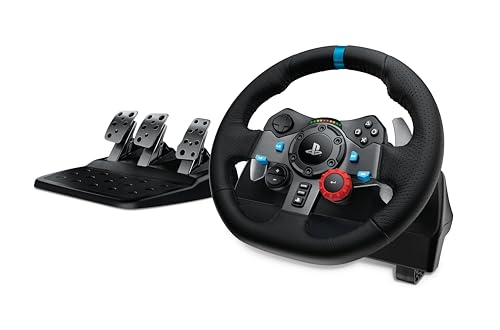 LOGITECH G Logitech G29 Driving Force Racing Wheel and Floor pedals for…
View on Amazon ↗
 PXN PXN V99 3.2Nm Force Feedback Gaming Steering Wheel | 270-900…
View on Amazon ↗
Listing names and images come from Amazon and are rechecked against the live listings; last checked Nov 8, 2026. No prices shown; the current price is on the listing.
Scope and limits. This guide covers gaming steering wheels as a category, not any individual model. It is written from general knowledge of how the hardware works, so verify dimensions like clamp depth and rotation range on the listing before you order.