Start with sensor distance and how you read the result. A no touch model held too far gives a low number, while a contact model needs the right spot. For elderly family members or a caregiver doing repeated checks, pick one with memory recall and a clear backlit screen. Skip extra app features unless you track readings over time. The real tradeoff is speed against consistency.
The Distance Between Sensor and Skin Is the Whole Check
Most wrong readings come from the gap, not the device. A no touch forehead thermometer reads infrared heat from a spot on the skin. Move it from the recommended distance and the spot changes size. The number can drop or rise without any real change in body temperature.
Check the listing for the stated distance, often around 1 to 2 inches for no touch models. A guide light or a distance sensor helps, but it still asks you to hold the device steady. Contact models remove most of that error by touching the temple or forehead, but they need a clean probe and a dry forehead.
For a caregiver checking an elderly family member who cannot sit still, no touch is easier. For a person who checks their own forehead every morning, contact is more repeatable.
No Touch, Contact, or Dual: What the Design Changes
No touch models avoid waking a sleeping child or touching irritated skin. They are fast and shareable between people. The tradeoff is that a draft, a sweaty forehead, or a hand that shakes can move the reading.
Contact models press against the skin. They are less sensitive to room air, but they need a clean sensor and a dry surface. Hair or lotion can interfere. Dual mode models let you switch, but most people settle into one habit and stop using the other.
For travel, a small no touch model fits a bag and needs no probe covers. For home monitoring, a contact or dual model may feel more consistent day to day.
| Design | Distance habit | Cleanup effort | Reading steadiness | Suits |
|---|---|---|---|---|
| No touch | Hold 1 to 2 in away | None, no skin contact | Can vary with angle | Sleeping kids, shared use |
| Contact | Touch temple or forehead | Wipe probe after each use | More repeatable | Solo daily checks |
| Dual mode | Switch per mode | Wipe probe in contact mode | Depends on mode used | Homes with mixed needs |
Read the Screen, Not Just the Beep
A fever threshold is not the same for every person. Many forehead thermometers show a color or a long beep for a high reading. That helps an elderly family member who cannot read small numbers. But the actual number matters more for a doctor call.
Look for a backlit display with large digits. Check how many past readings the memory holds. A memory of 10 to 30 readings is common and enough for a week of checks. Some models show an average or a trend, which is more useful than a single stored number.
Ambient temperature can shift the result. Some models display room temperature or correct for it. If the listing does not mention that, assume you should wait a few minutes after coming inside from cold air before measuring.
Features That Help and Ones That Just Add Clutter
A silent mode matters for a sleeping child. A fever alarm helps an older adult who forgets what number counts as high. A Celsius and Fahrenheit switch matters if you share the device with family abroad.
Bluetooth and app tracking are useful only if you log readings over weeks. For a one off check, the app adds setup time. A voice readout can help a caregiver whose hands are full, but it may wake a sleeping person.
Skip features like a built in flashlight or a room object mode unless you already use them. They do not make the body reading better. A soft carrying pouch or a wall mount loop is more practical for a household with one shared thermometer.
Where You Measure Changes the Answer
Forehead readings are surface readings. They run slightly lower than an oral reading for many people. The normal range shown in the manual is the one to follow, not the old 98.6 degree number from an oral thermometer.
Sweat, hair, or a hat can lower the reading. Wipe the forehead dry and push hair back. Wait a few minutes after exercise, a hot shower, or coming in from the cold. For an elderly family member who has been lying on one side, measure the side that was not pressed into a pillow.
For small households, one shared no touch model works. For frequent travel, a compact contact model with a cap is easier to keep clean in a bag. Caregivers may want two modes: no touch for a quick sweep, contact for a second check.
When a Forehead Thermometer Is the Wrong Tool
A forehead thermometer is not a medical device for everyone. If a person has a very low or very high reading that does not match how they feel, confirm with an oral or ear thermometer. Forehead models can miss a low grade fever in some situations.
For infants under three months, a rectal reading is the standard advice from pediatric groups. A forehead model can be a first check, but not the only one. For someone with a known circulation issue or a very thin forehead, the surface reading may be less reliable.
If you need a reading for a telehealth visit, write down the time, the number, and the method. A forehead reading is not interchangeable with an oral one. Tell the clinician which type you used.
Batteries, Calibration, and the Cost of Owning One
Most forehead thermometers run on two AAA batteries. Some use a coin cell. Check the listing for the battery type and whether it is included. A model with an auto off function will last longer between changes.
Clean the sensor with a soft cloth and a little alcohol. Do not submerge the device. Keep it out of direct sun and away from a heater. A stored thermometer that has been in a cold car should sit at room temperature for a while before use.
Some models claim self calibration, but that usually means a reset, not a true calibration. If the readings drift over time, compare against a known oral thermometer on a healthy person. A forehead model should not need yearly replacement if it is looked after.
The Mistake That Sends You Back to the Store
The most common mistake is buying by brand name alone and not checking the distance habit. A top rated model may still give a low reading if you hold it like a contact thermometer. Read the manual once and practice on yourself before you need it at 3 a.m.
Another mistake is expecting the same number as an oral thermometer. A forehead reading is a different measurement. Compare forehead numbers to forehead numbers, not to the last doctor visit.
If you are buying for an elderly family member, choose a model with a simple one button start and a big number. If you are buying for travel, choose a model with a cap and a small case. The right pick is not the most expensive one, it is the one whose distance and display match how you will actually use it.
Forehead Thermometer Questions People Ask Before Buying
How accurate is a forehead thermometer?
A forehead thermometer reads infrared heat from the skin surface. It is accurate enough for a home check when you hold it at the listed distance on a dry forehead. It runs slightly lower than an oral reading for many people. Use its own normal range, not the oral 98.6 degree standard.
Which forehead thermometer is best for elderly family members?
Look for a no touch model with a large backlit display and a fever alarm. A one button start helps if hands are unsteady. Memory recall of at least 10 readings lets a caregiver see a trend. Skip app features unless someone will actually open the app.
Can I use a forehead thermometer on a sleeping child?
Yes, a no touch model can read a sleeping child without waking them. Hold it at the listed distance, usually 1 to 2 inches, and use silent mode if available. Wait a few minutes if the child has been lying on that side of the forehead.
Is a forehead thermometer worth it for travel?
Yes, if you want a quick check without probe covers. A compact no touch or contact model with a cap fits a bag. Let it sit at room temperature for a while after a cold flight before measuring. A dual mode model adds flexibility but also adds size.
What is the difference between a no touch and a contact forehead thermometer?
A no touch model reads from about 1 to 2 inches away. It is faster and shared more easily, but distance and angle can shift the number. A contact model touches the temple or forehead. It gives a steadier reading but needs a clean dry probe.
The Pick That Fits a Daily Home Check
A caregiver checking an elderly family member or a small household doing a daily sweep gets the most from a no touch model with a large backlit display, a fever alarm, and memory for at least 10 readings. That combination is fast, shareable, and easy to read. If you check only yourself every morning and want a steadier number, choose a contact model with a cleanable probe instead. Skip the app and extra modes unless you already track readings over weeks.
Real forehead thermometer listings, so you can check the points in this guide against actual products. These are affiliate links: as an Amazon Associate we earn from qualifying purchases, at no extra cost to you.
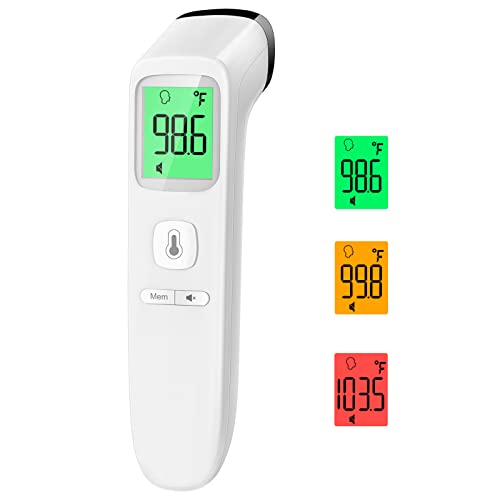 GOODBABY Goodbaby No-Touch Thermometer for Adults and Kid, Accurate Baby Thermometer…
View on Amazon ↗
 IHEALTH iHealth No-Touch Forehead Thermometer for Adults, Kids, Babies PT3 |…
View on Amazon ↗
 HETAIDA Digital Thermometer for Adults and Kids, No Touch Forehead Thermometer…
View on Amazon ↗
Listing names and images come from Amazon and are rechecked against the live listings; last checked Nov 8, 2026. No prices shown; the current price is on the listing.
What this guide is. This guide is written from general knowledge of how forehead thermometers work as a category, not from testing individual models or reading their reviews. It cannot tell you whether a specific listing has accurate distance markings or a reliable sensor, so check those details on the product page before buying.