Two checks decide most floating TV shelf purchases: the wall you are drilling into and the true weight of your TV plus anything stored on the shelf. A solid stud mount handles heavy loads and resists sag, while drywall anchors limit you to lighter setups. The main tradeoff is clean, cord free appearance against the effort of hiding cables in the wall.
The Wall Decides the Limit
The studs behind your drywall carry the real load. A floating shelf mounted into two studs with proper lag screws can hold a heavy TV and media box without sagging. Drywall anchors alone support far less, often only a fraction of what the shelf itself can carry.
Check what your wall is made of before ordering. Wood studs accept standard screws. Metal studs need special toggles, and brick or concrete requires masonry anchors. A shelf that works in one apartment may fail in the next if the wall type changes.
Use a stud finder to locate the framing and measure the spacing. Many floating shelves have fixed mounting holes, so the hole pattern must line up with your studs. If it does not, you may need a mounting plate that spans between studs.
Weight Ratings Hide a Simple Math Problem
A shelf rated for 50 pounds does not mean 50 pounds of TV. That number often assumes perfect installation into studs and may include the shelf's own weight. Add the TV, a streaming box, a game console, and cables, and the real load climbs quickly.
Compare the listed capacity against your actual setup. A 55 inch TV can weigh 30 to 45 pounds, and a shelf itself often weighs 10 to 15. Leave a margin of at least 20 percent below the rating, and treat any rating that lacks a wall type as marketing.
The depth of the shelf also matters. A TV base needs a flat surface deep enough that the feet do not overhang. Measure the front to back distance of your TV's stand, then add an inch so cables can bend without pinching.
Cable Routes Split Clean and Quick
The cleanest floating shelves hide cables inside the wall, but that requires cutting into drywall and running wire through the stud cavity. It is a permanent change that many renters cannot make. The simpler option is a shelf with a hollow back channel or a raised lip that hides cables behind the TV.
Open shelves with no cable management leave wires dangling below the TV. That can look messy in a living room or home office. If you cannot drill into the wall, look for a shelf with a built in cable tray on the underside.
Some designs route power and HDMI through a central column. This keeps everything tidy but forces your TV to sit at a fixed height. Measure where the TV ports are, because a low shelf can block access to an HDMI input on the back of the panel.
Three Shelf Shapes and Where They Fit
| Shelf shape | Weight feel | Cable hiding | Best room |
|---|---|---|---|
| Flat open board | Light to medium | None built in | Small living rooms |
| Box with front lip | Medium to heavy | Slots behind lip | Family homes |
| Hollow channel back | Heavy | Inside back channel | Home offices |
| Corner wedge | Light | Limited | Apartment corners |
Flat boards are the easiest to mount and suit a light TV with a soundbar. The box shape adds a front lip that holds a media player and hides a power strip behind it. A hollow channel back is the most work to install but gives a near invisible wire path.
Corner wedges solve the awkward space where two walls meet, but they usually hold less weight and force the TV to sit at an angle. Check that the viewing angle works from your sofa before choosing one.
A Floating Shelf Is Not a TV Mount
A floating shelf supports the TV from below, but it does not secure the TV to the wall. In a home with children or pets, a freestanding TV on a shelf can tip forward if bumped. If safety is a concern, pair the shelf with a strap or choose a dedicated wall mount instead.
The shelf also moves the TV farther from the wall than a flush mount. That extra depth can make a narrow hallway or small living room feel tighter. Measure the total depth of shelf plus TV stand and compare it to the space you have.
For a home office, a floating shelf under a monitor can hold a laptop dock and keep the desk clear. Just verify that the shelf height leaves enough clearance for your keyboard and that the weight rating covers a monitor arm if you plan to attach one.
Reading the Listing Before You Buy
Look for three numbers in the listing: the weight capacity, the distance between mounting holes, and the shelf depth. If any of these are missing, ask the seller before ordering. A vague rating like 'holds most TVs' tells you nothing about your wall.
Check the material thickness. A shelf made from thin particle board can flex over time even if the brackets are strong. Solid wood or thick MDF with a reinforced back holds its shape better. The finish matters less than the core.
Ask the seller which wall types the included hardware supports. Some shelves ship with anchors for drywall only, which means you will buy separate lag screws for studs or masonry anchors for brick. That extra cost should be part of your budget.
Rooms That Should Skip This Shelf
A narrow hallway is a poor place for a floating TV shelf. The TV protrudes into the walking path, and the viewing angle is rarely comfortable. A slim wall mount that pulls the TV tight to the wall works better there.
Renters who cannot drill into the wall should skip a floating shelf entirely. Adhesive strips and tension systems are not rated for a TV load. A low media console on the floor is the safer choice when you cannot use screws.
If you plan to move the TV frequently or rearrange the room often, a wheeled cart or simple stand saves you from patching holes. A floating shelf is a semi permanent decision, and each mount leaves marks in the wall.
Long Term Care and the Hidden Cost of Moving
A floating shelf itself needs almost no maintenance. Dust the surface and check the screws once a year to make sure nothing has loosened. If the wall is in a humid room, choose a sealed finish so the shelf does not warp.
The real long term cost shows up when you move out. Patching drywall holes, repainting, and possibly repairing a damaged stud can cost more than the shelf. If you rent, factor that into the decision before you mount anything.
Cables routed inside the wall should be rated for in wall use. Standard power cords behind drywall can overheat and are against code in many areas. An electrician can install a proper outlet plate if you want the cleanest and safest result.
Floating TV Shelf Questions That Come Up Before Mounting
Is a floating TV shelf safe for a heavy TV?
Only if it is mounted into studs with hardware rated for the combined weight of the TV, shelf, and anything stored on it. Drywall anchors alone are not safe for heavy loads. Check the listing's weight capacity, then subtract the shelf's own weight and leave at least a 20 percent margin.
What is the difference between a floating shelf and a TV wall mount?
A floating shelf supports the TV from underneath like a small table, while a wall mount grips the TV from behind and secures it to the wall. A shelf leaves the TV freestanding, so it can tip forward. A wall mount holds the TV tight and often allows tilting or swiveling.
How do I hide cables on a floating TV shelf?
You have three options. A shelf with a hollow back channel hides wires behind the TV. A box shelf with a front lip tucks a power strip behind the lip. The cleanest method is running cables inside the wall, but that requires cutting drywall and using in wall rated wire.
Can I mount a floating TV shelf on drywall without studs?
You can, but only for a very light setup. Heavy duty drywall anchors hold a small TV and shelf, but the rating drops sharply as the load pulls outward. For anything over about 30 pounds total, you need at least one stud or a mounting plate that spans two studs.
Which floating TV shelf works in an apartment corner?
A corner wedge shelf fits the angle where two walls meet and holds a small TV at a diagonal. It usually has a lower weight capacity than a straight shelf, so check that your TV is light enough. The viewing angle from the sofa also needs to work with the diagonal position.
A Floating TV Shelf That Earns Its Wall Space
A buyer with a standard wood stud wall and a 40 to 55 inch TV should look for a box shelf with a front lip and a weight rating at least 30 percent above the total load. That shape hides a power strip, holds a media player, and resists sag better than a flat board. For a renter who cannot drill into studs, skip the floating shelf and choose a low media console instead. It costs less in the long run and leaves the wall untouched.
Real floating tv shelf listings, so you can check the points in this guide against actual products. These are affiliate links: as an Amazon Associate we earn from qualifying purchases, at no extra cost to you.
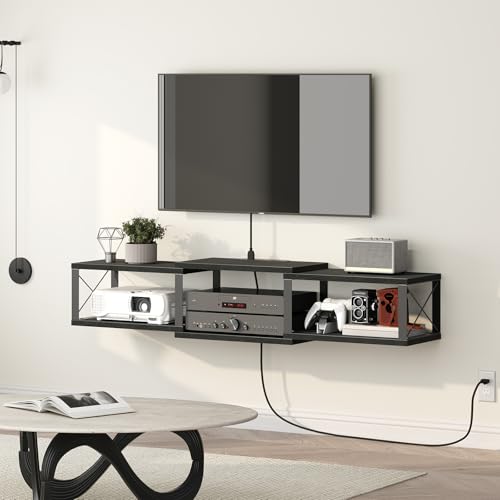 MAHANCRIS MAHANCRIS 43.7” Floating TV Stand with Power Outlet, Wall-Mounted Entertainment…
View on Amazon ↗
 HOOBRO HOOBRO 55" Floating TV Stand with Power Outlets, Modern Wall…
View on Amazon ↗
 IBUYKE IBUYKE Floating TV Stand Wall Mounted with Power Outlet,Modern Wood…
View on Amazon ↗
Listing names and images come from Amazon and are rechecked against the live listings; last checked Nov 8, 2026. No prices shown; the current price is on the listing.
Scope and limits. This guide is written from general knowledge of how floating shelves work on different wall types and under different loads. It does not evaluate any specific model, so check the mounting hole spacing, weight rating, and included hardware on the listing before you buy.