Two factors decide most evaporative cooler purchases: your local climate and how much air you can move through the room. Dry heat with an open window or door makes these coolers effective and cheap to run. Humid climates or sealed rooms turn them into noisy fans that leave surfaces damp. Check airflow, pad area, and water capacity against the square footage you actually need to cool.
Why dry air is the real fuel
An evaporative cooler lowers air temperature by pulling dry air across wet pads. Water evaporates, and that evaporation absorbs heat. The air leaving the unit is cooler but also carries more moisture.
This process only works when the incoming air is dry enough to absorb water. In places like the Southwest or high desert, that is most summer afternoons. In a humid climate, the air is already close to saturation, so little evaporation happens. You get a damp breeze instead of real cooling.
Check your local dew point or relative humidity before shopping. A dew point under about 55°F usually means an evaporative cooler can help. When the dew point stays above 60°F, a refrigerated air conditioner or a dehumidifier plus a fan is a more predictable choice.
Airflow first, tank size second
Cooler ratings usually list cubic feet per minute, or CFM, but the number only matters next to your room size and ceiling height. A small bedroom may need 1,500 to 2,500 CFM. A large garage or open living area may need 4,000 CFM or more. Compare airflow to the volume of the space, not just floor area.
More important than the fan speed setting is where the moist air goes. An evaporative cooler pushes air into a room, so the room needs an exit path. A window cracked a few inches on the opposite side lets humid air leave and keeps the cooling loop moving. In a sealed room, humidity builds until the cooler stops helping.
The tanks on many portable models hold 5 to 10 gallons. That sounds like a lot until a hot afternoon evaporates several gallons in a few hours. A larger tank or a hose connection reduces how often you refill. Check whether the listing gives a runtime at the airflow you plan to use.
Pad size and material decide the cooling ceiling
The wet pad is where evaporation happens, so its area and thickness set the upper limit on cooling. Thicker pads hold more water and expose more surface to the air. A compact personal cooler with a thin pad can cool the air directly in front of it but will not change the temperature across a room.
Most pads are made from aspen wood fiber or synthetic media. Aspen pads are inexpensive and work well but break down over a season. Synthetic or rigid media pads last longer and resist sagging, though they cost more to replace. Check how the pad is removed, because some units hide it behind a panel that takes several screws to open.
Mineral scale is the long term enemy of any pad. Hard water leaves deposits that block airflow and reduce evaporation. A cooler with a pad you can rinse or replace without tools will get cleaned more often. If your water is very hard, expect to replace pads more frequently or use a scale treatment.
Portable, window, or ducted: where the moisture lives
The main design types differ in where they sit and how much moist air they move. A portable room cooler on casters is the easiest to set up but usually has the smallest pad area. A window mounted cooler pulls air from outside and can cool one large room well. A ducted whole house cooler sits on the roof or ground and feeds several rooms, but it needs installation and access for servicing.
Placement changes how you live with the moisture. A portable unit inside the room recirculates some indoor air, which works if you open a window nearby. A window unit always draws outdoor air, so it works best when the outdoor air is dry and you want constant fresh air. Ducted systems push cooled air through the house and rely on open windows or vents in each room.
For a garage or workshop, a window or wall mounted unit often fits better than a portable cooler that competes for floor space. For a bedroom, a small portable cooler may be enough if the door stays open or a window is cracked. Basements are a poor match in most climates because they already hold more moisture than the rest of the house.
Where evaporative coolers make sense and where they do not
A dry climate with summer temperatures above 90°F is the clearest fit. The cooler also works well in spaces where you want fresh outside air, such as a garage, workshop, or covered patio. Running costs are lower than a compressor air conditioner because the main power draw is a fan and a small water pump.
Skip an evaporative cooler if your summers are humid, if you cannot open a window or door, or if you need precise temperature control. People with allergies or asthma may also prefer an air conditioner, because a cooler pulls in unfiltered outdoor air and raises indoor humidity. Wood furniture, guitars, and paper can suffer in a room that stays damp for hours.
If you already run a dehumidifier in the same space, the two machines fight each other. The cooler adds moisture while the dehumidifier removes it. That wastes energy and gives you neither dry air nor reliable cooling. Pick one based on the season or move one machine to a different room.
Reading a listing before you buy
Use the table below to compare the main cooler types by what they ask of you and where they fit. After that, check the listing for the numbers that are missing.
Look for the airflow rating in CFM and the recommended room size. If the listing only gives a room size, ask the seller for the CFM at the highest and lowest fan speeds. A cooler that claims to cover 500 square feet but only moves 1,200 CFM will struggle in a hot room with high ceilings.
Check the water system: tank capacity, whether a hose can connect, and whether the pump runs continuously. A float valve and overflow drain matter if you plan to leave it running for hours. Look for a pad replacement part number in the listing or the manual, because a cooler without replacement pads is a disposable purchase.
Ask the seller about pad thickness, exterior dimensions, and whether the fan motor is sealed against moisture. Also confirm the electrical draw in watts, since a cooler with a powerful fan may need a dedicated circuit in an older home.
| Cooler type | Pad area | Moisture effect | Maintenance | Best room setup |
|---|---|---|---|---|
| Portable personal cooler | Small | Light, localized | Wipe and refill often | Small bedroom, desk, or bedside |
| Standard room cooler | Medium | Noticeable in one room | Rinse pad weekly in hard water | Bedroom or living room with open window |
| High capacity window cooler | Large | Strong, room wide | Frequent pad cleaning and tank filling | Large room, garage, or workshop |
| Whole house ducted cooler | Very large | Whole house humidification | Seasonal service and pad replacement | Multiroom home in a dry climate |
The pad area column matters more than the fan speed badge. A large fan moving air across a small wet pad just blows warm, slightly damp air faster. The moisture effect follows the pad area and the dryness of the incoming air, not the wattage of the motor.
Water care and the costs that show up later
Evaporative coolers are cheap to run but not maintenance free. The water tank grows algae and bacteria if it sits warm and wet. Empty the tank and let the pad dry at least once a week in hot weather. Some units include a drain plug or a removable tank that makes this easier.
Mineral buildup is the main long term cost. Hard water coats the pad, pump, and water lines with scale, which reduces airflow and can burn out the pump. You may need a scale control cartridge, a water softener for the supply line, or more frequent pad replacement. Factor in one to two pad replacements per season in hard water areas.
At the end of the season, drain the unit completely and run the fan without water for a few hours to dry the pad. Store the cooler where it will not freeze, because water left in the pump or lines can crack them. A dry, covered storage spot also keeps dust and insects out of the pad.
The garage and bedroom tests
For a garage, the cooler should move enough air to overcome the heat radiating from the slab and the door. A window or wall unit rated for the garage volume works better than a small portable cooler placed next to your workbench. Open the garage door a few inches or add a vent so the humid air can escape.
For a bedroom, noise matters as much as cooling. A personal cooler with a loud fan may cool the air near your bed but keep you awake. Look for a low speed setting that still moves enough air for the room, and check the decibel rating if the listing provides one. A unit with a timer or a remote control helps if you want it to run only while falling asleep.
Basements are usually the wrong place for an evaporative cooler. They stay cooler than the rest of the house and often have higher humidity. Adding moisture can encourage mold on walls and stored boxes. A fan or a small dehumidifier is a more useful appliance in a basement, as covered in our dehumidifier guides for small spaces.
Alternatives when a swamp cooler is the wrong tool
A refrigerated air conditioner is the obvious swap in humid climates or sealed rooms. It removes moisture while it cools, so it works with the windows closed. A heat pump or mini split offers the same benefit with heating in winter. These cost more to buy and run but give predictable cooling regardless of the dew point.
For a small apartment where you cannot open a window wide, a tower fan or a ceiling fan may be the better move. Fans do not lower the air temperature, but they move air across your skin and make a room feel cooler. Pair one with light blocking curtains and a dehumidifier if the air feels sticky.
If the problem is dry heat at night and you only need to cool a bed, a small personal cooler or a cooling mattress pad may be enough. For a workshop where you only need spot cooling, a high velocity fan aimed at your work area often beats a cooler that humidifies the whole garage. Our compact air purifier guide for small rooms covers sealed spaces where air quality matters more than temperature.
Evaporative cooler questions before you spend
Is an evaporative cooler worth it in a humid climate?
Usually not. When the air is already humid, little water evaporates from the pads, so the cooling effect drops sharply. The unit still adds moisture, which can make a room feel muggier and encourage mold. In a humid climate, a refrigerated air conditioner or a dehumidifier plus a fan is a more effective use of your money.
How do I choose the right size evaporative cooler for a room?
Compare the cooler's airflow in cubic feet per minute to the volume of the room, not just the floor area. A room 12 by 15 feet with 8 foot ceilings holds about 1,440 cubic feet. A cooler rated around 2,000 CFM can exchange that air frequently, but you also need a window or door open for exhaust. If the listing only gives a room size, ask for the CFM at the fan speeds you will use.
Can I use an evaporative cooler in a bedroom overnight?
Yes, if the outdoor air is dry and you can leave a window open a few inches. Place the cooler near the window so it draws in dry air, and leave the bedroom door open or crack another window for the moist air to escape. Check the noise rating and low speed setting, because a loud fan can disrupt sleep even when the cooling works.
Does an evaporative cooler need a window open?
Yes. The cooler adds moisture to the air it pushes into the room. Without an open window or door, humidity climbs until evaporation slows and the cooling effect fades. A window open a few inches on the opposite side of the room lets humid air leave and keeps the unit working.
What is the difference between an evaporative cooler and an air conditioner?
An evaporative cooler lowers temperature by evaporating water into the air, which adds moisture. A refrigerated air conditioner uses a compressor and refrigerant to remove heat, and it also removes moisture from the indoor air. Evaporative coolers cost less to run and work best in dry climates with open windows. Air conditioners work in any climate with the windows closed but use more electricity.
Which evaporative cooler fits your room
For a dry climate bedroom or small living room with a window you can open, a standard portable room cooler with a medium pad area and a 5 to 10 gallon tank is the most flexible starting point. It cools a single room without permanent installation and is easy to empty and store in winter. For a garage or workshop in the same dry climate, step up to a high capacity window or wall mounted unit with a much larger pad area and a hose connection. That second pick trades portability for enough airflow to overcome a hot slab and a large door.
Real evaporative cooler listings, so you can check the points in this guide against actual products. These are affiliate links: as an Amazon Associate we earn from qualifying purchases, at no extra cost to you.
 FLOWBREEZE Windowless Portable Air Conditioners, 45" Evaporative Cooler for Room No…
View on Amazon ↗
 SERENELIFE SereneLife Evaporative Air Cooler Tower with Remote, 5L Tank, 4…
View on Amazon ↗
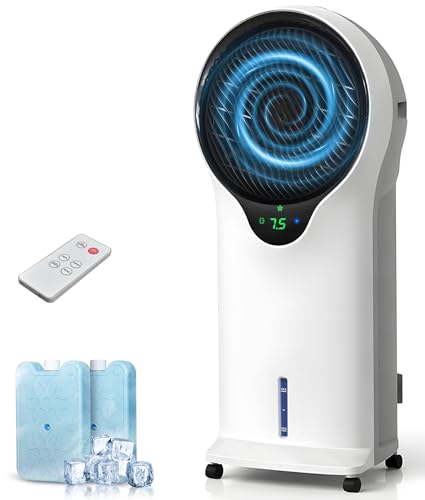 EXNOS EXNOS 35" 3-in-1 Evaporative Air Cooler, Portable Swamp Cooler Air…
View on Amazon ↗
Listing names and images come from Amazon and are rechecked against the live listings; last checked Nov 8, 2026. No prices shown; the current price is on the listing.
Scope and limits. This guide draws on general knowledge of how evaporative cooling works and the physical limits of pads, airflow, and humidity. It does not evaluate individual cooler models, so check the listing for the exact CFM, tank capacity, pad dimensions, and electrical draw before you buy.