Focus on three factors: page layout, binding, and dated versus undated format. Page layout determines whether you record one long list or segmented blocks for meetings, classes, and personal tasks. Binding decides if the planner lies flat and survives a bag. Dated planners save setup time but lock you into a year; undated ones flex around gaps. The main tradeoff is structure versus freedom: more preprinted sections can keep you consistent, but unused sections add bulk and guilt.
One List or Several Boxes: The Layout Question
Most daily planner disappointment starts on the page itself. A layout built around hourly rows suits someone whose day moves by appointments, classes, or meetings. A layout with one large ruled block suits someone who jots tasks and notes in a single stream. Manufacturers rarely label these clearly, so study the page image on any listing.
Segmented pages divide the day into zones: priorities, schedule, to dos, notes, sometimes a gratitude line or water tracker. Those extras help only if you return to them daily. An unused segment is not harmless white space; it narrows the writing area you do use and makes every page feel heavier.
For students and teachers, a weekly view with a daily column often beats a strictly daily page, because deadlines and lesson prep span multiple days. If you carry the planner to every class or meeting, limit yourself to one or two extra zones beyond the core list.
Binding Decides Whether the Planner Survives the Semester
Three binding styles dominate. Coil or spiral bindings fold back completely and stay flat, which matters when you write in a cramped lecture seat or on a standing desk. They also catch on bag fabric and can deform under heavy books. Stitched or thread bound planners look more professional but rarely lie flat without pressing, and the gutter can swallow text near the spine.
Disc bound systems sit between the two: pages snap in and out, and the planner opens flat. That flexibility costs more and adds a small learning curve, but it helps if you want to move pages between a work and home planner. Check the listing for a cover that closes securely, because exposed discs can snag.
A hardcover protects pages in transit but adds weight. A softcover or flexible cover slides into a backpack more easily. For hybrid workers who move between an office and home, a lighter cover with a firm back board often feels best in a bag.
Dated or Undated Changes How You Recover From a Bad Week
A dated daily planner prints every date, so you can start the day you open it. That convenience becomes a drawback the first time you miss a week: blank dated pages stare back, and many users abandon the planner entirely rather than write past the gap. Students with long breaks and teachers with uneven terms feel this most sharply.
An undated planner lets you fill in dates yourself, so gaps disappear and you can resume after a month away. The cost is setup time: five minutes at the start of each week, plus the discipline to date every page before you write. Some undated planners print day of week headers only, which keeps the page flexible without requiring a full date.
If you already use a digital calendar for appointments, an undated paper planner usually fits better, because the paper holds tasks and notes while the calendar holds times. If the paper planner is your only calendar, choose dated and accept that gaps happen.
Paper Weight and Pen Choice Matter More Than the Cover Design
Planner paper weight is often listed in grams per square meter, or gsm. Most planners run 80 to 120 gsm. Below about 100 gsm, gel and fountain pens tend to ghost through to the back of the page, and heavy markers can bleed. If you write with a fine ballpoint or pencil, thin paper matters less.
Check the listing for a paper weight rather than a vague 'thick paper' claim. If no weight appears, assume the paper is thin and plan to use ballpoint or pencil. A smooth paper finish also matters: toothy paper slows writing, while coated paper can smudge with some inks.
Cream paper reduces glare under classroom or office lighting and feels easier on the eyes for long writing sessions. Bright white paper makes ink colors pop but can tire the eyes by late afternoon. Neither is better; choose based on where you write.
A Comparison of the Main Daily Planner Page Formats
The table below summarizes how the common page formats behave for different schedules. Use it to narrow down the listings before you compare individual page images.
| Page format | Best schedule fit | Writing space | Typical binding |
|---|---|---|---|
| Single ruled block | Long running task list | Largest | Coil or stitched |
| Hourly time blocks | Meetings, classes, shifts | Moderate, fixed slots | Coil or stitched |
| Segmented zones | Priorities plus notes | Moderate, split | Stitched or disc |
| Weekly with daily column | Deadlines across days | Smaller per day | Coil or stitched |
| Undated ruled page | Irregular or gap prone use | Largest | Disc or stitched |
Some planners mix formats, such as a weekly spread followed by a ruled notes page. Those hybrids work well for meeting notes or class notes that do not fit a daily box, but check how many note pages are included before you rely on them.
Which Features Earn Their Space and Which Just Add Bulk
Pockets and folders earn their keep for anyone who collects handouts, receipts, or permission slips. A single back pocket or a few divider folders keep loose paper out of the writing area. Extra pockets on every tab add thickness without adding usefulness for most people.
Ribbon markers and elastic closure bands look like small luxuries but change daily use. Two ribbon markers let you keep one place in the daily pages and another in a reference section. An elastic band keeps pages from fanning in a bag. Neither is essential, but both are cheap to add and hard to retrofit.
Sticker sheets and habit trackers are marketing that works only if you already use them. A habit tracker on every daily page consumes space for someone who tracks habits in an app. A budget section built into a daily planner rarely matches how people actually track money, so a separate notebook or a dedicated money planner usually works better.
For Students, Teachers, and Hybrid Workers the Needs Diverge
Students benefit most from a weekly overview with a daily task column and a few note pages. Exam schedules and project deadlines live across weeks, not inside a single day. A compact size that fits next to a laptop in a lecture hall also matters, so look for a planner under about A5 or half letter size.
Teachers need space for lesson prep, grading notes, and parent contact records. A daily page with a schedule block plus a large notes area works better than a purely hourly layout. Dated planners align with term dates, but an undated planner avoids wasted pages over breaks.
Hybrid workers often juggle a digital calendar for meetings and a paper planner for deep work and action items. A weekly layout with a daily priorities box plus a notes section matches that split. Avoid planners with heavy daily time blocks if your meetings already live in an app.
The Mistake That Leaves a Third of Every Page Empty
Buying a planner with more structure than your schedule requires is the most common error. Hourly rows for someone with two meetings a week leave blank lines that make the planner feel like a record of wasted time. Segmented boxes for water intake, gratitude, and meal planning feel useful in the store and burdensome by week three.
The reverse mistake is buying a blank ruled page when you need anchors. Without any printed structure, some users write nothing at all, because the page offers no starting point. The right amount of structure is the smallest number of prompts that gets you writing daily.
A third mistake is judging a planner by its cover and size alone. A beautiful cover does not fix a page layout that fights your schedule, and a too large planner gets left on the desk while tasks happen elsewhere. Read the page layout description before the cover description.
Who Should Skip a Paper Daily Planner
If your schedule lives entirely in a shared digital calendar with coworkers or family, a paper planner duplicates work. You will copy meetings from screen to page, then forget which version is current. A simple notebook for daily task lists may serve better than a full planner.
People who travel constantly and work from a phone may find a paper planner adds weight without adding clarity. A digital task app with a daily view covers the same ground. If you still want paper, choose a slim undated format that tolerates missed days.
A daily planner is also the wrong tool for long form journaling or project management. Daily pages constrain writing to a day, while journals need flowing space and projects need cross page views. A notebook or a project planner handles those better.
Daily Planner Questions Before You Open a New Page
Is a daily planner worth it if I already use a phone calendar?
For many people, yes, because a phone calendar shows times while a daily planner holds tasks, notes, and priorities. The paper page gives you a place to think without notifications. If you mostly need to know where to be and when, a digital calendar alone may be enough and a paper planner becomes extra work.
Which daily planner layout is best for students?
A weekly layout with a daily column and a few note pages usually fits students best. Deadlines and exam dates span multiple days, and a strictly daily page makes it hard to see the week ahead. Look for a compact size that fits next to a laptop, and choose undated if breaks interrupt your use.
What makes a daily planner different from a regular notebook?
A daily planner prints dates or day structures on each page, so it anchors your writing to a specific day. A notebook gives you blank pages with no time structure. The planner trades freedom for routine, which helps some people stay consistent and feels restrictive to others.
How do I compare two daily planners before buying?
Compare the page layout first: what does one page look like, and how many boxes or zones does it have? Then compare binding and paper weight, because those decide how the planner feels in use. Finally check dated versus undated and how many months or pages are included. Ignore cover design until the functional checks pass.
Can I start an undated planner in the middle of the year?
Yes, that is the main advantage of an undated format. You fill in the date on each page when you use it, so there are no wasted pages for months that already passed. The tradeoff is that you must date every page yourself before writing, which takes a few minutes each week.
Which Daily Planner Should You Start Tomorrow With?
A student with shifting deadlines and long breaks does best with an undated weekly layout, a coil binding, and paper at or above 100 gsm. That combination lies flat, survives a backpack, and skips the guilt of blank dated pages. A teacher or hybrid worker who plans lessons or deep work around fixed meetings should instead pick a dated daily page with a schedule block and a large notes area, accepting the wasted pages over breaks as the cost of term aligned structure.
Real daily planner listings, so you can check the points in this guide against actual products. These are affiliate links: as an Amazon Associate we earn from qualifying purchases, at no extra cost to you.
 TUUN FUPLAN Undated Weekly Planner - 8.5" x 11" Undated Daily Productive…
View on Amazon ↗
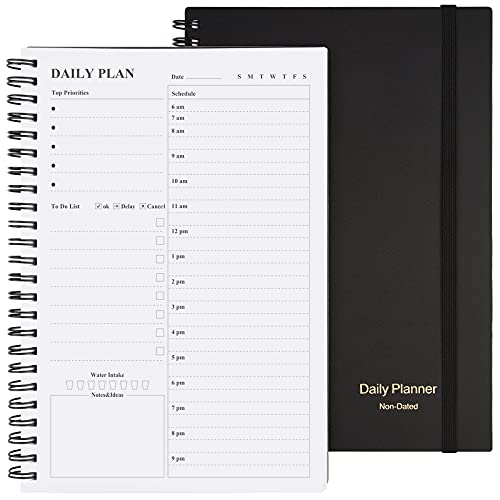 ASTEN Daily Planner Undated: Asten To Do List Notebook Day Planners…
View on Amazon ↗
 ANECDOTE. Anecdote 2027 Daily Planner, 2026-2027 Calendars, Flexible 26 Weeks Undated…
View on Amazon ↗
Listing names and images come from Amazon and are rechecked against the live listings; last checked Nov 8, 2026. No prices shown; the current price is on the listing.
About this guide. This guide covers the daily planner category as a whole, not specific models or brands. It is written from general knowledge of planner formats, bindings, and paper types; no individual product documents, reviews, or tests were used. Check any listed page size or paper weight on the product page before you order.