Two factors decide most countertop water dispenser purchases: how you load water and how you want it chilled. Bottom loaders hide the bottle and avoid heavy lifting, while top loaders cost less and are easier to inspect. Families that drink several gallons a day should choose a compressor cooled unit, while light users can accept a thermoelectric model that runs quieter but cools slower. The main tradeoff is between upfront simplicity and long term convenience.
Loading Style Sets Your Daily Routine
The first decision is how the water bottle meets the machine. A top loader has an open bay on top where you invert a bottle, typically 3 or 5 gallons. Gravity feeds the reservoir, so there is no pump to fail. You can see the water level and the bottle condition at a glance. The downside is lifting a heavy bottle to chest height and flipping it without spilling.
A bottom loader hides the bottle inside a cabinet at floor level. You slide the bottle in, connect a probe or hose, and the unit pumps water upward. This design suits anyone with back strain, a low counter, or a preference for a clean look. The pump adds a part that can wear out, and you cannot see how much water remains without opening the door.
Some countertop units skip bottles entirely. A bottleless dispenser connects to a water line or uses a refillable tank and runs water through a filter. This removes bottle storage and delivery costs, but it adds filter replacements and, for plumbed models, installation limits. For rentals or dorm rooms where you cannot alter plumbing, a bottle fed model is usually the safer choice.
Cooling Method Changes Noise and Speed
Countertop water dispensers cool water in one of two ways. A compressor system works like a mini refrigerator. It chills water quickly, often to a consistent cold temperature, and can hold a larger cold water reserve. The tradeoff is a hum or vibration when the compressor cycles, plus more weight and a higher price.
A thermoelectric system uses a solid state plate to transfer heat. It is nearly silent and lighter, which suits bedrooms, offices, or shared living spaces. The cooling is slower and less powerful, so the water may be cool rather than cold, especially in a warm room. Thermoelectric units are common in budget and mid range models.
Check the listing for the cold water output per hour if you host guests or fill large bottles. A compressor unit often delivers a cup or more of cold water per minute, while thermoelectric models may need a recovery pause after several cups. If you mainly drink room temperature water, cooling power matters less and a simpler unit may be enough.
Hot Water Taps Need Safety and Capacity
Many dispensers include a hot water tap for tea, instant soup, or cleaning. This is not boiling water from a kettle. The internal tank typically holds water between 160 and 200 degrees Fahrenheit, warm enough to scald but below a full rolling boil.
Look for a child safety lock on the hot tap if children or visitors are around. A recessed button or two step activation reduces accidental burns. The hot tank size decides how much hot water you can draw before the unit needs to reheat, which can take 10 to 20 minutes.
If you only want cold and room temperature water, skip the hot feature. It adds an electrical draw, a heating element that can scale up, and another tank to clean. Some buyers pay for hot water they never use.
Cleaning Access Is Where Cheap Units Fail
A water dispenser touches your drinking water daily, so cleaning access matters more than most buyers expect. Open reservoirs and drip trays collect dust, biofilm, and mineral scale. A unit with a removable drip tray, a wide reservoir opening, and a drain plug is far easier to maintain.
Top loaders usually let you wipe the bottle seat and reservoir opening directly. Bottom loaders hide the probe and tubing, which can grow slime if not flushed. Bottleless units need filter housing checks and occasional sanitizing of the internal line.
Plan to clean the reservoir and drip tray weekly with mild soap or a food safe sanitizer, and flush the lines monthly if the model has a pump. Check the listing for a cleaning mode or a self cleaning function, which some mid range units include. If the seller does not describe how to clean the unit, that is a warning sign.
| Loading style | Cooling method | Lifting effort | Cleaning access | Suits |
|---|---|---|---|---|
| Top loader | Usually compressor | High, bottle to chest height | Easy, open reservoir | Families, budget buyers |
| Bottom loader | Compressor or thermoelectric | Low, bottle at floor level | Harder, hidden pump and tubing | Renters, anyone with back strain |
| Bottleless | Compressor or thermoelectric | None, no bottle | Moderate, filter and line upkeep | Homes with water line access |
Use this table to match the loading style to your physical comfort and the room where the dispenser will sit. A bottom loader in a small laundry room may block a cabinet door, while a top loader in a dorm room may be too tall for the counter.
Room Fit Before You Click
Countertop water dispensers are not all the same footprint. Measure the counter depth and the height under any upper cabinets. A bottom loader needs clearance to open its lower door and slide a bottle in, which can add 12 to 18 inches of forward space during loading.
Check the power cord length and outlet placement. A dispenser near a sink is easier to fill and drain, but you may need a drip tray that catches splashes. In a rental property or student accommodation, confirm the counter can hold the weight of a full bottle, which is over 40 pounds for a 5 gallon jug.
Ventilation matters for compressor models. Leave a few inches behind and beside the unit so heat can escape. A thermoelectric unit in a tight corner may run warmer and cool water even less effectively.
Ongoing Costs Beyond the Price Tag
The dispenser itself is only part of the cost. Bottle delivery or exchange fees vary by region and can be the largest long term expense for a large family. A 5 gallon bottle may last a single person two weeks but a family of five only two or three days.
Bottleless units shift the cost to replacement filters, which often need changing every three to six months. Check the filter type and price before buying. Some proprietary filters are expensive and hard to find, while common inline filters keep costs low.
Electricity use is modest for both cooling methods, but a hot water tank that stays on all day adds a small continuous draw. If you only use hot water once a day, look for a model with a hot water on/off switch.
Mistakes That Lead to Returns
The most common mistake is choosing a bottom loader for a room with limited floor clearance. The lower cabinet door needs room to swing open, and the bottle must slide in on a level surface. Carpet or uneven flooring makes this harder.
Another mistake is expecting hot water to be boiling. If you need water for baby formula or black tea, check the listed hot water temperature and consider a separate kettle. A dispenser hot tap is a convenience, not a full boiling water replacement.
Buyers also forget the drip tray. A shallow tray overflows quickly and leaves water on the counter. Look for a removable tray with a capacity of at least one cup, and empty it daily if you use the dispenser often.
Who Should Skip a Countertop Dispenser
If you have a refrigerator with a built in water dispenser and you rarely drink more than a glass or two a day, a countertop unit adds clutter and another appliance to clean. A simple filtered pitcher may do the job.
Remote cabins without reliable electricity or a nearby bottle supply are a poor fit. A manual pump on a standing bottle or a gravity filter system may be more practical. Similarly, a tiny kitchen with no free counter space may be better served by a wall mounted or freestanding unit in another room.
If you need both hot and cold water in large volumes, an under sink or point of use system may deliver better performance. Countertop dispensers trade output for portability.
Countertop Water Dispenser Questions Before You Buy
How often should I clean a countertop water dispenser?
Clean the reservoir, drip tray, and any accessible nozzle weekly with mild soap or a food safe sanitizer. Flush the pump lines monthly if the unit is a bottom loader, and descale the hot tank every one to three months depending on your water hardness. Bottleless units need filter housing checks at the same time.
Which is better, a top loader or a bottom loader?
A top loader is better if you want a lower price, easier cleaning, and do not mind lifting a heavy bottle. A bottom loader is better if you have back or shoulder issues, want a cleaner look, or prefer sliding a bottle at floor level. The bottom loader's pump is an extra part that can fail.
Is a countertop water dispenser worth it for one person?
It can be, if you drink enough water to finish a bottle before it sits too long. A 3 gallon bottle may last one person about a week, which is fine. If you drink less, a filtered pitcher or refrigerator dispenser may be cheaper and take less counter space.
Can a countertop water dispenser make water hot enough for tea?
Most hot water taps reach 160 to 200 degrees Fahrenheit, which is below a full boil. That is enough for instant coffee, cocoa, or ramen, but black tea and some green teas brew better with true boiling water. Check the unit's listed hot water temperature before relying on it for tea.
What should I check on the listing before buying?
Confirm the bottle size it accepts, the cooling method, the hot water safety lock, the drip tray capacity, and the cleaning access. Ask the seller about replacement filter availability for bottleless units and the cold water output per hour if you fill large bottles.
Which Countertop Water Dispenser Fits Your Kitchen
A household that drinks a gallon or more a day and has space for a bottle delivery service should get a bottom loader with a compressor cooler and a child safe hot tap. That combination hides the bottle, chills water quickly, and covers tea and soup needs. A single person in a rental with limited counter space should instead pick a compact top loader with thermoelectric cooling and skip the hot tap to save money and counter room.
Real countertop water dispenser listings, so you can check the points in this guide against actual products. These are affiliate links: as an Amazon Associate we earn from qualifying purchases, at no extra cost to you.
 HOUSIWILL Housiwill Top-Loading Hot & Cold Water Cooler for 1.2–5 Gallon…
View on Amazon ↗
 AVALON Avalon B8WHT Countertop Bottleless Water Cooler Dispenser - 2 Stage…
View on Amazon ↗
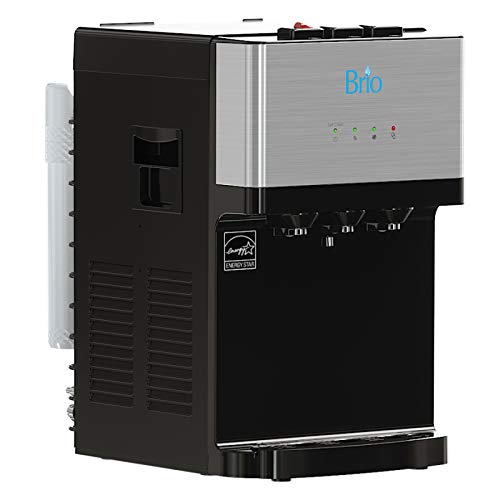 BRIO Brio Countertop Self Cleaning Bottleless Water Cooler Dispenser with Filtration…
View on Amazon ↗
Listing names and images come from Amazon and are rechecked against the live listings; last checked Nov 8, 2026. No prices shown; the current price is on the listing.
How to read this guide. This guide covers countertop water dispensers as a category, based on general knowledge of how the designs work, not on any individual model documents or customer reviews. Verify dimensions, bottle compatibility, and temperature ranges on the product listing before you buy.