Runtime, bin capacity and floor head design decide most of the result. A bigger battery and a larger bin suit whole home runs and pet hair. A lighter body with a smaller bin fits quick hard floor pickups. The main tradeoff is between long cleaning sessions and easy handling on stairs.
Battery Shape Decides How Long You Can Actually Clean
A cordless stick vacuum only works while its battery holds a charge. The battery sits either as a fixed pack sealed inside the handle or as a removable pack that clicks off. A removable pack means you can buy a second battery and swap it mid clean, which effectively doubles your runtime without waiting for a recharge.
A fixed pack cannot be swapped. When it dies, the vacuum sits on its charger for several hours. If you clean a whole apartment or a high traffic hallway in one pass, a fixed pack may force you to finish the job in two sessions. Check the listing for the word 'removable' or 'swappable' before you buy.
Battery capacity is often listed in watt hours or volts. A higher number generally means longer runtime on a single charge, but the motor and floor head also draw power. Compare the stated runtime in the product details, and remember that carpet mode drains the battery faster than hard floor mode.
Bin Capacity Sets Your Trash Trips
The bin is the clear container that collects dirt and hair. A small bin, often under half a liter, forces you to empty it after every room or two. A large bin, closer to one liter, holds more debris but adds weight near your hand.
For pet hair or a busy entryway, a small bin fills in minutes. You stop the vacuum, walk to the trash, open the bin and tap out the dust. A larger bin reduces those interruptions, but it shifts the center of gravity and makes the vacuum feel heavier when you lift it off the floor.
Look at the bin's release mechanism. A one button drop into the trash keeps your hands clean. A bin that requires you to pull out a filter or twist a collar means more contact with the dust. The listing photos usually show how the bin opens.
The Floor Head Does Most of the Work
The floor head is the wide part that touches the floor. On hardwoods and tile, a soft roller or a felt strip picks up fine dust without scratching. On carpet, a motorized brushroll digs into the fibers and pulls up pet hair and ground in dirt.
Many cordless stick vacuums come with one floor head that tries to do both. A brushroll with stiff bristles can scratch a polished hardwood floor over time. A soft roller alone will not pull hair out of a medium or high pile carpet. If you have both floor types, look for a head with a switch that turns the brushroll on or off.
Check the listing for the floor head's width. A wider head covers more floor per pass but is harder to maneuver around chair legs. A narrower head fits under low furniture and works better on stairs, where you only have a tread and riser to clean.
Stairs and Small Apartments Reward a Lighter Body
A cordless stick vacuum's main advantage over a corded upright is that you can carry it up and down stairs. But that advantage disappears if the vacuum weighs more than you want to hold in one hand. Most cordless sticks weigh between five and eight pounds with the battery and floor head attached.
In a small apartment, you may only need a few minutes of runtime per day. A lighter model with a small battery and a compact bin works well because you never clean for long. The same model would frustrate a homeowner with a three bedroom house and two dogs.
For stairs, look for a vacuum that converts to a handheld. You detach the wand and use a crevice tool or a small motorized brush on the treads. This is much easier than trying to balance the full stick on a step.
Pet Hair and High Traffic Rooms Need a Brushroll and a Bigger Bin
Pet hair wraps around a brushroll and fills a bin quickly. A motorized brushroll with a tangle resistant design helps, but no brushroll is fully tangle free. You will still stop to cut hair off the roller every few uses. The listing may say 'tangle free' or 'anti tangle', but that means fewer tangles, not none.
High traffic rooms collect grit, crumbs and outdoor dirt. A vacuum with strong suction on paper may still leave debris behind if the floor head has a poor seal against the floor. Look for a head with a flexible neck that stays flat when you push it under a table or along a baseboard.
Consider the bin size again here. Pet hair is bulky. A half liter bin may need emptying three times in one pet hair pass. A one liter bin gets you through a living room and hallway before you stop.
How to Read a Listing Before You Buy
Start with the runtime. The listing will often say 'up to 40 minutes' or '60 minutes'. That number is almost always measured on the lowest power setting with a non motorized tool attached. On high power with a brushroll on carpet, the real runtime is often half or less of the advertised number.
Next, look at the weight. The listing may give the weight of the main body only, without the wand, floor head or battery. A seven pound body can feel like nine pounds in your hand once everything is attached. If the weight is not clear, ask the seller for the total weight with the floor head and battery installed.
Check what is in the box. Some cordless sticks come with a wall mount, a crevice tool and a second battery. Others come with only the vacuum and a charger. A spare battery or a motorized mini brush for upholstery can be worth more than a higher suction number.
Ask the seller two questions. First, 'What is the runtime on the highest power setting with the motorized floor head attached?' Second, 'Is the battery removable and can I buy a spare?' The answers tell you more than any marketing phrase.
| Battery type | Bin size | Best floor | Stairs fit |
|---|---|---|---|
| Swappable pack | Large | Carpet and hard floors | Heavier to carry |
| Swappable pack | Small | Hard floors and quick pickups | Easier on steps |
| Fixed pack | Large | Whole home carpet cleaning | One charge per session |
| Fixed pack | Small | Small apartments and hard floors | Lightest option |
Use this table as a checklist against any listing. If a vacuum has a fixed pack and a small bin, it will struggle with a whole house of pet hair no matter how strong the suction number looks.
Who Should Skip a Cordless Stick Vacuum
A cordless stick vacuum is not a replacement for a full size corded vacuum in every home. If you have thick wall to wall carpet in several large rooms, a corded upright or a canister vacuum will pull more dirt out per pass and never run out of battery.
If you clean for more than an hour at a time, a cordless stick will interrupt you. The battery dies, the bin fills, and you wait. A corded vacuum with a large bag or bin keeps going. For a deep clean once a week, corded often wins. For a daily five minute pickup, cordless wins.
Also consider the long term cost. A lithium ion battery loses capacity after a few hundred charge cycles. In two or three years, the runtime may drop by a noticeable amount. A corded vacuum has no battery to wear out. If you want a vacuum to last a decade, corded is the safer choice. For other floor care options, see canister vacuum guides or compact steam cleaner advice.
Filters and Consumables Add Up
Cordless stick vacuums use a washable filter, usually a foam or felt disc inside the bin. That filter needs rinsing every few weeks and drying for 12 to 24 hours before you use the vacuum again. If you wash the filter and put it back damp, you can damage the motor.
Some models have a second filter, a HEPA style exhaust filter that catches fine dust. That filter also needs washing or replacing. Check the listing for whether replacement filters are sold separately and how often the manual recommends changing them.
The brushroll itself is a consumable. Over time, the bristles wear down and the roller picks up less hair. On some models you can buy a replacement roller. On others the whole floor head must be replaced. This is a hidden cost that does not show up in the initial price.
Cordless Stick Vacuum Questions Before You Buy
How long does a cordless stick vacuum battery last on one charge?
Advertised runtimes are usually measured on the lowest power setting with a non motorized tool. On high power with a brushroll on carpet, expect roughly half the stated number. A removable battery lets you swap in a spare for continuous cleaning. A fixed battery means you stop and recharge for several hours.
Is a cordless stick vacuum strong enough for pet hair?
Yes, if it has a motorized brushroll and a bin of at least half a liter. The brushroll pulls hair out of carpet fibers, and the bin holds the bulky hair before it clogs. A model with only a soft roller will leave hair behind on carpet. Empty the bin often and check the brushroll for tangles.
Can I use a cordless stick vacuum on hardwood floors?
Yes, but check the floor head. A soft roller or a felt strip is safest for hardwood because it picks up dust without scratching. A stiff brushroll can leave marks over time. If the vacuum has a switch to turn the brushroll off, use that setting on hardwood and tile.
What should I look for in a cordless stick vacuum for stairs?
Look for a total weight under seven pounds and a design that converts to a handheld. You detach the wand and use a crevice tool or mini brush on each tread. A swappable battery helps if you also clean upstairs rooms. A heavy body with a fixed battery makes stair cleaning tiring.
Which is better for a small apartment, a cordless stick or a corded vacuum?
A cordless stick usually wins in a small apartment because you have no cord to plug in and you can store it on a wall mount. Runtime is less of an issue because you clean for a few minutes at a time. Choose a model with a small bin and a light body rather than the longest runtime.
The Cordless Stick Vacuum Pick for Your Floors
Someone with a mix of hard floors, a few rugs and one or two pets should look for a cordless stick with a swappable battery, a bin near one liter and a floor head that switches between a soft roller and a brushroll. That combination handles daily pickups and weekly pet hair passes without constant interruptions. A different pick fits a small apartment dweller who cleans only hard floors for five minutes a day: a fixed battery, small bin and soft roller only, chosen for light weight and easy storage over runtime.
Real cordless stick vacuum listings, so you can check the points in this guide against actual products. These are affiliate links: as an Amazon Associate we earn from qualifying purchases, at no extra cost to you.
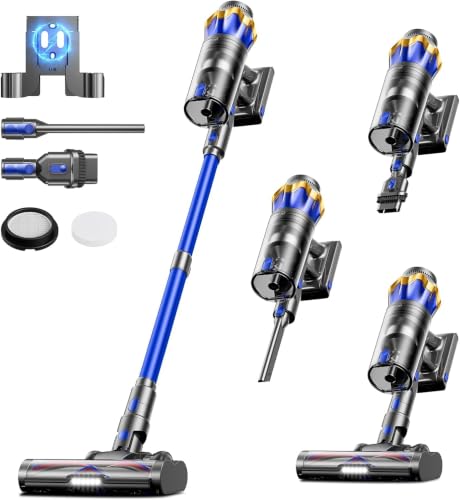 JELLYPIG Cordless Vacuum Cleaner, Upgraded 650W 60KPA 70Mins Cordless Stick Vacuum…
View on Amazon ↗
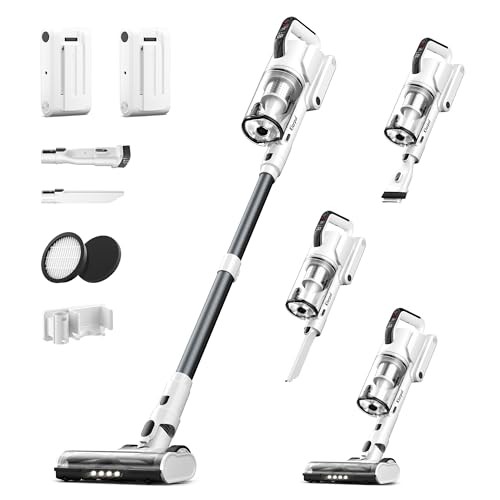 KLARPUL Klarpul Cordless Vacuum Cleaner, 2 Batteries 140 Mins Runtime 650W…
View on Amazon ↗
 FIEETY Dual-battery Cordless Vacuum Cleaner 140 Mins(Eco) 55KPa 650W, Stick Vacuum…
View on Amazon ↗
Listing names and images come from Amazon and are rechecked against the live listings; last checked Nov 8, 2026. No prices shown; the current price is on the listing.
What this guide is. Use this guide as a checklist to hold against any listing you open. It covers the cordless stick vacuum category as a whole, not individual models, and no product documents, reviews or tests were used. Verify any dimension or runtime number on the listing before you buy.