Start with your floor type and how much floor you clean in one pass. Hard sealed floors suit nearly any compact steam mop, while waxed or unsealed wood rules most out. Then weigh tank size against storage: a larger tank means fewer refills but a bulkier body. Pet owners and small apartments usually win with a quick heating, lightweight model.
Start With What Your Floor Can Take
Steam mops work by heating water to produce hot vapor that loosens dirt on hard surfaces. That heat and moisture are safe for sealed floors like tile, laminate, vinyl, and sealed hardwood. Check your flooring documentation before buying, because some hardwood finishes and most waxed or oiled wood will warp or cloud under steam.
If you have unsealed wood, bamboo, or cork, skip a steam mop entirely. A spray mop or microfiber mop gives you control over moisture and avoids voiding a floor warranty. For mixed homes, note which rooms have sealed hard floors and plan to use the steam mop only there.
Pet households often have sealed vinyl or tile in kitchens and baths, which makes them a natural fit. The heat helps lift dried paw prints and food spills without chemical residue. Just keep the mop moving on any glued down vinyl, since prolonged steam in one spot can soften adhesive.
Two Design Types, One Big TradeOff
Compact steam mops split into two broad shapes. The first is a short, handheld style body with a fixed mop head, often triangular. It heats fast, stores in a small closet, and reaches under toe kicks. The second is a taller upright with a rectangular head and a larger tank, closer to a traditional stick mop.
The fixed triangular head trades floor coverage for agility. It pivots around chair legs and fits between a toilet and vanity, but you refill the tank after roughly one small room. The rectangular head covers more floor per pass and holds more water, yet it is harder to store in a studio apartment.
Some compact models add a detachable handheld steamer for counters, grout, or stovetops. This raises the price and the weight, but it replaces a separate handheld unit. If you only need floors, skip that feature and keep the body lighter.
| Head style | Tank size | Best floor | Storage | Suits |
|---|---|---|---|---|
| Fixed triangular | Small, often 10 to 15 oz | Small rooms, tight corners | Fits a coat closet | Studio or bath touch ups |
| Rectangular | Medium, up to 20 oz | Open kitchens, hallways | Needs a utility closet | Apartments with one open plan |
| 2 in 1 detachable | Medium to large | Floors plus counters | Bulkier, more parts | Pet owners who want one tool |
| Tall upright | Large, 20 oz or more | Large sealed hard floors | Tall, needs vertical space | Multiroom cleans |
The table shows the main split: smaller tanks and heads make a mop easier to store and steer, while larger ones reduce refills but need more closet room. Match the head style to your floor layout before comparing wattage or attachments.
Reading a Listing Like a Flooring Owner
Listings lead with steam temperature and warm up time, but the useful numbers are tank capacity, cord length, and weight. A compact mop with a 10 ounce tank may cover only 100 square feet before you refill, which is fine for a bathroom but frustrating for a kitchen and hallway.
Check the cord length against your outlets. Many compact models use a 15 foot cord, which may not cross a large room without switching outlets. A 20 foot cord or a swivel cord reduces that hassle, but adds little weight.
Look past vague phrases like 'sanitizes floors.' Steam can reduce common bacteria on sealed surfaces when the mop stays in contact long enough, but that depends on temperature and dwell time. Compare the claimed steam temperature and the recommended contact time in the manual, not the marketing headline.
Ask the seller two questions before buying. First: is the mop safe for your exact floor finish, and will the manufacturer confirm that in writing? Second: what replacement pads fit it, and are they washable or disposable? The answers tell you more than a feature list.
Do not assume a compact mop works on all hard floors. The word 'hardwood' in a listing often means sealed hardwood only. If the manual says 'do not use on unsealed or waxed floors,' take that as a hard stop.
The Mistakes That Send a Mop Back
Buyers often overbuy attachments. A compact steam mop with a grout brush, a carpet glider, and a squeegee sounds useful, but most of those tools sit in a drawer. Buy the mop for the floors you actually have, not the projects you might try once.
Another mistake is ignoring pad care. Microfiber pads trap dirt, but they need washing after every few uses. If a listing only includes one pad, you will do laundry before you can finish a second room. Budget for at least two washable pads or a pack of disposables.
Filling the tank with tap water is usually fine, but hard water leaves mineral scale inside the heater over time. A mop with a removable or rinsable tank is easier to descale than one with a sealed internal reservoir. If your water is hard, plan to run a descaling solution monthly.
Finally, do not use steam on a floor that is already wet. The mop pushes dirty water around instead of lifting it. Sweep or vacuum first, then steam, and let the floor dry before walking on it.
Pet Hair and the PreClean Habit
Steam mops do not vacuum. They loosen stuck on messes, but loose pet hair and crumbs get pushed into corners or cling to the pad. In a pet household, run a stick vacuum or broom before you steam, or you will spend more time rinsing the pad than cleaning the floor.
The heat does help with dried food, urine spots, and muddy paw prints on sealed tile. Use a slow pass over the spot and let the steam dwell for a few seconds. Then wipe with a dry microfiber cloth to pick up what the pad leaves behind.
For staircases, a compact triangular head is the easiest to balance on a tread. A tall upright mop is awkward and heavy to lift step by step. If you have more than a few stairs, look for a mop under five pounds with a head that swivels flat.
Storing It Where You Will Actually Use It
A compact steam mop only gets used if it lives near the mess. A model that needs a spot behind the coats will stay there. Look for a body that stands on its own or hangs from a hook, and check the folded height against your closet shelf.
Cord wrap matters more than it looks. A mop with a loose cord you have to wind by hand will tangle and annoy you every time. A clip or hook that holds the cord in place keeps the mop grab and go.
If you live in a small apartment, skip the 2 in 1 detachable models. The extra handheld unit and its attachments need a second storage spot, and you will likely leave them in a drawer. A simple fixed head mop is the one you will actually pull out for a quick spill.
Long Term Costs Live in the Pads
The mop itself is a one time cost, but pads are the recurring expense. Washable microfiber pads last for dozens of washes if you air dry them, but they lose grip after heavy use. Disposable pads are convenient but add up fast in a busy household.
Check whether the mop uses a standard pad shape or a proprietary one. A standard rectangular or triangular pad that fits other brands gives you cheaper replacements. A unique shape means you buy only the manufacturer's pads, often at a premium.
Hard water scale is the other long term cost. If your mop has a removable tank, you can soak it in vinegar or a descaling solution. A sealed tank may need a cleaning cycle with distilled water, which adds a small ongoing expense but protects the heater.
Who Should Skip a Compact Steam Mop
Skip this category if most of your home is carpet or unsealed wood. A steam mop cannot clean carpet beyond a light refresh with a glider attachment, and it risks damage on unfinished or waxed floors. A vacuum plus a spray mop covers that home better.
Skip it if you clean large open areas in one pass. A compact tank means stopping to refill after a few hundred square feet, which breaks your rhythm. A full size steam mop or a corded stick vacuum with a wet roller may serve you better.
Skip it if you want chemical disinfection. Steam can reduce some germs on sealed floors with proper dwell time, but it is not a substitute for a disinfectant on high touch areas. If a household member is immunocompromised, follow medical guidance rather than relying on steam alone.
For a different cleaning task, see how a clamp on shelf changes a small space or browse the broader home and kitchen guides.
Compact Steam Mop Questions, Answered Straight
Is a compact steam mop safe for hardwood floors?
Only if the hardwood is sealed and the manufacturer of the floor allows steam. Unsealed, waxed, or oiled wood can warp or cloud from heat and moisture. Check your floor warranty and the mop manual before using steam on any wood surface.
Which compact steam mop is best for pet households?
Look for a quick heating model with a triangular head that reaches around pet bowls and under cabinets. A detachable handheld steamer helps with dried messes on tile grout, but you still need to vacuum or sweep loose hair before steaming.
How long does a compact steam mop take to heat up?
Most heat in 20 to 45 seconds. The fastest models are ready before you finish filling the tank. A longer warm up is not a dealbreaker, but it matters if you grab the mop for a quick spill and want steam immediately.
Can I use tap water in a compact steam mop?
Yes, unless the manual says otherwise. Hard tap water leaves mineral deposits over time, so descale monthly with a vinegar or citric acid solution if your water is hard. Using distilled water avoids scale but adds a recurring cost.
Is it worth buying a 2 in 1 compact steam mop?
Only if you will use the handheld steamer for counters, grout, or appliances at least weekly. If you only clean floors, a fixed head mop is lighter, cheaper, and easier to store. The detachable unit adds weight and another accessory to keep track of.
The Short Answer for Most Small Space Cleaners
A renter in a small apartment with sealed vinyl or tile gets the most from a fixed triangular head, a 10 to 15 ounce tank, and a warm up under 30 seconds. It stores on a hook, reaches under cabinets, and handles pet spills with a quick presweep. Choose a 2 in 1 detachable model instead if you clean grout and counters weekly and have a shelf for the extra attachments.
Real compact steam mop listings, so you can check the points in this guide against actual products. These are affiliate links: as an Amazon Associate we earn from qualifying purchases, at no extra cost to you.
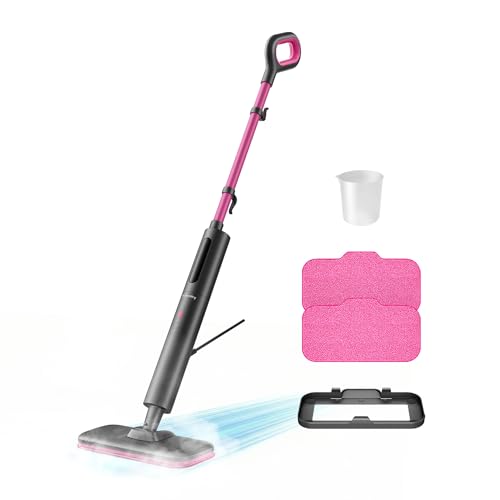
Listing names and images come from Amazon and are rechecked against the live listings; last checked Nov 8, 2026. No prices shown; the current price is on the listing.
What this guide is. This guide covers compact steam mops as a category, not any individual model. It is written from general knowledge of how these machines work, so check the listing for exact tank size, cord length, and floor compatibility before buying.