Canister vacuums split the motor and bin from the nozzle, so the part you push stays light while the body follows on wheels. Decide first between bagged and bagless dust handling, then check hose length and attachments for stairs and upholstery. Corded power suits deep carpet and pet hair, but the trailing canister can feel clumsy in tight rooms.
Bagged or Bagless Changes How You Live With Dust
Bagged canisters trap fine dust and dander inside a sealed paper or cloth bag. You replace the bag when full, which keeps your hands clean but adds an ongoing cost. Bagless canisters collect debris in a clear plastic bin you empty into the trash. That saves money on bags, but emptying releases a small dust cloud and the filters need washing more often.
For pet hair and allergy prone homes, a bagged design often keeps particles contained better. The bag itself acts as the first filter, so the motor and exhaust stay cleaner. Bagless bins show you exactly when to empty, but hair wraps around the internal cyclone and needs manual pulling out. Check how the bin releases: a one button drop away base is easier over a trash can than a twist off cup.
Hose Length and Wand Height Set Your Real Reach
A canister vacuum only feels easy if the hose lets you clean a whole staircase or a full curtain without dragging the body. Most hoses run between five and eight feet, and the wand adds another two to three feet. Measure from where you will stand to the highest stair or curtain top, then compare that to the combined hose and wand length on the listing.
The wand matters as much as the hose. Telescoping wands adjust for short users and tall ceilings, but a heavy metal wand tires your wrist during above floor work. Look for a wand that locks at your comfortable height and a hose that swivels at both ends, which resists kinking when you reach around furniture.
A short hose makes the canister follow you into every corner and bump into door frames. A long hose adds weight and can reduce suction slightly at full stretch. For small apartments, a shorter hose keeps the body close and stable. For stairs and high shelves, choose the longest hose you can handle.
The Floor Head Decides Carpet, Hardwood, and Pet Hair Results
Canister vacuums come with either an air driven turbo head, an electric powerhead, or a simple suction only floor nozzle. A powerhead has its own motor that spins a brush roll, which digs into medium and high pile carpet and pulls out embedded pet hair. A turbo head uses airflow to spin the brush, which works on low pile and area rugs but stalls on thick carpet.
For hardwood, tile, and laminate, a soft brush roll or a dedicated hard floor head prevents scratches and picks up fine dust without scattering it. Some canisters include both a carpet powerhead and a hard floor tool, while others make you buy the second head separately. Check whether the brush roll can be switched off: running a spinning brush on hard floors can fling debris and wear the bristles.
Pet hair changes the calculation. Hair wraps around any spinning brush, but a powerhead with a removable brush roll is much easier to clean than a fixed one. Look for a head with wide grooves or a comb design that reduces tangling. Suction only heads avoid hair wrap entirely but leave hair pressed into carpet fibers.
| Floor head | Best on | Pet hair | Maintenance |
|---|---|---|---|
| Electric powerhead | Medium and high pile carpet | Deep removal, but hair wraps brush | Remove brush roll to cut hair |
| Air driven turbo head | Low pile and area rugs | Lifts surface hair, stalls on thick pile | Clean brush and air inlet |
| Suction only nozzle | Hard floors and bare floors | No brush wrap, but hair stays in carpet | Wipe underside, check for clogs |
| Hard floor brush | Wood, tile, laminate | Gentle pickup, no agitation | Wash soft bristles regularly |
If your home has both thick carpet and hard floors, a canister with a switchable powerhead and a separate hard floor tool covers both without compromise. A turbo head is a lighter, cheaper middle ground, but it will frustrate you on plush carpet.
Corded Power Versus the Cordless Convenience You Give Up
Almost all canister vacuums are corded, because the motor and bin sit behind you and need constant power for strong suction. A corded canister delivers steady airflow for deep cleaning and long sessions, but you must plug and unplug as you move between rooms. A cordless stick vacuum trades that power for grab and go speed on quick messes.
If you clean a whole house in one pass, the cord is a minor hassle. If you do five minute touch ups daily, a cordless stick might serve you better. Some canisters have automatic cord rewind, which saves bending and untangling. Check the cord length: a 20 foot cord plus a 7 foot hose reaches about 27 feet from the outlet, enough for most rooms without swapping sockets.
Cordless canister style vacuums exist but are rare and usually weaker. They suit hard floors and light dust, not deep carpet or heavy pet hair. If you want cordless, a stick vacuum is the more common design and often the better fit.
Weight on Paper Misleads More Than Any Other Spec
A canister vacuum's listed weight often sounds light, around 10 to 15 pounds, but that is only the body you pull. The hose, wand, and floor head add another few pounds in your hand, and the whole assembly drags behind you. A heavy powerhead on a thick carpet feels far heavier than the body weight suggests.
Wheel design matters more than the number on the box. Large rear wheels and a swiveling front caster let the canister follow you around corners instead of tipping over. Small, hard plastic wheels catch on rug edges and door thresholds. If you have stairs, you will carry the canister by its handle, so check that the handle is comfortable and the body is balanced, not just light.
For small apartments and high traffic rooms, a compact canister with a short hose and simple floor head is easier to tuck away. For whole house cleaning, a full size canister with a long hose and powerhead is worth the extra bulk. Try lifting the body in the store or check the dimensions against your closet shelf.
Filters and Bags Are the Long Term Cost Nobody Quotes
Bagged canisters need replacement bags every one to three months, depending on how much you vacuum. Generic bags cost less than branded ones and often fit fine, but check compatibility. A HEPA exhaust filter traps fine particles but may need replacing once or twice a year. Washable premotor filters save money but must dry completely before reuse or they grow mold.
Bagless canisters skip bags but their filters clog faster. The main cyclone filter and the exhaust HEPA filter both need washing or replacing regularly, and a clogged filter kills suction long before the bin looks full. Count the filters in the listing: one washable filter is easier to maintain than three separate ones.
If anyone in the home has allergies or asthma, a sealed system with a HEPA filter matters. 'Sealed' means the air path has no leaks between the bin and the exhaust, so dust does not escape back into the room. A vacuum that merely has a HEPA filter but leaks around the bin still releases particles.
Stairs and Tight Rooms Reveal the Design's True Character
Canister vacuums shine on stairs because the body sits on the step below while you clean the tread with the hose. A short, stiff hose makes you haul the canister up every step, which defeats the purpose. Look for a hose long enough to reach from the bottom step to the top landing, and a wand that extends for the risers.
In small apartments, the canister's footprint matters more than its weight. A body that stands upright when parked takes less floor space than one that lies flat. A telescoping wand that collapses fully lets you store the vacuum in a narrow closet. If you have no closet, a compact canister with onboard tool storage is easier to keep out of sight.
High traffic rooms need quick transitions between carpet and hard floor. A floor head with a foot pedal that switches the brush roll on and off lets you move from rug to wood without changing tools. A canister that requires swapping heads for every surface will slow you down in a busy hallway.
Read the Listing for the Specs That Actually Predict Performance
Manufacturers advertise watts, amps, air watts, and pascals, but none of those alone tells you how well a canister cleans. Suction power matters, but the floor head design and airflow path decide whether that suction reaches the carpet. Compare the same metric across models if you must, and ignore peak numbers that only last a few seconds.
Check the listing for the three measurements that change your daily use: hose length, wand length, and cord length. Add them together to estimate your cleaning radius. Look for the weight of the body and the weight of the floor head separately if listed. A 12 pound body with a 4 pound powerhead is very different from a 12 pound body with a 2 pound hard floor tool.
Ask the seller or check the manual for the filter replacement schedule and bag capacity. Bag capacity in liters or quarts tells you how often you will change bags. A small bag in a high shedding pet home means weekly changes. Also confirm which attachments come in the box: a crevice tool, dusting brush, and upholstery tool are standard, but a pet turbo brush or hard floor head may cost extra.
Canister Vacuum Questions Worth Asking Before You Buy
Is a canister vacuum better than an upright for pet hair?
For pet hair on stairs, upholstery, and under furniture, a canister with a motorized powerhead and a sealed HEPA bag often outperforms an upright because the hose reaches where an upright cannot. On large open carpet areas, an upright with a wide powerhead may clean faster. Choose the canister if your pet hair collects on stairs and furniture, not just floors.
What is the difference between a bagged and bagless canister vacuum?
A bagged canister collects debris in a disposable bag that you replace, keeping dust contained and the motor clean. A bagless canister uses a clear bin and cyclonic separation, so you empty the bin and wash filters instead of buying bags. Bagged models suit allergy sufferers and low maintenance users; bagless models suit buyers who want no recurring bag cost.
Can a canister vacuum clean hardwood floors without scratching?
Yes, if you use a hard floor brush or turn off the spinning brush roll. A soft bristle brush or a felt strip on the floor head glides over wood and tile while suction pulls dust from gaps. Running a spinning powerhead on hardwood can scatter debris and wear the finish, so switch to the dedicated hard floor tool.
How do I compare suction power between canister vacuums?
Look for air watts or water lift, which measure suction at the hose end, rather than motor watts. But suction alone does not predict cleaning: a well designed floor head with good airflow can clean better with lower suction. Compare the same metric across models and check for a sealed HEPA system if allergies matter.
Should I buy a canister vacuum for a small apartment?
A compact canister works well in a small apartment if you have hard floors or low pile rugs and need to clean stairs or furniture. But if you have mostly bare floors and little storage space, a cordless stick vacuum may be more convenient. Choose a canister only if you value strong suction and hose reach over grab and go speed.
Which Canister Vacuum Fits Your Floors and Stairs
For a home with wall to wall carpet and a shedding pet, choose a bagged canister with an electric powerhead, a sealed HEPA system, and a hose at least seven feet long. That combination pulls embedded hair, contains dust, and reaches stairs without dragging the body. If you live in a small apartment with mostly hardwood and tile, pick a compact bagless canister with a soft hard floor brush and a short hose: it stores easily, skips bag costs, and cleans bare floors without scratching.
Real canister vacuum cleaner listings, so you can check the points in this guide against actual products. These are affiliate links: as an Amazon Associate we earn from qualifying purchases, at no extra cost to you.
 EUREKA Eureka Whilwind Canister Vacuum Cleaner, Household Vacuum for Home, Pet…
View on Amazon ↗
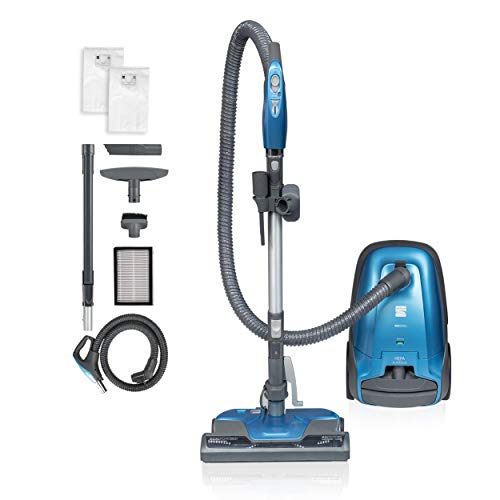 KENMORE Kenmore BC3005 Pet Friendly Lightweight Bagged Canister Vacuum Cleaner |…
View on Amazon ↗
 ASPIRON 40Kpa Canister Vacuum Cleaner, Bagless Vacuum, Powerful 1600W | 4QT…
View on Amazon ↗
Listing names and images come from Amazon and are rechecked against the live listings; last checked Nov 8, 2026. No prices shown; the current price is on the listing.
What this guide is. This guide covers the canister vacuum cleaner as a product type: the design choices, floor head types, dust handling, and fit for different homes. It does not evaluate individual models, and no product documents, reviews, or tests were used. Verify any dimension such as hose length or weight on the listing before buying.