Judge a camera teleprompter by two things: how clearly the script reflects, and how steadily it stays aligned with your lens. Glass beam splitters beat plastic sheets for sharpness. A rigid frame and hood beat a floppy cloth shade. If you film indoors at a desk, a compact unit works. If you shoot outdoors, you need a tight hood and a bright display.
The Glass Makes or Breaks the Read
A camera teleprompter works by reflecting a script onto a piece of glass in front of the lens. That glass is a beam splitter. It reflects the text toward your eyes and lets the camera see through it. Cheap units use a thin plastic sheet or an uncoated pane. The reflection looks soft, and the sheet can wobble as you speak.
Look for a listing that names the glass type. Coated optical glass gives a brighter, sharper reflection than plain float glass. A thicker pane, often around 2 to 3 millimeters, stays flatter and vibrates less. If the glass is described only as 'transparent' or 'acrylic', expect a dimmer script and a slight haze over the lens.
Glass angle matters too. Most teleprompters place the glass at 45 degrees to the lens. A fixed 45 degree beam splitter is simpler and sturdier. Some rigs let you adjust the angle, which can help with odd camera heights, but every adjustable joint is another place for misalignment. For most desk setups, a fixed angle is fine.
The Hood Decides Whether You Can Read Outdoors
The hood is the dark box around the glass. It blocks light from hitting the back of the glass and washing out the script. A shallow hood works in a dim office. A deep, rigid hood works near a window or outside. Cloth hoods collapse for travel but sag over time. Plastic or aluminum hoods keep their shape and block more stray light.
Check how the hood attaches. A hood that screws or clamps onto a rigid frame stays square to the glass. A hood that ties or stretches over a frame can pull the glass off angle. If you film in different rooms, a collapsible hood is convenient, but it must lock open tightly. Any gap around the lens opening lets light leak in.
For outdoor use, the hood needs a lens opening that seals around your lens barrel. Many listings include a set of step up rings or a flexible gasket. Without that seal, sunlight enters from the side and you see a reflection of the sky instead of your script.
Mounting: Where the Rig Sits Changes Everything
A teleprompter has to sit directly in front of your lens. How it gets there depends on your camera. A clamp on rig attaches to a tablet or phone and sits in front of a webcam or small camera. A rail mounted rig slides onto 15 millimeter rods and holds the glass in front of a cinema or mirrorless camera. A tripod mounted rig has its own base plate and supports the camera behind the glass.
Weight is the first check. A glass beam splitter and a rigid frame can weigh a pound or more. A lightweight tripod head may sag under that load. List the weight of your camera, lens, and teleprompter together, then compare it to your tripod's rated capacity. A sagging head tilts the glass and throws the script off axis.
The second check is the lens opening. The glass must be large enough to cover your lens without vignetting. A wide angle lens needs a larger opening than a telephoto. If the listing gives a maximum lens diameter, compare it to your lens. A lens hood left on the lens can also hit the glass, so you may need to remove it.
Display: Your Phone or Tablet Is the Engine
Most camera teleprompters use a phone or tablet as the display. The device lies face up under the glass. The app scrolls the script. The glass reflects it. That means the display's brightness and the app's scrolling control are part of the teleprompter, even though they are not in the box.
A phone with a bright OLED screen works better than an old LCD. The reflection loses some brightness, so a dim display becomes unreadable. Check that your device can hold full brightness without overheating during a long take. A tablet gives a larger script and a wider reflection, but it also makes the rig heavier and taller.
The app matters for control. You want adjustable scroll speed, a remote control option, and a way to pause without touching the device. Some apps work with a Bluetooth remote or a foot pedal. If you film alone, that remote is the difference between a smooth read and reaching over the camera every take.
Mistakes That Turn a Teleprompter Into a Prop
The most common mistake is buying the cheapest clamp on sheet. It arrives, the script is a blur, and the hood flops into the shot. A plastic beam splitter is not a budget version of glass. It is a different product. If the price seems too low, check the material before you buy.
Another mistake is ignoring the camera height. A teleprompter puts the glass above the lens, which means you look slightly upward to read. If the camera is at eye level, that upward glance is natural. If the camera is high, you look even higher and the read looks awkward. Lower the camera or raise your seat.
Buyers also forget the distance between the camera and the speaker. The farther you stand, the smaller the script appears and the more you squint. A larger glass and a larger display help at distance. If you stand more than six feet away, a tablet based rig with a 10 inch or larger display is a better choice than a phone based one.
Finally, some buyers buy a teleprompter for a lens it cannot fit. A large cinema lens with a wide front element may not fit behind a small beam splitter. Measure your lens diameter and compare it to the opening before you order. A camera with a built in lens, like a camcorder, may also sit too far from the glass to work.
Comparing the Main Rig Styles
The table below lays out the three common rig styles. Each one trades portability for stability and brightness. The right pick depends on how often you move the rig and where you film.
| Rig style | Setup effort | Glare resistance | Suits |
|---|---|---|---|
| Clamp on tablet rig | Low | Low | Desk webcam or phone, indoor use |
| Rail mounted glass | Medium | Medium | Mirrorless or DSLR on rods, studio desk |
| Studio beam splitter | High | High | Cinema or broadcast camera, fixed set |
A clamp on rig is the fastest way to start. It clamps to a tablet stand or a tripod head and holds a phone in front of a webcam. The glass is small and the hood is shallow, so it works only in controlled light. For a home office or a quick YouTube setup, that is often enough.
A rail mounted rig adds a baseplate and rods. The camera sits on the baseplate, and the glass slides forward on the rods. This keeps the glass perfectly square to the lens and lets you balance the weight. It takes longer to set up, but the alignment is repeatable. It suits a mirrorless camera on a sturdy tripod.
A studio beam splitter is a larger, heavier unit with a deep hood and a big glass. It often includes its own stand or mounts on a heavy duty tripod. The script is bright and readable even with studio lights. The tradeoff is size and weight. It is not something you pack in a backpack.
Features That Matter and Features That Are Noise
Real features change the read. A glass beam splitter with an anti reflective coating is a real upgrade. A rigid aluminum frame is a real upgrade. A deep hood with a lens gasket is a real upgrade. A remote control for the app is a real upgrade. These are the things to check in the listing.
Marketing features often add little. A 'universal' mount usually means a bag of cheap adapters that do not fit anything well. A '4K compatible' label is meaningless, because the teleprompter does not touch the image sensor. A 'no tools assembly' claim matters less than whether the joints stay tight after assembly.
The app bundled with the rig can be a real feature or a distraction. Some apps are polished and let you import scripts, adjust speed, and mirror the text. Others are basic and crash. You can use any teleprompter app with any rig, so do not pay extra for a 'premium app' unless it does something you need.
Long term, the consumable is the glass. It scratches. A scratched beam splitter shows every mark in the reflection. Check whether the listing sells replacement glass. If not, you will buy a whole new rig when the glass gets damaged. A rigid case or a padded bag is a worthwhile add on.
Who Should Skip a Camera Teleprompter
If you record short clips under 30 seconds, you may not need one. Memorizing a sentence or reading from a card off camera is faster. A teleprompter adds setup time before every take. For short form video, the rig can be more trouble than the script.
If you walk around while filming, a teleprompter does not help. The rig sits on a tripod. The glass stays in front of a stationary camera. A moving camera cannot look through a fixed glass. For vlogging or handheld shots, use a phone app with a floating script overlay instead.
If you already read naturally to a camera, a teleprompter can make you look stiff. The eye movement is small but visible. Some speakers sound more natural with bullet points on a card. A teleprompter rewards a conversational script and a relaxed delivery. It does not fix a stiff reader.
For live streaming, a teleprompter can work if you keep the script short. But a live chat moves fast, and a teleprompter shows only what you preloaded. A second monitor with chat and notes is often more useful. Use a teleprompter for the opening and closing, not for the whole stream.
Reading a Listing Before You Buy
Start with the glass material. The listing should say 'glass' or 'optical glass'. If it says 'acrylic', 'plastic', or 'beam splitter film', expect a softer image. A listing that does not name the material is a red flag. Ask the seller before ordering.
Then check the dimensions. The glass size and the lens opening are the two numbers that decide fit. A glass that is 10 inches wide may still have an opening that fits only a 77 millimeter lens. Compare both to your camera. The weight of the whole rig matters for your tripod, so check that too.
Look at the hood in the product photos. A deep, rigid hood with a lens gasket is a good sign. A shallow cloth hood is a sign the rig is meant for a desk, not a bright room. Photos that show the hood from the side tell you more than photos that show only the front.
Ask the seller two questions. First, what is the maximum lens diameter the opening accepts? Second, can the glass be replaced if it scratches? If the seller cannot answer either, the listing is probably a rebranded generic rig with no spare parts. A good teleprompter lasts for years, and you will need that glass.
Camera Teleprompter Questions, Answered Straight
Is a camera teleprompter worth it for YouTube?
If you film scripted videos longer than a few minutes, yes. It keeps your eyes near the lens and removes the need to memorize or cut between takes. For short, casual clips, the setup time may not be worth it. You can also start with a phone app and a simple stand before buying a glass rig.
Which camera teleprompter works with a webcam?
A clamp on tablet rig is the simplest choice. It sits in front of a webcam or a small camera and holds your phone or tablet underneath. The beam splitter reflects the script while the webcam shoots through it. Check that the rig's clamp fits your desk stand or tripod before ordering.
What is the difference between glass and acrylic teleprompters?
Glass reflects a sharper, brighter script and stays flatter than acrylic. Acrylic is lighter and cheaper, but it flexes and scratches more easily. The flex can make the text wobble. For a serious read, coated optical glass is the better choice. For occasional use in a dim room, acrylic may be acceptable.
Can I use a camera teleprompter outside?
Only with a deep, rigid hood and a tight seal around the lens. Sunlight hitting the back of the glass washes out the script. A cloth hood or a shallow shade will not block enough light. You also need a bright phone or tablet, because the reflection loses brightness in daylight.
How do I compare two teleprompter listings?
Compare the glass material and thickness, the hood depth and rigidity, the lens opening size, and the total weight. Those four items decide the read quality and the fit. App features and bundled remotes matter less, because you can use any teleprompter app with any rig.
The Right Camera Teleprompter for Your Setup
A home office creator filming talking head videos indoors gets the most from a rail mounted glass rig with a rigid hood and a tablet tray. It stays square to the lens and reads clearly under soft light. If you shoot outside or under bright studio lights, choose a studio beam splitter with a deep hood and a lens gasket instead. That heavier rig is the only one that keeps the script readable in glare.
Real camera teleprompter listings, so you can check the points in this guide against actual products. These are affiliate links: as an Amazon Associate we earn from qualifying purchases, at no extra cost to you.
 DESVIEW Desview T3 Teleprompter for Camera & Smartphone - Supports iPad/Tablet…
View on Amazon ↗
 NEEWER NEEWER Basics X12B Aluminum Alloy Teleprompter 12" for Tablet DSLR…
View on Amazon ↗
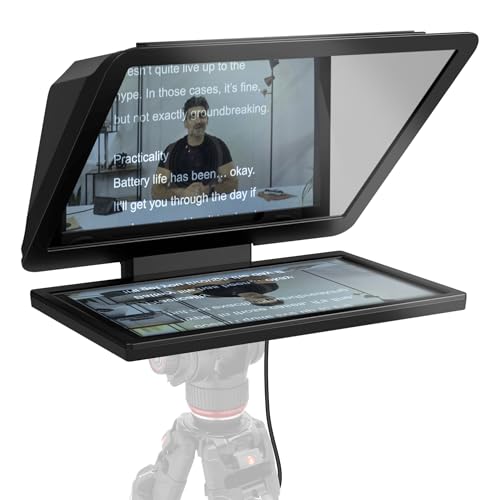 ELGATO Elgato Prompter XL, Full-Sized Teleprompter, Removable | 15.6-inch detachable Full…
View on Amazon ↗
Listing names and images come from Amazon and are rechecked against the live listings; last checked Nov 8, 2026. No prices shown; the current price is on the listing.
How to read this guide. This guide covers the camera teleprompter category as a whole, not any individual model. It is written from general knowledge of how these rigs work, without reading product reviews or testing units, so confirm the glass size and lens opening on the listing before you order.