The mount style and the surface decide everything. Screw mounts hold best on wood and brick but leave holes. Adhesive pads protect rental walls yet fail on rough or cold surfaces. Check the camera's weight, the viewing angle you need, and whether you can drill before comparing listings.
Match the Mount to the Wall, Not the Other Way Around
A mount that works on a wooden porch post may slide right off a vinyl fence. Rough brick breaks the seal of a flat adhesive pad. A clamp needs a lip to bite, so a flat gate frame may not offer one. Check the surface texture and whether it stays dry before anything else.
Rental apartments usually mean no drilling. Adhesive mounts and gutter clamps avoid deposit deductions, but only if the adhesive can bond to the painted surface and the camera is light enough. On a shaded porch, temperature swings and condensation can weaken some adhesives over time.
For brick walls, a screw mount with masonry anchors is the dependable route. Adhesive rarely survives the dust and uneven surface long term. If you cannot drill into brick, look for a mount that straps around a downspout or sits on a flat ledge instead of relying on a sticky pad.
Angle Range Decides Whether You See the Gate or the Sky
A fixed mount points the camera in one direction. That works only if the mounting spot already aims where you want to watch. Most gates and doorways need a downward tilt, which a flat wall plate cannot provide. A ball joint or adjustable arm gives you that downward angle.
Narrow door frames leave little room to swivel a camera sideways. A compact mount with a short arm can angle the lens without bumping into the trim. Check the listing's angle range: some mounts tilt 90 degrees but barely swivel, while others offer a full ball joint.
Outside gates move. A camera mounted on the gate itself swings with every opening. That can blur footage or point the lens at the ground. A mount on the stationary post beside the gate usually gives a steadier view than one attached to the gate panel.
Weather Sealing Matters More Than the Screw Finish
The Blink camera itself is weather resistant, but the mount is not always. A powder coated metal bracket can rust at the screw holes within a season if the coating chips. Stainless steel hardware resists rust longer. Plastic mounts do not rust, but cheap plastic can crack after a winter of expansion and contraction.
Check whether the mount covers the camera's USB port or leaves it exposed to rain. Some designs wrap around the camera body; others just hold the base. A mount that leaves the charging port open means you can top up the battery without unmounting the camera, which saves time but exposes the port to moisture.
On a shaded porch, the main threat is not sunlight but damp. Condensation can pool in the mount's joints and freeze. Look for drainage slots or a design that does not cup water. If the listing does not mention drainage, assume water can collect.
Removal Leaves a Mark, So Decide Before You Mount
Screw mounts leave holes that need spackle and paint. Adhesive mounts can leave residue or peel paint when removed, especially on older walls. Clamp mounts leave nothing except maybe a small indentation on a soft surface. Each removal method has a cost you pay later.
If you rent, check your lease before choosing. Many leases allow small nail holes but not adhesive residue on painted drywall. Others forbid any alteration. A clamp mount on a gutter or door edge sidesteps the wall entirely and leaves no trace.
For a camera you plan to move between rooms, an adhesive mount with a replaceable pad is easier to relocate than a screw mount. But each reapplication weakens the adhesive. A mount with a magnetic base or a quick release plate lets you remove the camera without peeling the pad off the wall.
How to Read a Blink Mount Listing Before You Add to Cart
Start with the weight limit. Blink cameras are light, but some mounts are built for heavier security cameras and may not grip a small Blink body tightly. A loose fit lets the camera wobble in wind, which turns footage into a blur. Check the listed compatibility rather than assuming one size fits all.
Then check the mounting hardware. Does the listing include masonry anchors for brick, or only wood screws? Are the screws stainless steel or zinc plated? Zinc screws rust faster outdoors. If the hardware is not described, ask the seller before buying.
Look at the product photos from the side, not just the front. A side view shows how far the camera sits from the wall and whether the arm clears a door frame. If the listing shows only front views, the mount may have a clearance problem the seller does not want you to see.
Finally, check the swivel range in the specifications, not the marketing copy. A mount advertised as adjustable may only tilt 30 degrees. That is enough for a high wall looking down, but not for a gate post that needs a sharp sideways angle.
- Confirm the mount fits your specific Blink model, not just the brand.
- Check whether masonry anchors and stainless steel screws are included.
- Look for side view photos that show how far the camera sits off the wall.
- Compare the tilt and swivel degrees in the specifications, not the headline.
Mount Styles Compared for Gates, Porches, and Rentals
| Mount style | Best wall surface | Angle flexibility | Wall damage | Typical weak spot |
|---|---|---|---|---|
| Screw mount | Brick, wood, stucco | Fixed or limited tilt | Visible holes | Rust at screw heads |
| Adhesive pad | Smooth painted drywall | Fixed, no adjustment | Residue or peeled paint | Cold or textured walls |
| Clamp mount | Gutter, shelf, rail edge | Often full ball joint | None to minimal | Needs a lip to grip |
| Magnetic base | Steel door or appliance | Manual repositioning | None | Only works on ferrous metal |
For a shaded porch with a wooden beam, a screw mount with a ball joint covers both the surface and the angle. For a rental apartment with a painted wall, an adhesive mount is the least invasive, but you trade angle adjustment and long term hold. A clamp mount on a gutter gives you both adjustment and no holes, but only if the gutter is close enough to the area you want to watch.
Cheap Mounts Fail in the Same Two Places
The first failure point is the joint. A plastic ball joint that feels tight in your hand can loosen after a few hot afternoons. The camera slowly droops until it points at the ground. Metal joints hold better, but check whether the tightening screw is easy to reach once the camera is mounted.
The second failure point is the adhesive bond. Most adhesive failures happen not on the first day but after a rain, a freeze, or a week of direct sun. The pad looks fine until the camera hits the ground. If you use adhesive, clean the wall with rubbing alcohol first and press the pad for a full minute. Even then, check the camera every few weeks.
Marketing terms like military grade or heavy duty do not tell you the actual holding force. Look for a stated weight capacity or a pull force number in the specifications. If the listing avoids numbers, the mount is probably designed for indoor use and dressed up with outdoor language.
When a Mount Is the Wrong Fix Altogether
A mount cannot fix a bad camera location. If the only spot with power or Wi-Fi points at a blank wall, no bracket will change that. Walk the area with your phone to check the Wi-Fi signal before you drill. A mount that places the camera behind a gutter or under a deep eave may block half the view.
Skip a mount entirely if you can place the camera on a flat surface. A windowsill, a fence cap, or a shelf can hold the camera without any hardware. The Blink camera's flat base sits stable on a level surface, and you can move it whenever the view needs to change.
For renters who cannot use adhesive or clamps, a freestanding camera on a shelf inside a window is the alternative. The glass reduces night vision and can cause glare, but it avoids wall damage completely. Weigh that tradeoff before buying a mount you cannot legally install.
Blink Mount Questions That Come Up After the Box Is Open
How do I mount a Blink camera on brick without drilling?
Adhesive pads rarely hold on brick because the surface is rough and dusty. A clamp mount on a nearby downspout, gutter, or fence rail is the most reliable no drill option. If no edge is available, place the camera on a flat ledge or use a heavy duty outdoor adhesive rated for masonry, but check the bond weekly.
Is a Blink camera mount worth it for a rental apartment?
Yes, if you choose a non damaging style. An adhesive mount or a clamp on a door edge or gutter avoids holes and keeps your deposit safe. Test the adhesive on a hidden spot first, because some paints peel when the pad is removed. A freestanding camera on a shelf is the zero risk alternative.
What should I look for in a Blink camera mount for outside?
Check three things: the mounting hardware, the angle range, and the weather resistance. Stainless steel screws and a powder coated or plastic body last longer outdoors. A ball joint gives you more aiming options than a fixed plate. Make sure the mount does not block the camera's USB port or night vision sensor.
Which Blink camera mount holds up best on a vinyl fence?
A screw mount with short, coated screws works on vinyl fence posts. Do not overtighten, or the vinyl can crack. If you cannot drill, a clamp mount on the fence rail is a good alternative. Avoid adhesive on vinyl, because the surface expands and contracts with temperature and the pad will eventually let go.
Can a Blink camera mount damage the wall?
Screw mounts leave holes. Adhesive mounts can leave residue or peel paint, especially on older or flat paint finishes. Clamp mounts leave little to no damage. To minimize damage, choose a mount that matches your wall type and test any adhesive in an inconspicuous area before committing.
The Mount to Start With Depends on One Wall
For a wood or brick wall where holes are acceptable, a screw mount with a metal ball joint gives the most reliable hold and the widest aiming range. For a rental apartment or any wall you cannot drill, switch to a clamp mount on a door edge, gutter, or shelf lip. That keeps the camera stable without costing you a deposit. If your only spot is a smooth painted wall and you accept the risk of residue, a quality adhesive pad is the fallback, but check it weekly.
Real blink camera mount listings, so you can check the points in this guide against actual products. These are affiliate links: as an Amazon Associate we earn from qualifying purchases, at no extra cost to you.
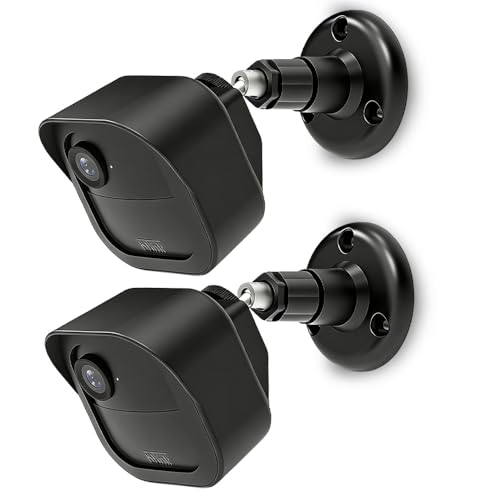 AUTOSONIC 2 Pack | All-New Mount for Blink Outdoor 4 and…
View on Amazon ↗
 FATKITT Blink Outdoor Camera Mount, 360 Degree Adjustable Indoor/Outdoor Wall Mount…
View on Amazon ↗
 LUCRAVE Blink Outdoor Camera Mount, 360 Degree Adjustable Wall Mount Bracket…
View on Amazon ↗
Listing names and images come from Amazon and are rechecked against the live listings; last checked Nov 8, 2026. No prices shown; the current price is on the listing.
What this guide is. Use this guide as a checklist to hold against any Blink camera mount listing you are considering. It covers the product type as a whole, not individual models, and is written from general category knowledge rather than product documents or tests. Verify any dimension, angle range, or weight limit on the listing before you buy.