Blade width and length range decide what a beard trimmer can do. Narrow blades handle edges and detail, wide blades clear a full beard faster. Skin contact matters most for sensitive or coarse hair. Buy for the beard you keep most often, not the one you might grow.
Pick the Beard You Actually Keep
A trimmer built for stubble will struggle on a full beard. Stubble needs a short, fine length range, often 0.5 to 5 millimeters. A full beard needs settings up to 20 millimeters or more, plus a wider blade to clear bulk.
Everyday grooming favors a cordless trimmer that charges fast and runs for a week of short sessions. If you only tidy edges once a week, a corded model works and costs less.
Travel changes the decision. Look for a compact body, a travel lock, and dual voltage if you fly between countries. A long battery life means fewer chargers to pack.
Sensitive skin calls for rounded blade tips or a foil head that does not drag. Coarse hair needs more power, often a stronger motor, so the blade does not pull.
If you shave clean most days, a beard trimmer is the wrong tool. A dedicated foil shaver or rotary shaver will be faster and closer. Buy a trimmer only if you keep visible facial hair at least a few days a week.
For beginners, start with a trimmer that has clear guard markings and a wide range of settings. That way one tool teaches you which lengths suit your face before you spend more.
Blade Width Sets the Speed
Blade width is the first decision. A narrow blade, around 20 to 25 millimeters, is precise for cheek lines, necklines, and mustache edges. A wide blade, often 35 to 45 millimeters, clears a full beard in fewer passes.
Wide blades can miss the hollow under the jaw and the curve around the lip. If you keep a shaped beard, you will pair a wide blade with a separate detail trimmer or buy a model with both heads.
Detail trimmers are small, often 10 to 15 millimeters, and handle sharp lines around the mouth and sideburns. They are slow for anything larger than a goatee.
Foil shaver heads sit at the opposite end. They cut almost to the skin and work for clean necklines and stubble fading. They clog faster with long hair, so they are a finishing tool, not a bulk tool.
Compare the blade width in the listing to the area you trim most. A wide blade on a short goatee is overkill; a narrow blade on a thick beard doubles your grooming time.
| Blade style | Best length | Cleanup effort | Edge precision |
|---|---|---|---|
| Narrow blade | Stubble to medium | Low | High |
| Wide blade | Medium to long | Low | Moderate |
| Detail trimmer | Short lines and edges | Moderate | Very high |
| Foil shaver head | Stubble and clean neck | High | Very high |
The table shows why most people end up with two heads. A trimmer that includes a wide blade and a detail head covers both bulk and edges without a second tool.
Length Range Locks the Look
Length settings decide what the trimmer can produce. Stubble looks best with fine steps, often 0.5 millimeter increments up to about 5 millimeters. A full beard needs steps of 2 or 3 millimeters up to 20 millimeters or more.
A dial or wheel with many settings is more flexible than a set of clip on guards. Guards get lost and limit you to their fixed lengths. A built in adjustable comb stays attached and changes length in seconds.
Check the minimum setting. Some trimmers leave 1 millimeter of hair, which reads as shadow, not stubble. If you want a closer look, you need a trimmer that cuts to 0.5 millimeter or includes a foil head.
For long beards, ignore the maximum setting on the box. A trimmer that claims 20 millimeters may only reach that with a bulky guard that leaves uneven patches. Look for a model where the longest guard still feeds hair smoothly.
Beginners should buy a trimmer with at least ten length steps. That range lets you experiment without buying a second tool. If you already know your length, a simpler dial with five steps is enough.
Skin Contact Decides Comfort
Blade tips are the part that touches your skin. Rounded or blunted tips are less likely to nick or irritate. Sharp square tips cut closer but can catch on bumps, especially on the neck.
Sensitive skin does better with a foil shaver head for clean areas and a trimmer with rounded tips for the rest. Avoid trimmers with exposed blade corners if your neck breaks out after every trim.
Coarse hair pulls more than fine hair. A stronger motor, often listed as higher strokes per minute, helps the blade cut through without tugging. Look for a motor speed above 6,000 strokes per minute if your beard is wiry.
Some trimmers have a hypoallergenic coating on the blade, often titanium or ceramic. These reduce friction and heat, which helps if your skin reddens after a trim. The coating matters less if you use a guard and the blade never touches skin.
Check the listing for the blade material and tip shape. If the description does not mention rounded tips or a skin safe coating, assume the blade is sharp and plan to use a guard.
Wet, Dry, and the Cleanup After
A waterproof trimmer can be rinsed under the tap or used in the shower. That saves time and is gentler on sensitive skin, since warm water softens hair. A non waterproof trimmer must be brushed out, which takes longer.
Check the IP rating on the listing. IPX7 means the trimmer can be submerged briefly, so rinsing is safe. IPX4 only resists splashes, so a quick rinse is fine but do not hold it under running water for long.
Oil is a long term cost that many buyers forget. Most blade heads need a drop of clipper oil every few weeks to stay sharp and quiet. A trimmer with a self sharpening blade still needs lubrication.
Replacement blades are another cost. Foil heads and detail blades wear out and need replacing, often every 6 to 12 months with daily use. Check whether the listing sells replacement heads before you buy the trimmer.
If you trim in the shower, a wet and dry trimmer is the only option. Dry only trimmers will clog and rust. For travel, a wet and dry trimmer is also easier to clean in a hotel sink.
Read the Listing for What It Does Not Say
Battery life is often listed as minutes per charge, but that number assumes a full battery and a short trim. A 60 minute runtime may mean 40 minutes if you trim a thick beard at full power. Ask the seller how long the trimmer runs at the highest speed.
Charge time is just as important. A trimmer that takes 4 hours to charge is useless if you forget to plug it in before a trip. Look for a quick charge feature, often 5 minutes for one trim, listed in the details.
Corded and cordless operation is a real feature. A trimmer that runs while plugged in saves you when the battery dies mid trim. If the listing only says cordless, assume it cannot be used while charging.
The guard system is where listings get vague. Clip on guards can be lost or crack. Check whether the trimmer has a built in adjustable comb and whether the guards are sold separately if one breaks.
Noise level is rarely listed, but motor type hints at it. Rotary motors are quieter than pivot motors. If you trim early in the morning and want quiet, ask the seller about the decibel rating or motor type.
Weight matters for long sessions. A heavy trimmer tires your hand when you shape a full beard. A light plastic body is easier to control but may feel flimsy. Compare the weight in the listing to the battery size, since bigger batteries add grams.
Marketing Claims to Ignore
Laser guided trimmers promise precise lines, but the laser is a gimmick. Your mirror and a steady hand do the same job. Pay for blade quality, not a red dot.
Self sharpening blades sound appealing, but all blades dull eventually. The term means the blades rub against each other to stay aligned, not that they never need replacing. You still need oil and occasional replacement.
A 10,000 stroke per minute motor matters less than the blade and guard. Higher speed helps with coarse hair, but a dull blade at high speed still pulls. Check the blade material before the motor number.
Vacuum systems that catch trimmed hair work on short stubble but clog with long beard hair. If you trim a full beard, expect to clean the vacuum chamber as often as you would sweep the sink.
Digital displays that show battery percentage are convenient but add cost. A simple LED indicator is enough for most people. Spend the difference on a better blade or a longer warranty.
Titanium and ceramic blades are often coatings, not solid metal. They reduce friction and heat, which helps sensitive skin, but they do not stay sharper forever. The coating can wear off after a year of daily use.
The Wrong Tool for the Job
A beard trimmer is not a shaver. If you want a clean face every morning, a foil or rotary shaver will be faster and closer. A trimmer leaves at least 0.5 millimeter of hair.
A beard trimmer is not a hair clipper. Hair clippers have wider blades and stronger motors for thick head hair. Using a beard trimmer on your head will overheat the motor and dull the blade faster.
A beard trimmer is not a body groomer. Body groomers have rounded blades and longer guards designed for sensitive areas. A beard trimmer can nick loose skin on the chest or groin.
If you keep a long, thick beard, a trimmer with a wide blade and long guards is enough for maintenance. But if you shape it weekly, you will also want a detail trimmer for the cheek and neck lines.
If you travel often for work, a compact trimmer with a travel lock and dual voltage is worth more than a premium home model. A trimmer that turns on in your bag will be dead when you arrive.
If your skin breaks out after every trim, the problem may be your prep, not the tool. Trim after a warm shower, use a pre shave oil, and rinse the blade after every pass. A foil head for the neck can also help.
Beard Trimmer Questions Worth Asking
What is the difference between a beard trimmer and a shaver?
A beard trimmer cuts hair to a set length, leaving at least 0.5 millimeter of stubble. A shaver cuts at skin level for a clean shave. Foil and rotary shavers use thin screens and oscillating blades, while trimmers use a moving blade against a stationary comb. If you want visible facial hair, buy a trimmer. If you want a smooth face, buy a shaver.
Is a beard trimmer worth it for stubble?
Yes, if you keep stubble most days. A trimmer with a 0.5 to 5 millimeter range and fine steps will maintain a consistent shadow. Without one, you would have to shave and wait for regrowth, which looks uneven. A foil shaver can also create a stubble look by shaving with the grain, but a trimmer gives more control over length.
How do I choose a beard trimmer for sensitive skin?
Look for rounded blade tips, a hypoallergenic coating like titanium or ceramic, and a waterproof body so you can trim after a warm shower. A foil shaver head for the neck is gentler than an open blade. Avoid trimmers with exposed sharp corners, and use a guard so the blade does not drag on your skin.
Which beard trimmer is best for a long beard?
A trimmer with a wide blade, often 35 to 45 millimeters, and guard settings up to 20 millimeters or more. A strong motor helps with coarse hair. Look for a built in adjustable comb rather than clip on guards, since long guards can bend and leave uneven patches. A detail trimmer for the edges is a useful second head.
Can I use a beard trimmer for body hair?
No. Body groomers have rounded blades and longer guards designed for sensitive areas. A beard trimmer has sharper corners and can nick loose skin on the chest, groin, or underarms. The blade width is also wrong for large areas, making the job slow and uncomfortable. Buy a dedicated body groomer if you need one.
The Pick for Your Morning Routine
A man who trims a short to medium beard every other morning should buy a cordless trimmer with a narrow to medium blade, ten or more length steps, and rounded blade tips. That combination handles stubble and a shaped beard without irritation. If you keep a long, thick beard instead, switch to a wide blade model with guards up to 20 millimeters and a detail head for the edges.
Real beard trimmer listings, so you can check the points in this guide against actual products. These are affiliate links: as an Amazon Associate we earn from qualifying purchases, at no extra cost to you.
 NAUQUOHZ Men's Beard Trimmer-All-in-One Mustache Trimmer for Men with 20 Length…
View on Amazon ↗
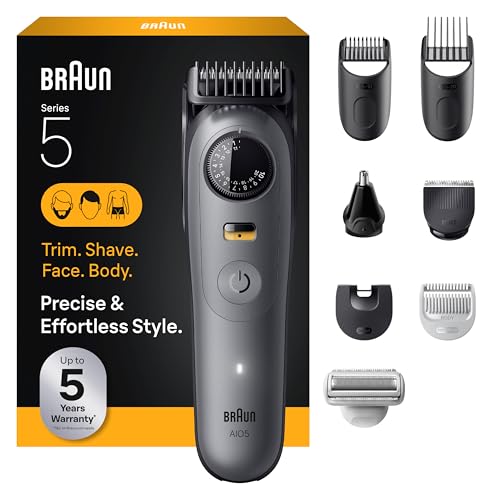 BRAUN Braun Series 5 All-in-One Beard & Body Grooming Kit for…
View on Amazon ↗
 UFREE Ufree Adjustable Beard Trimmer for Men, Mustache Trimmer, Electric Shaver…
View on Amazon ↗
Listing names and images come from Amazon and are rechecked against the live listings; last checked Nov 8, 2026. No prices shown; the current price is on the listing.
What this guide is. This guide is written from general knowledge of how beard trimmers work, not from testing individual models. It cannot tell you whether a specific listing's battery life, blade quality, or guard fit is accurate, so check the dimensions and runtime on the product page before you buy.