Start with the battery chemistry and the size you actually need to recharge. NiMH AA and AAA users want a smart bay charger, while lithium ion and device owners often need a USB-C wall or travel charger. Decide between speed, portability, and multi chemistry support. A compact desk charger can fail you in a power outage if it cannot run from a power bank.
Match the Charger to the Chemistry You Own
Battery chargers are not universal, even when the plug fits. Nickel metal hydride batteries in AA and AAA sizes need a charger that detects each cell and stops before overcharging. Lithium ion packs inside phones, cameras, and power tools use a different voltage curve and usually charge through USB-C, a barrel connector, or a dock.
Lead acid batteries in cars and backup systems run on yet another profile. A charger built for one chemistry can damage another or simply refuse to start. Before comparing listings, list every battery you will recharge in a typical month, not just the one in your hand right now.
Some bay chargers support both NiMH and lithium ion sizes like 18650 or 21700, but check the slot lengths carefully. A charger that fits an 18650 may not fit a protected 21700 cell. Chemistry support is the first filter because it eliminates most of the market at once.
Bay Chargers, Wall Plugs, and the Space Between
A smart bay charger is the workhorse for people who own a drawer of rechargeable AA, AAA, C, or D cells. It holds each cell individually and monitors voltage, temperature, and charge state. This is the design to pick when you rotate batteries through remotes, flashlights, toys, or camera flashes.
A USB wall charger with one or more USB-C ports is a different tool. It does not charge loose cells; it powers devices that hold their own battery inside. This is the right pick for a phone, tablet, earbuds case, or a small power bank on a desk or nightstand.
Car chargers and solar chargers cover the gap for travel and outages. A car charger runs from a 12 volt socket and often includes both USB ports and a bay for loose cells. A solar panel charger works slowly but keeps small devices alive when the grid is down for days.
| Design type | Best for | Charge speed | Battery care | Off grid use |
|---|---|---|---|---|
| Smart bay charger | AA, AAA, C, D, 9V cells | Moderate | Strong | Sometimes with car adapter |
| USB-C wall charger | Phones, tablets, earbuds | Fast | Limited | No |
| Analyzer bay charger | Conditioning old cells | Slow | Very strong | Rarely |
| Solar or crank charger | Outages and camping | Slow | Moderate | Yes |
Analyzer chargers add discharge and capacity testing, which matters if you have older cells and want to know which ones still hold a useful charge. They cost more and take longer, but they can revive a battery that a basic charger would reject as faulty.
Outage Duty Is a Different Job Than Desk Duty
A charger that works beautifully on a home office desk can be useless when the power goes out. Wall chargers stop the moment the outlet dies. If your main worry is a storm, a blackout, or a long camping trip, choose a charger that can pull power from a car, a power bank, or the sun.
For power outages, the most flexible setup is often a bay charger that accepts a 12 volt car adapter plus a USB power bank large enough to run it overnight. Some bay chargers include a USB output port, which lets the same unit charge your phone from the AA batteries inside it. That reverses the usual flow and turns a charger into a small emergency power source.
Check the input options before buying. A USB-C input on a bay charger means it can run from a laptop charger, a car USB port, or a solar panel with a USB output. A charger with only an AC wall plug limits you to places with working outlets.
Speed Claims Hide the Real Charge Time
Marketing often leads with a maximum charge current, but that number only applies to one slot under ideal conditions. A four bay charger may deliver 1 amp per cell when all four bays are full, or 2 amps to a single cell when the others are empty. Compare the per slot current at full occupancy, not the headline rate.
Faster charging generates more heat, and heat shortens battery life. A charger with a fan or well spaced bays can hold a higher current without cooking the cells. If you do not need batteries back in an hour, a slower charge is usually gentler and quieter.
For lithium ion USB devices, wattage tells more than amps. A 65 watt USB-C charger can power a laptop; a 20 watt charger can fast charge a phone but will crawl on a tablet. Match the wattage to the largest device you will plug in, and check that the charger supports the fast charging standard your device uses.
Read the Listing Like a Technician, Not a Shopper
Start with the supported chemistries and sizes. If the listing does not clearly state NiMH, lithium ion, or lead acid, assume it does not support the one you need. Look for the exact battery sizes in millimeters or standard names like AA, 18650, or 21700.
For bay chargers, check how charge termination works. The best units use negative delta voltage detection plus a temperature sensor. A charger that relies on a simple timer can overcharge cells that were not fully empty. Independent channels matter more than the number of bays: four independent channels mean each cell gets its own program.
Ask the seller about the full load charge current, the input voltage range, and whether a car adapter is included or sold separately. If a listing only shows a photo of the unit with no specifications table, treat that as a red flag. Compare the physical dimensions to the space where you will keep it, especially if it will ride in a glove box.
Other electronics guides cover nearby categories like power and adapter options, but the charger itself needs this level of listing detail.
The Desk Organization Trap
A charger that looks tidy on a desk can disappoint in daily use if the cable arrangement fights you. Wall chargers with ports on the side suit a desk against a wall; ports on the bottom work better on a nightstand where the cord drops out of sight. Think about where the cable will bend and whether the plug will block the neighboring outlet.
Bay chargers are bulkier than they look in photos. A four bay charger with a power brick can occupy a surprising footprint. If it will live on a desk, look for a low profile unit with the display on top and the power input on the back. If it will travel, a folding plug or a detachable AC cord saves space.
Cable management is part of the purchase. A charger with a built in cable is convenient until the cable frays; a charger with a detachable USB-C cable is easier to replace. For a permanent desk setup, a short right angle cable often fits better than the long straight cable that comes in the box.
Long Term Costs Hide in the Batteries, Not the Charger
A quality charger can last a decade, but the batteries it charges will not. If you buy a bay charger for NiMH cells, plan to replace the cells every few years depending on use. Low self discharge cells like eneloop style batteries hold their charge longer in storage, which matters for emergency kits that sit untouched for months.
Cheap chargers can damage expensive batteries. A poorly regulated charger that overcharges a lithium ion cell can ruin it in a few cycles or create a fire risk. Spending more on the charger often protects the larger investment in the batteries themselves.
If you only use disposable alkaline batteries, a charger may not pay for itself. Rechargeable cells cost more up front but pay back after a handful of recharge cycles. Skip the charger if your household burns through fewer than a dozen batteries a year; stick with disposables and save the drawer space.
Who Should Skip a Dedicated Charger
Some people do not need a separate charger at all. If every device you own charges over USB-C and you already have a good multi port wall charger, a new battery charger adds nothing. The same applies if you use only disposable batteries and have no interest in switching.
For international travel, a universal USB charger with interchangeable plug adapters often beats a dedicated battery charger. Most modern devices accept 100 to 240 volts, so a simple plug adapter is enough. A bay charger for loose cells is only worth packing if you carry a camera flash or other AA powered gear.
In a home office, a desktop charging station with built in cable management may serve better than a standalone charger. If the goal is tidiness rather than battery care, a weighted base with multiple USB ports and a phone stand solves the desk problem more directly.
Questions People Ask Before Buying a Battery Charger
Is a battery charger worth it if I only use AA batteries?
Yes, if you go through more than a dozen AA cells a year. A smart bay charger plus four rechargeable NiMH cells pays for itself within a year for most households. If you use fewer batteries, disposable cells are cheaper and simpler. The exception is emergency gear, where rechargeable cells stored in a charger make less sense than a sealed pack of lithium disposable batteries.
Which battery charger works for both AA and 18650 batteries?
Look for a bay charger that explicitly lists NiMH and lithium ion support with adjustable or automatic slot lengths. Many four bay chargers handle AA, AAA, and 18650, but fewer fit protected 21700 cells. Check the slot length in millimeters and confirm the charger detects chemistry automatically or lets you select it manually.
Should I buy a fast charger or a slow charger?
Fast charging is convenient but generates more heat, which shortens battery life over many cycles. If you need batteries back within an hour for a camera flash or a gaming controller, a fast charger makes sense. For overnight charging or long term battery health, a slower charger is gentler. Some chargers let you choose the current per bay.
Can I use a car battery charger for AA batteries?
No. A car battery charger is built for 12 volt lead acid batteries and will destroy AA cells. The term battery charger covers several unrelated tools. For AA and AAA cells you need a bay charger designed for NiMH chemistry. For a car you need a lead acid charger or maintainer. They are not interchangeable.
How do I choose a charger for power outages?
Pick a charger that can run from a 12 volt car socket or a USB power bank, not just a wall outlet. A bay charger with a USB input and output works well: charge AA cells from a power bank, then use the charged cells to top up a phone through the USB output. A solar panel adds a third input for longer outages.
Which Battery Charger Fits Your Shelf and Your Worst Day
A smart four bay charger with independent channels and USB input covers the most common household: AA and AAA cells for remotes, flashlights, and toys, plus a way to run it from a power bank in an outage. If most of your devices charge over USB-C, skip the bays and buy a compact two port wall charger instead. For a car or camping kit, choose a charger that includes a 12 volt adapter and a USB output.
Real battery charger listings, so you can check the points in this guide against actual products. These are affiliate links: as an Amazon Associate we earn from qualifying purchases, at no extra cost to you.
 KEENSTONE Keenstone 18650 Battery Charger, Smart Universal Charger LCD Display for…
View on Amazon ↗
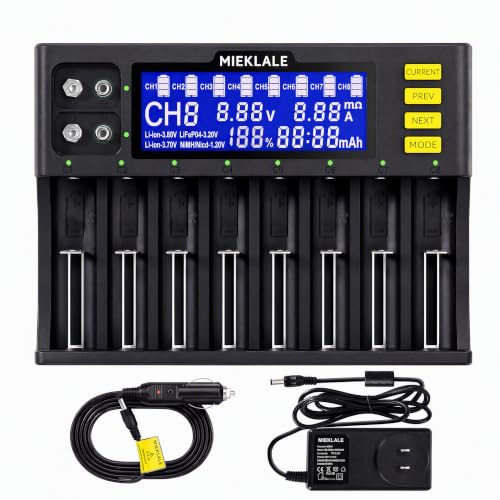 MIEKLALE MIEKLALE 18650 Battery Charger,8+2 Bays Battery Charger with LCD Display…
View on Amazon ↗
 SNADO Snado 18650 Battery Charger, Universal Smart Charger for Li-ion NiMH…
View on Amazon ↗
Listing names and images come from Amazon and are rechecked against the live listings; last checked Nov 8, 2026. No prices shown; the current price is on the listing.
What this guide is. This guide covers the battery charger category as a whole, from bay chargers to wall plugs and solar options. It is written from general knowledge of how these products work, not from individual product documents or tests, so verify any listed dimensions or supported chemistries before ordering.