Focus on two decisions: seal style and fabric. A zippered encasement blocks the most allergens but is harder to install. A fitted or zippered cover with breathable fabric is easier to wash but lets more particles through. Most sleepers in apartments or dorms with dust mite or pet allergies should start with a full zippered encasement on mattress and pillows, then add breathable covers if heat or noise bothers them.
Zippered Encasement or Fitted Protector
Allergen covers come in two main forms. A full encasement zips around all six sides of the mattress. It locks in dust mites, dead skin, and pet dander that already live inside the mattress. It also stops new particles from settling in.
A fitted protector covers only the top and sides, like a deep pocket sheet. It is easier to remove for washing. However, the elastic hem leaves the bottom and corners exposed, so allergens can still reach the mattress surface.
For allergy control, a zippered encasement is the more effective design. Reserve fitted protectors for dorm rooms or guest beds where you need frequent, quick changes and accept less protection.
Fabric Pore Size and Weave
An allergen cover works by creating a physical barrier. The important specification is average pore size, often listed in microns. Dust mite allergens are around 10 to 20 microns. Cat and dog dander can be smaller, under 10 microns.
A fabric with an average pore size of 10 microns or less will block most dust mite particles. Some tightly woven polyester or polypropylene covers list pore sizes under 5 microns. These are the most protective but can feel stiff and warm.
Breathable covers use looser weaves or knit cotton blends. They sleep cooler but let more fine particles through. Check the listing for a pore size or particle filtration claim. If no number is given, assume it is a comfort cover rather than a true barrier.
| Cover design | Allergen block | Breathability | Wash ease | Best for |
|---|---|---|---|---|
| Full zippered encasement | High | Low to medium | Medium | Dust mite and pet allergies |
| Zippered breathable cover | Medium | High | Medium | Hot sleepers with mild allergies |
| Fitted protector | Low | High | High | Dorm rooms and frequent washers |
| Fitted terry cotton pad | Very low | Medium | High | Sweat protection only |
A cover can be both zippered and breathable, but the two goals pull against each other. A looser weave improves airflow and reduces that crinkly feel. It also lets more allergenic particles pass. Decide which factor matters more before you shop.
What the Listing Should Tell You
Start with the seal. A true encasement will say it covers all six sides and has a full length zipper with a closure flap. If the listing only says 'fitted' or 'deep pocket,' it is a protector, not an encasement.
Next, look for a pore size or micron rating. A claim like 'blocks 99% of dust mite allergens' is meaningful only if it names the particle size tested. Generic phrases like 'hypoallergenic' or 'allergy relief' are marketing terms with no standard definition.
Check the zipper details. A small tooth zipper with a fabric flap over the closure reduces gaps. The flap should cover the zipper pull completely. Also confirm the cover is machine washable and can handle hot water, since heat kills dust mites.
Ask the seller three questions if the listing is vague: What is the average pore size in microns? Is the zipper covered by a fabric flap? Can the cover be washed at 60 degrees Celsius or higher? If they cannot answer, treat the product as a basic protector.
Washing and Replacement Costs
Every allergen cover loses effectiveness as it collects dust, skin flakes, and dander. Plan to wash the cover every two to four weeks in hot water. Check the care label first; some covers shrink or delaminate in high heat.
A zippered encasement is bulky to remove and reinstall. Budget ten to fifteen minutes for the job. Fitted protectors wash and replace in a few minutes, which is why they suit dorm rooms and frequent washers.
Expect to replace an allergen cover every two to three years. Zippers wear out, fabric thins, and pore size can enlarge with repeated washing. If your allergies return after a period of relief, a worn cover is a likely cause.
When a Cover Is Not Enough
A mattress cover only addresses allergens from the mattress. In a dusty room or pet household, allergens also settle in bedding, carpet, curtains, and upholstery. You will need to wash sheets weekly and vacuum floors regularly.
Some sleepers should skip an allergen mattress cover entirely. If you have no dust mite or pet allergy, a plain mattress protector for spills and sweat is cheaper and more comfortable. If your main problem is seasonal pollen, a room air purifier may help more than a cover.
For severe dust mite allergy confirmed by a doctor, a full encasement on the mattress, box spring, and pillows is the standard approach. A single fitted cover on the mattress alone will not control symptoms.
Bed Sizes and Odd Mattress Shapes
Check the depth range before buying. Many zippered encasements fit mattresses from 9 to 14 inches deep. If you have a pillow top or a mattress topper, measure the total height and look for a deep or extra deep encasement.
Dorm beds often use twin XL mattresses with unusual depths. A fitted protector with a stretchy skirt is more forgiving than a zippered encasement in that setting. Apartment beds with storage drawers underneath may make a full encasement harder to zip closed.
If you use a mattress topper for comfort, place the allergen encasement over the topper and mattress together. That way the topper, which collects skin flakes, is sealed inside the barrier.
Noise, Heat, and Sleep Comfort
Tightly woven synthetic fabrics can crinkle when you move. That noise bothers some sleepers. Cheaper polypropylene covers are often the loudest. Woven microfiber and knit cotton blends are quieter but less protective.
A full encasement can trap body heat. If you sleep hot, look for a cover that lists breathable construction or a moisture wicking top panel. You will trade some allergen blocking for comfort.
Under a fitted sheet, most covers are unnoticeable. If the cover feels stiff or noisy, a thicker mattress pad on top can soften the feel without reducing the barrier underneath.
The Pet and Dusty Room Problem
In a pet household, dander is fine and sticky. It works into mattress seams and fabric. A full zippered encasement is the best defense because it stops dander from reaching the mattress interior.
In a dusty room, the main allergen is usually dust mite waste. Mites thrive in warm, humid bedding. A cover with a pore size under 10 microns prevents mites from colonizing the mattress itself.
For small bedrooms or apartments, you cannot move the bed away from a dusty window or vent. In those spaces, pair a zippered encasement with weekly hot washing of sheets and pillowcases. The cover alone will not fix a dusty environment.
Allergen Mattress Cover Questions, Answered
What is an allergen mattress cover?
It is a fabric barrier that fits over or around a mattress to block dust mite allergens, pet dander, and pollen. A full encasement zips around all six sides for the strongest protection. A fitted protector covers only the top and sides and is less effective.
Should I buy a zippered or fitted allergen cover?
Buy a zippered encasement if you have confirmed dust mite or pet allergies and want maximum protection. Buy a fitted protector if you need to wash the cover frequently, live in a dorm, or have only mild, seasonal symptoms.
Is an allergen mattress cover worth it?
For dust mite or pet dander allergies, yes. A zippered encasement can significantly reduce nighttime symptoms by sealing the mattress, which is a major allergen reservoir. If your allergies are mild or seasonal, a basic protector plus regular washing may be enough.
How do I compare allergen mattress covers?
Compare three specifications: seal type, average pore size in microns, and wash temperature limit. A full zippered seal with a pore size under 10 microns and hot water tolerance is the strongest combination. Ignore vague terms like hypoallergenic.
Which allergen mattress cover works for pet households?
A full zippered encasement with a tight pore size works best because pet dander is small and sticky. Look for a cover that lists a particle filtration size under 10 microns and has a zipper flap to close gaps.
Which Allergen Mattress Cover Fits Your Bed
An apartment or dorm sleeper with dust mite or pet allergies gets the most relief from a full zippered encasement with a pore size under 10 microns and a zipper flap. Install it once, wash it monthly in hot water, and pair it with weekly sheet changes. Choose a fitted protector instead if you live in a dorm with frequent laundry runs or only need sweat and spill protection. A breathable zippered cover is the wrong trade for severe allergies, but it suits a hot sleeper with mild symptoms.
Real allergen mattress cover listings, so you can check the points in this guide against actual products. These are affiliate links: as an Amazon Associate we earn from qualifying purchases, at no extra cost to you.
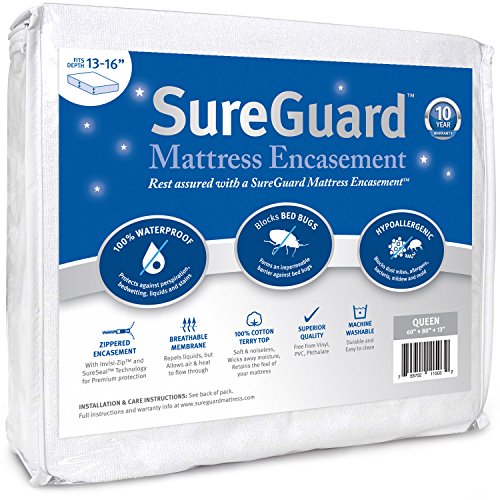 SUREGUARD MATTRESS PROTECTORS Queen (13-16 in. Deep) SureGuard Mattress Encasement - 100% Waterproof,…
View on Amazon ↗
 FAUNNA FAUNNA 100% Cotton Bed Bug Dust Mite Mattress Protector Cover…
View on Amazon ↗
 PLUSHDELUXE PlushDeluxe Bamboo Waterproof Mattress Protector, Queen Size, Ultra Soft |…
View on Amazon ↗
Listing names and images come from Amazon and are rechecked against the live listings; last checked Nov 8, 2026. No prices shown; the current price is on the listing.
Scope and limits. Use this guide as a checklist when you read any allergen mattress cover listing. The advice reflects how the product type works in general, not any single model, and you should confirm dimensions, pore size, and wash limits on the page before buying.