Two things decide most of it: the height range matching your wrist crease, and the shaft build staying rigid under your weight. Grips and tips matter next, mostly for hand comfort and floor grip on your usual surfaces. If you weigh more or walk on uneven ground, choose a metal shaft and a wide base tip. If you mostly need light support indoors, a lighter shaft and standard tip can work. The tradeoff is between a cane that feels light in your hand and one that feels planted when you lean on it.
Set the Height Before You Compare Anything Else
An adjustable cane only helps if you can set it so your elbow bends slightly when your hand rests on the grip. Stand in your usual shoes, let your arm hang, and measure from the floor to the crease of your wrist. That number is your target height. If the cane's range does not include it, every other feature is secondary.
Most adjustable canes cover roughly 30 to 39 inches, but the lower and upper ends vary. A shorter person may need a range starting around 28 or 29 inches. A taller person may need one reaching 40 inches or more. Check the listing's stated range, not the product photo.
Set the cane too high and your shoulder lifts, which tires your arm and tilts your spine. Set it too low and you lean toward that side, which puts more load on the hip and knee. The right height keeps your wrist near the top of the hip bone while your elbow stays relaxed.
Shaft Material Decides How Much the Cane Flexes
Aluminum is the most common shaft material because it is light and resists corrosion. It can flex slightly under a heavy lean, which some people notice as a soft or springy feel. If you want the cane mostly for balance cues and light support, aluminum is often enough.
Steel is heavier and stiffer. It transfers more of your weight straight down to the tip, which can feel more secure if you lean hard or weigh more. The tradeoff is arm fatigue from lifting a heavier cane many times a day.
Wood shafts have a warm, solid feel and do not conduct cold the way metal does. They are less common in adjustable models because the locking mechanism has to work with a wood tube. A wood adjustable cane may still be stiffer than aluminum but heavier than a slim aluminum model.
Carbon fiber is light and very stiff, but it tends to pass more road vibration up to your hand. That can matter on concrete or rough sidewalks. It also usually costs more than aluminum or steel.
Handle Shape Changes Where the Pressure Lands
The classic crook handle hooks over your arm when you are not using it, but it concentrates pressure on a smaller part of the palm. A derby or Fritz handle has a broader, flatter top that spreads the load across more of your hand. An ergonomic or offset handle positions your wrist more neutrally, which can reduce strain during longer walks.
Handle diameter matters too. A very thin handle forces your fingers to curl tightly, which can aggravate arthritis or hand fatigue. A very thick handle can be hard to grip securely. If you can, compare the grip circumference in the listing or try a similar shape in person.
Foam and gel covers soften the contact point but add bulk and can wear down or tear over time. A contoured plastic or rubber handle without a foam sleeve may last longer and be easier to clean, though it can feel harder on the first few uses.
The Tip and Base Do the Actual Gripping
A single rubber tip with a flat bottom works on dry, even floors. On tile or polished wood, look for a tip made of a softer rubber compound that resists slipping. A worn tip is one of the most common reasons a cane slides out, so check whether the listing says the tip is replaceable.
A quad base, the four footed version, stands on its own and offers a wider stance. That can help on carpet, grass, or when you need to let go of the cane briefly. The tradeoff is weight and a slightly wider footprint that can catch on doorways or furniture.
Some canes include a built in ice tip or a flip down cleat for winter. If you walk on snow or ice, a metal cleat bites into the surface in a way rubber cannot. If you do not face those conditions, the extra mechanism is just more parts to maintain.
Adjustment Mechanism: Pin, Twist, or Folding
The most common adjuster is a spring loaded push button that pops through a hole in the shaft. It is quick to set, but the button can rattle or the hole can wear oval over time. A locking collar or twist lock clamps the two shaft sections together, which often feels more solid but takes a few extra seconds to adjust.
Folding canes collapse into several segments connected by an internal cord. They are easy to pack in a bag or car, but the joints can loosen after repeated folding. For daily indoor and outdoor use, a one piece telescoping shaft tends to feel more stable than a folding model.
Check the listing for the number of height positions or the minimum and maximum height. A cane with only a few widely spaced holes may not land exactly at your wrist height. A twist lock lets you set any height within the range, which is more precise.
Long Term Costs Hide in Tips, Grips, and Joints
The cane itself is often a one time purchase, but the tip is a wear part. Rubber tips flatten and lose tread after months of daily use on pavement. A replaceable tip costs little but matters for safety. Check whether the cane uses a standard tip diameter you can buy separately.
Foam grips absorb sweat and skin oils and may need replacing or wrapping after a year or two. A solid rubber or plastic grip lasts longer. Folding canes have internal cords and joint locks that can fail, and those parts are not always replaceable.
If you choose a quad base or a specialized ice tip, those parts may be specific to that model. Before buying, consider whether you can get replacements easily or whether a worn part would mean replacing the whole cane.
Small Spaces and Long Sits Shape the Cane You Need
In a small bathroom, a wide quad base can be harder to place between the toilet and the tub. A slim single tip is easier to tuck beside the sink or the shower. If you use the cane mainly at home, weight matters less than maneuverability around furniture and narrow doorways.
For long sitting hours at a desk or in a car, a folding cane is easier to stow beside you or in a bag. A one piece cane may end up leaning against a wall where it can fall. If you stand up after sitting for a long time, a cane with a stable base gives you something solid to push against.
Older adults often use a cane for balance more than for weight bearing. In that case, a lighter aluminum shaft with a comfortable handle reduces arm fatigue. A heavier steel or quad cane is better for someone who leans on the cane to get up from a chair or to climb a step.
Which Features Are Real and Which Are Just Marketing
Some listings emphasize a shock absorbing tip or a spring in the shaft. A shock absorbing tip can reduce vibration on hard floors, but it may also feel slightly less stable because the tip compresses. If you need firm contact, a solid tip is more predictable.
Built in LED lights sound useful but add a battery and a switch. If you walk in the dark, a small flashlight or a lighted path may serve you better. A cane with a light built into the handle also adds weight and another part to fail.
Wrist straps keep the cane from falling if you let go, but a strap around your wrist can jerk your arm if the cane catches on something. Many people prefer a crook handle they can hang over an arm or a table edge instead of a strap.
Comparison Table: Shaft and Base Choices at a Glance
| Shaft material | Base style | Stability feel | Weight feel | Suits |
|---|---|---|---|---|
| Aluminum | Single tip | Moderate | Light | Balance support, indoor use |
| Steel | Single tip | High | Heavy | Heavier lean, hard floors |
| Aluminum | Quad base | High | Moderate to heavy | Uneven ground, standing up |
| Carbon fiber | Single tip | Moderate | Very light | Long walks, hand fatigue |
| Wood | Single tip | Moderate to high | Moderate | Warm feel, light support |
Match the shaft and base to how much you lean, not to how the cane looks. A quad base on an aluminum shaft can feel as stable as a steel cane with a single tip, but it weighs less and stands on its own.
Read the Listing for These Four Numbers
First, find the height range and confirm your wrist height sits inside it. Second, check the maximum user weight if the listing states one. A cane rated for a lower weight may flex or fail under a heavier user.
Third, look at the tip diameter and whether the listing says the tip is replaceable. Fourth, check the handle type and the grip circumference if it is given. These four details tell you more than the color or the pattern on the shaft.
If a listing does not state the height range, the shaft material, or the weight rating, ask the seller before you buy. A cane without those numbers is a guess. A cane with a clear range and material is a tool you can set up correctly.
When a Cane Is the Wrong Tool
A cane supports one side of your body. If you need support on both sides, a walker or rollator gives a wider base and lets you rest your weight on both hands. If you have a leg injury that requires you to keep all weight off one side, crutches or a knee scooter may be safer.
If your balance problems are severe or you fall often, a cane can give a false sense of security. A physical therapist or doctor can assess whether a cane is enough or whether you need a walker. A cane is not a substitute for a proper mobility evaluation.
For very short distances inside a small apartment, a cane may be more than you need. A sturdy piece of furniture or a wall mounted grab bar can help in specific spots. Use a cane when you need support while moving through rooms, not just when standing still.
Adjustable Cane Questions Worth Asking Before You Buy
How do I know what height to set my adjustable cane?
Stand in your usual shoes with your arm hanging naturally. Measure from the floor to the crease of your wrist. Set the cane so the top of the handle reaches that height. Your elbow should bend slightly, around 15 to 20 degrees, when your hand rests on the grip.
Is an adjustable cane as strong as a fixed cane?
A well made adjustable cane with a locking collar or a solid push button can be nearly as strong as a fixed cane. The weak point is the adjustment mechanism itself. A cheap plastic collar or a loose button can slip. Check the weight rating and choose a metal locking collar if you lean heavily.
What is the difference between a single tip and a quad cane?
A single tip has one rubber foot and is lighter and easier to maneuver in tight spaces. A quad tip has four feet and a wider base, so it stands on its own and resists tipping on uneven ground. The quad version weighs more and can catch on door frames.
Can I use an adjustable cane if I only need it sometimes?
Yes. A folding adjustable cane is a good choice for occasional use because it packs into a bag or car. Set the height once and keep the adjustment locked. Check the tip and the locking mechanism before each use, since folding canes can loosen at the joints over time.
Which handle shape is best for arthritis in my hands?
A wider, contoured handle such as a derby or ergonomic shape spreads pressure across more of your palm. Avoid very thin crook handles that force your fingers into a tight curl. A soft foam or gel cover can help, but make sure the diameter still lets you grip without straining.
Which Adjustable Cane Fits Your Daily Walk
Someone who needs light balance support indoors and walks mostly on even floors should start with an aluminum shaft, a single replaceable rubber tip, and a contoured derby handle. Set the height to your wrist crease and check the locking collar before each walk. If you lean heavily, stand up from low chairs, or walk on grass and gravel, choose a steel or aluminum shaft with a quad base instead. The wider base gives you a planted feel that a single tip cannot match on uneven ground.
Real adjustable walking cane listings, so you can check the points in this guide against actual products. These are affiliate links: as an Amazon Associate we earn from qualifying purchases, at no extra cost to you.
 DMI DMI Lightweight Aluminum Adjustable Walking Cane with Derby-Top Handle for…
View on Amazon ↗
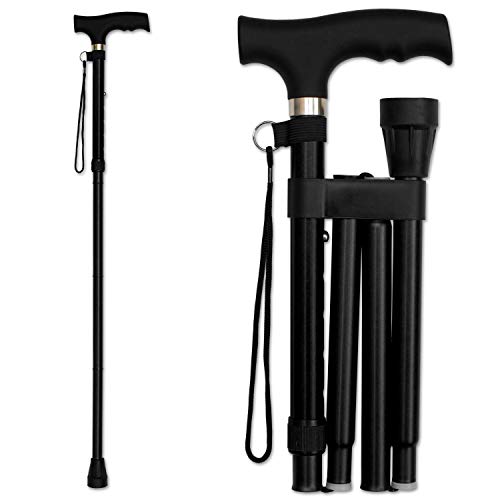 RMS RMS Folding Cane, Adjustable, Lightweight Offset Walking Cane (Black) |…
View on Amazon ↗
 CAREX Carex Health Brands Soft Grip Walking Cane - Height Adjustable…
View on Amazon ↗
Listing names and images come from Amazon and are rechecked against the live listings; last checked Nov 8, 2026. No prices shown; the current price is on the listing.
Scope and limits. This guide draws on general knowledge about how adjustable canes are built and how their materials, handles, and bases behave in everyday use. It does not inspect any specific model, so check the listing for the exact height range, weight rating, and tip diameter before you add it to your cart.