Focus on three things: wood type, finish, and joinery. Hardwoods like maple or beech resist dents and splinters better than soft pine. A food safe, nontoxic finish matters most for teething babies. Solid joinery, not glue or small nails, keeps parts attached. Parents who want heirloom quality should pay for hardwood and simple, solid construction. Those buying for a short phase can choose softer wood with a safe finish.
Wood Type Sets the Toy's Lifespan
Hard maple, beech, and walnut resist dents, scratches, and splinters far better than pine or basswood. A baby who bangs toys on the floor will dent soft wood quickly. Dents create rough spots that can catch on skin.
Open grain matters too. Oak has deep pores that trap food and saliva, while maple and beech have tighter grain. Tight grain is easier to wipe clean and less likely to harbor bacteria.
Check the listing for the specific wood name, not just 'natural wood'. Vague wording often hides soft, fast grown pine. If the seller does not name the wood, ask before buying for a baby who mouths everything.
Finish Is the Real Safety Feature
A toy labeled 'nontoxic' is not automatically safe for mouthing. The finish is what sits against gums and lips. Food safe oils like linseed, walnut, or beeswax are the safest choices for teething babies.
Avoid paints and varnishes unless the listing explicitly states they are food safe or comply with toy safety standards for mouthing. Many colored finishes are durable but not meant to be chewed.
Raw wood with no finish can feel lovely but dries out, absorbs drool, and may develop raised grain or tiny splinters over time. A light oil or wax finish seals the surface and keeps it smooth.
Joinery Decides What Breaks First
Wheels, ears, and handles are the first parts to fail. Solid, one piece carving or tight mortise and tenon joints hold up to drops and twisting. Glue alone fails when a toddler uses the toy as a hammer.
Look for large, chunky parts that cannot be pulled off by small hands. Any part small enough to fit through a toilet paper tube is a choking hazard and should be avoided for underthrees.
Screws and nails can loosen over time and expose sharp edges. If a toy has hardware, check that it is recessed and inaccessible. The listing should state the joinery method or show close up photos of joints.
Quiet Play Versus Click and Clatter
Wooden toys have a sound profile. Solid blocks and stacking rings make a dull thud. Rattles with internal beads or loose rings click and clatter. Parents in apartments or shared bedrooms often prefer the dull thud.
The noise comes from moving parts. More moving parts means more sound and more failure points. A simple push toy with one solid wheel is quieter and lasts longer than a toy with five spinning, rattling pieces.
If the toy is a gift for a household with a sleeping baby nearby, choose solid, nonrattling designs. The listing may not state noise level, but the design makes it predictable: loose parts always make sound.
Reading a Listing Before You Buy
Ask the seller three things: the exact wood species, the exact finish ingredients, and the age range they tested against. A responsible handmade seller answers all three without hesitation.
Check the dimensions. A toy described as 'perfect for little hands' may still be too wide for a six month grip. Compare the listed width to your baby's current grip span, or ask for a photo with a hand for scale.
Look at the edges in photos. Rounded, sanded edges are essential for mouthing. Sharp corners or visible tool marks mean the piece was not finished for a baby. Zoom in on joints and corners.
Weight matters more than most buyers expect. A solid hardwood toy can be too heavy for a young toddler to lift safely. Check the listed weight and compare it to toys your child already handles.
- Ask for the exact wood species and finish ingredients.
- Verify the dimensions against your baby's grip.
- Check that edges are rounded, not just sanded.
- Compare the weight to toys your child already lifts.
Finishes Compared by Mouth and Mess
| Finish type | Mouth safety | Durability | Shows drool | Suits |
|---|---|---|---|---|
| Food safe oil | Best for teething | Needs reoiling | Low sheen, hides marks | Babies who mouth everything |
| Beeswax blend | Safe when pure | Wears with chewing | Slight sheen, easy wipe | Daily play and teething |
| Nontoxic paint | Only if certified | Chips over time | Shows chips clearly | Older toddlers, not teethers |
| Raw wood | No chemicals | Dries and roughens | Absorbs drool | Display or gentle play only |
Food safe oil finishes are the most forgiving for teething babies. They can be reapplied at home with a cloth and a drop of oil. Beeswax blends offer a little more water resistance but can wear unevenly where a baby chews.
Painted toys look bright but chip. Those chips end up in mouths. If you choose painted, look for a certification mark and expect to retire the toy when the paint starts to flake.
Mistakes That Send Toys to the Back of the Closet
Buying by color or theme before checking wood and finish. A cute painted bunny that chips is less useful than a plain maple ring that survives teething.
Assuming 'handmade' means 'safe'. Handmade describes the process, not the materials or the finish. A handmade toy can use unsafe paint or splintery wood just as easily as a factory toy.
Choosing a toy that is too complex for the child's stage. A busy activity cube overwhelms a six month old. A single grasping ring or a two piece stacker is the right level for small hands.
Skipping the weight check. A heavy hardwood rattle can hurt when a baby drops it on their own face. Lightweight designs exist in hardwoods like maple and are easier for weak grips.
Skip Wooden Toys If These Matter More
Wooden toys are not the softest option. A baby who throws toys at siblings or pets will cause more damage with wood than with fabric or silicone. Choose soft toys for aggressive throwers.
They are also harder to sterilize. Wood cannot go in the dishwasher or be boiled. If your household needs frequent, deep sanitizing, silicone or food grade plastic is more practical.
Wooden toys cost more for the same play value as a plastic toy. If you need a toy that will be lost at the park or chewed to pulp in a month, buy a budget silicone teether instead.
Wooden Toy Questions From New Parents
How do I know if a wooden toy finish is safe for my baby to chew?
Look for the words 'food safe', 'saliva resistant', or a specific oil like linseed or beeswax. Avoid anything described only as 'nontoxic paint' unless it also carries a toy safety certification for mouthing. Contact the seller and ask for the finish ingredients. A safe finish list is short and recognizable.
Which wood is best for a toy that will be chewed and dropped daily?
Hard maple or beech. Both have tight grain that resists splintering and are hard enough to shrug off drops and teeth marks. Avoid soft woods like pine and basswood, which dent and roughen quickly. Oak is hard but has open pores that trap drool and food.
Can wooden toys be washed or sterilized?
No. Wood absorbs water and can warp, crack, or raise its grain. Wipe wooden toys with a damp cloth and mild soap, then dry immediately. Never soak, boil, or put them in a dishwasher. For frequent sterilizing, choose silicone or food grade plastic instead.
What should I check in a handmade wooden toy listing before buying?
The exact wood species, the finish ingredients, the toy's dimensions, and the recommended age range. Ask for a photo showing the toy in a hand for scale. Check that all edges are rounded and that no small parts can detach. Weight matters too: a toy that is too heavy can hurt a baby who drops it.
Quiet, Safe Wooden Toys Start With These Checks
Parents buying a first wooden toy for a baby who mouths everything should start with a solid hardwood like maple in a food safe oil finish. One piece or tightly joined construction with rounded edges is the baseline. For a baby who throws toys hard, skip wood and choose a soft silicone or fabric alternative. For a family that needs to sterilize toys daily, wood is the wrong material entirely.
Real wooden toy listings, so you can check the points in this guide against actual products. These are affiliate links: as an Amazon Associate we earn from qualifying purchases, at no extra cost to you.
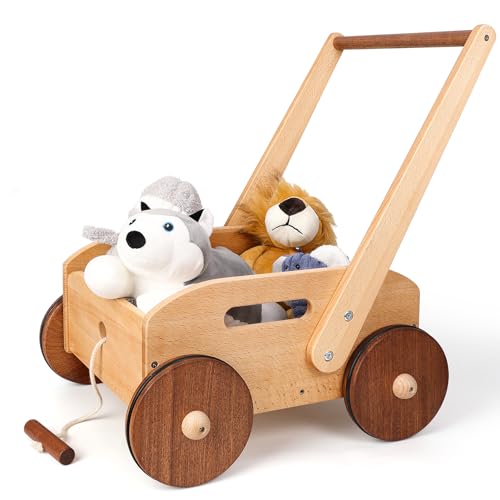 WOODTOE Woodtoe Wooden Baby Walker, Adjust Speed Push and Pull Toys…
View on Amazon ↗
 MELISSA & DOUG Melissa & Doug Wooden Scoop & Serve Ice Cream Counter,…
View on Amazon ↗
 JOYREAL Joyreal Wooden Noah's Ark Toy for 1 Year Old Baby…
View on Amazon ↗
Listing names and images come from Amazon and are rechecked against the live listings; last checked Nov 8, 2026. No prices shown; the current price is on the listing.
About this guide. This guide is written from general knowledge about wooden toy materials, finishes, and construction. It does not review individual toys, read owner feedback, or handle any units. Always confirm the exact wood, finish, and dimensions with the seller before buying.