Start with where the sign will live: inside a room, on a covered porch, or fully exposed to rain and sun. That one spot decides the wood, the finish, and the hanging hardware you need. Then check the back and the edges, because that is where moisture enters first. A sign with a sealed back and a clean hanging method will outlast a prettier one that is only finished on the front.
Where the Sign Will Hang Decides Everything
A sign above a kitchen shelf never sees the stress a front porch sign does. Indoor signs can use almost any wood and a light finish, because temperature and humidity stay fairly steady. A bathroom sign is different: steam and damp air act like outdoor weather in a small room.
A covered porch or entryway is a middle case. The sign gets no direct rain but still sees humidity swings, cold nights, and strong sun from the side. A sign for a fully exposed spot, like a fence, garden post, or front door without a storm door, needs the most protection.
Check the listing for where the maker says the sign can hang. If the listing only says 'indoor use' or shows it on a mantel, do not assume it will survive a porch. Ask the seller directly about the finish on the back and edges, not just the front face.
Finish Coverage Matters More Than the Design
Most wooden sign problems start on the back. A sign finished only on the front looks great in photos but curls or cracks within a season outdoors. Moisture enters through the raw back, swells the wood, and pushes against the sealed front. The sign cups, the paint cracks, and the edges lift.
Look for signs described as sealed on all sides, or ask the seller whether the back and edges receive the same treatment as the front. For outdoor signs, a spar urethane, marine varnish, or exterior polyurethane is a much stronger choice than a basic craft sealant or wax.
Painted edges are a good sign of care. Raw edges are where water wicks in fastest, especially on plywood or MDF. A sign with a visible edge seal or a full paint wrap will hold its shape longer than one with a crisp front and bare sides.
Wood Type Sets the Starting Point
| Wood type | Indoor | Covered porch | Full weather | Main risk |
|---|---|---|---|---|
| Pine | Good | Needs full seal | Short life | Soft, dents and warps |
| Cedar | Good | Good | Good with sealant | Needs resealing |
| MDF | Good | Only if fully painted | Not suitable | Swelling if chipped |
| Hardwood | Good | Good | Good with sealant | Heavy, needs strong hanger |
Cedar and other rot resistant woods give you a head start outdoors, but they still need a finish. No wood is weatherproof on its own. Dense hardwoods like oak or maple hold screws well but are heavy, so the hanging hardware has to match.
MDF is perfectly fine indoors and on a covered porch if every surface is painted and sealed. But one scratch through the paint lets water in, and MDF swells fast. Treat it as a painted surface, not a wood one.
Hanging Hardware That Actually Holds
A sawtooth hanger nailed to the back is fine for a small indoor sign. It is not enough for a heavy hardwood sign or anything that will face wind. The sign swings, the nail pulls out, and the sign drops.
For outdoor signs, look for keyhole slots, D rings, or a French cleat. These spread the weight and keep the sign flat against the wall. If the sign will hang from a hook, check the hole size and whether the maker reinforces it with a grommet or metal ring.
The hanging method also tells you something about the maker's attention. A sign with two D rings and a note about the right screw size for your wall type is built to stay up. A sign with only a sawtooth hook is built to be photographed.
The Custom Text Trap
Custom lettering is the main reason people buy a wooden sign, and the main reason they are disappointed. Vinyl lettering can peel at the edges after a season outdoors. Painted lettering can fade unevenly. Stenciled lettering can bleed at the edges if the wood was not sealed first.
Ask how the text is applied and sealed. A sign with painted lettering under a clear topcoat will age better than vinyl applied over the finish. For outdoor signs, dark text on light wood fades less noticeably than light text on dark wood.
Also check the proof process. A maker who sends a digital proof with the exact spelling and spacing is less likely to deliver a sign with a typo in your family name. If the listing does not mention a proof, ask before you order.
Size and Readability From a Real Distance
A sign that looks crisp in a close up product photo may be unreadable from your sidewalk. Letter height, contrast, and the amount of empty space around the text matter more than the sign's overall size.
As a rule of thumb, lettering needs to be at least 1 inch tall to be read from about 10 feet away, and 2 inches tall from 20 feet. A 12 inch wide sign with a long quote will have tiny letters. A shorter message on the same board will read much better.
Check the listing for the overall dimensions and the lettering height. If the lettering height is not listed, ask. A sign with a simple first name or house number can be smaller. A sign with a full quote or a welcome message needs room to breathe.
Who Should Skip a Wooden Sign
If the sign will face full sun and rain year round with no maintenance, a metal, composite, or PVC sign will outlast any wooden one. Wood needs a reseal every year or two outdoors, and even then it will fade and weather.
If you want a guaranteed uniform surface with no knots, grain, or color variation, wood will disappoint. Each board is different, and a photo of one sign is not a promise of the exact board you will receive. That variation is part of the charm for some buyers and a flaw for others.
If you need the sign to arrive quickly for a specific date, handmade wooden signs often have longer production times. Custom lettering, drying time between coats, and finishing all add days. An off the shelf printed sign may be the better choice for a last minute gift.
For a sign that will hang in a high humidity room like a bathroom or laundry, consider ceramic, metal, or a sealed composite instead. Wood can work there, but it will need more care than a material that does not absorb moisture.
Care That Keeps It From Warping
Outdoor wooden signs need a fresh coat of exterior sealant every 12 to 24 months, more often in harsh sun or coastal salt air. Lightly sand the surface, clean off dust, and apply a thin coat. This is a 20 minute job that doubles the sign's life.
Indoor signs need almost no care beyond dusting, unless they hang in a kitchen or bathroom. Wipe grease and steam residue off before it builds up. Do not hang a raw wood sign directly above a stove or shower head.
If a sign does start to cup or crack, it is usually too late to fully flatten it. Catching the problem early, before the wood has visibly warped, is the only real fix. That is why the back and edge finish matter so much at purchase time.
Matching the Sign to the Style Without Clashing
A rustic farmhouse sign can look wrong in a modern apartment, and a sleek painted sign can look sterile in a cabin. The wood tone, the font style, and the edge treatment all send a signal.
Look at the listing photos for the sign's surroundings. A maker who photographs signs on a white wall, a barnwood background, and a front door is showing you the range. If every photo is the same styled vignette, you are buying that one look.
The edge treatment matters more than most buyers expect. A rough, live edge reads rustic. A sanded, rounded edge reads contemporary. A beveled edge reads traditional. Pick the edge that matches the room, not just the font you like.
Wooden Sign Questions Buyers Actually Ask
Can a wooden sign be left outside in winter?
Only if it is made for it. A fully sealed sign on cedar or hardwood can survive freezing temperatures, but repeated freeze and thaw cycles will eventually crack any finish. The sign should be sealed on all six sides, and the hanging hardware must not trap water against the wood. If you live where winters are harsh, bring the sign inside or choose a composite material.
How do I keep my wooden sign from fading?
Fading comes mostly from ultraviolet light, not rain. A finish with UV inhibitors, applied over painted or stained lettering, slows the fade. Dark text on a lighter background fades less noticeably than light text on dark. Reapplying a clear exterior topcoat every year or two is the most reliable way to keep colors from washing out.
What does 'sealed on all sides' mean?
It means the maker applied a protective finish to the front, back, and all four edges. This is the single most important detail for an outdoor sign, because raw wood on the back or edges absorbs moisture and swells. A sign sealed only on the front will cup and crack much sooner.
Is MDF or real wood better for a sign?
Real wood has grain and natural variation, and it handles moisture better than MDF if sealed properly. MDF is perfectly smooth and stable indoors, but it swells quickly if water gets through a scratch or chip. For indoor or covered porch use, both work. For full outdoor exposure, real wood, especially cedar or hardwood, is the safer choice.
How heavy is a wooden sign?
It depends on the wood and the size. A small pine sign under 12 inches may weigh under 2 pounds. A large hardwood sign over 24 inches can weigh 10 pounds or more. The listing should state the weight or the wood thickness. Always match the hanging hardware to the weight, and use wall anchors for anything over a few pounds.
The Sign That Fits Your Spot and Stays Flat
For a front porch, covered entry, or any spot that sees humidity, choose a cedar sign sealed on all sides with painted lettering and D ring hardware. That combination handles weather swings without constant care. If the sign will hang fully exposed to rain and sun, step up to a dense hardwood with a marine grade finish and plan to reseal it every year. For a purely indoor decorative piece, a painted MDF sign is fine and often more affordable.
Real wooden sign listings, so you can check the points in this guide against actual products. These are affiliate links: as an Amazon Associate we earn from qualifying purchases, at no extra cost to you.
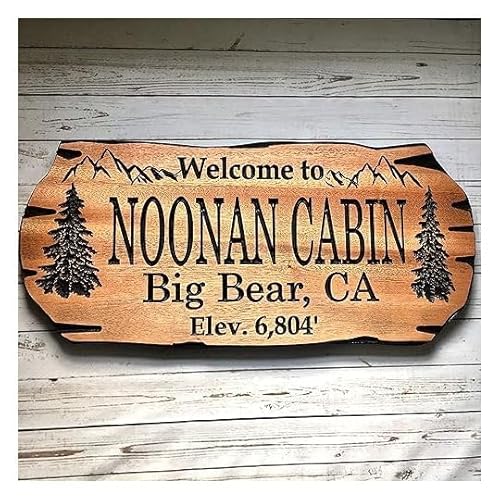 BENCHMARK SIGNS AND GIFTS Personalized Cabin Sign Outdoor Wooden Sign Lake House Welcome Sign…
View on Amazon ↗
 AVGRAFX Custom Wood Sign, Personalized UV Printed Wooden Sign, 4x12 in…
View on Amazon ↗
 VESKAOTY Veskaoty Felt Letter Board with 294 Letters, 10 x 10…
View on Amazon ↗
Listing names and images come from Amazon and are rechecked against the live listings; last checked Nov 8, 2026. No prices shown; the current price is on the listing.
How to read this guide. This guide covers the wooden sign category as a whole, not any individual model, and is written from general knowledge of wood, finishes, and hanging methods. No product documents, owner reviews, or physical units were used, so check the listed dimensions and finish details on the product page before ordering.