Start with the two measurements that decide fit: your violin's lower bout width and your neck to jaw height. A rest that clamps too wide or too narrow will not stay on, and one that is too tall or too flat forces your head to clamp down. After fit, compare foot grip and padding material, because those control whether the rest stays put and feels comfortable through a long practice. Budget buyers should accept fixed height and basic foam; players with long necks or shifting between violins need adjustable height and a wider clamp range. The main tradeoff is between a light, low profile rest that is easy to pack and a taller, more padded rest that is more comfortable but bulkier.
Measure the Violin Before the Rest
Check the lower bout width of the violin where the rest will clamp. Most rests list a clamp range in millimeters, often around 190 to 230 mm, but some fit only a narrower band. A clamp that is too tight can press on the ribs, and one that is too loose will fall off mid bow stroke.
Do not assume all full size violins are identical. Older instruments, fractional sizes, and some student models vary by a few millimeters, which is enough to change the fit. If you cannot measure, choose a rest with a stated range that covers your violin size and check the listing for the word adjustable.
Height Is the First Comfort Decision
Your neck length and jaw shape decide how much lift you need. A rest that is too tall pushes the violin up so your chin has to reach down, while one that is too flat forces your head to tilt and clamp. Both cause tension in the neck and left shoulder.
Fixed height rests are simpler and lighter but suit only players whose anatomy matches that one position. Adjustable rests let you raise or lower the platform, often by loosening a screw or changing feet. If you have a long neck, look for a rest that extends well above the violin's back; if you have a short neck, a low profile rest or even a foam pad may be enough.
Compare the specified height range, not just the maximum. Some rests start too tall for shorter players, and others do not go high enough for longer necks.
Foot Grip Decides Whether It Stays
The feet are the small rubber or silicone caps that press against the violin's back. Softer, tackier materials grip better but can leave a mark on some varnishes. Harder plastic feet are less likely to react with the finish but slide more easily.
Look for feet that angle inward or have a textured surface. Some rests use a swiveling foot that adapts to the violin's curve, which helps on instruments with a pronounced arch. If you play with a shoulder rest on a glossy or freshly varnished violin, check whether the feet are described as non marking.
A rest with worn or loose feet is the most common cause of a slipping rest. Even a good design will fail if the feet have hardened or cracked.
Padding Shape and Material
The part that touches your shoulder can be a thin foam strip, a shaped plastic shell, or a padded wooden platform. Thicker padding spreads the pressure over a larger area, which matters during long practice sessions. Denser foam lasts longer but feels firmer; soft foam feels plush at first but compresses over time.
Some rests are covered in a fabric or leather like material that can feel warm and less slippery against clothing. Others leave the foam exposed, which is cooler but may absorb sweat. If you play in hot rooms or outdoors, consider a cover that can be wiped down.
The shape of the padding also changes how the violin sits. A curved pad follows the slope of your shoulder, while a flatter pad suits players with a more level shoulder line.
Weight and Case Fit
A shoulder rest adds weight and bulk to your case. Lightweight rests made of plastic or thin wood weigh very little and often fold flat, which matters if you carry your violin to school or on a trip. Heavier rests with thick padding and metal adjustment parts feel more solid but take up more room.
Check whether the rest folds or collapses. Some rests fold in half, others slide to a shorter length, and a few do not fold at all. If you use a shaped case with a small accessory pocket, a non folding rest may not fit inside without pressing on the violin.
For travel, a simple foam pad or a folding plastic rest is easier to pack than a tall wooden rest. But do not sacrifice fit just to save weight: a rest that slips in a hotel room practice is worse than one that takes a little more space.
Who Should Skip a Shoulder Rest
Some players do not need one. Baroque violinists often play without a rest, and a few modern players prefer a small cloth or chamois for a lower, flatter position. If you have a very short neck or a flat shoulder, a rest may raise the violin too high and force your bow arm up.
A shoulder rest is not a fix for a poorly fitted chin rest. If your jaw does not reach the chin rest comfortably, changing the chin rest may help more than adding height under the violin. Compare both before buying.
Players with shoulder injuries or limited mobility may need a taller rest or a custom shaped pad, but a standard rest can still work if it has enough height adjustment. If you feel pain after a few minutes, the rest is likely the wrong height, not the wrong brand.
Design Types Compared
| Design | Height options | Weight and pack size | Best for |
|---|---|---|---|
| Foam pad | Very low, fixed | Lightest, folds or rolls | Short necks, travel, minimalists |
| Low profile plastic | Low, fixed | Light, folds flat | Students, small cases |
| Adjustable wood | Medium to high, adjustable | Moderate, folds or slides | Long necks, changing instruments |
| High arch adjustable | High, adjustable | Heavier, bulkier | Long necks, heavy practice |
The table shows the main style split. A low profile rest keeps the violin close to your collarbone, which some players find more natural. A high arch rest lifts the violin so your head stays more upright, which can reduce neck strain but changes the bow arm angle.
Within each style, small details matter more than the category. Check the clamp range and foot material on any design you are considering.
Reading a Listing Without Seeing the Rest
A good listing states the clamp range, the height range or fixed height, the foot material, and the padding material. If any of those is missing, ask the seller before buying. A vague phrase like 'fits most violins' is not enough.
Look for a clear photo of the feet and the underside. You want to see whether the feet swivel and whether the padding is a single piece or segmented. A segmented pad can bend to fit your shoulder curve better than a rigid one.
Do not be swayed by marketing terms like 'ergonomic' or 'professional grade.' They do not tell you anything about the measurements. A rest described as 'for 4/4 violin' may still not fit your specific instrument if the clamp range is too narrow.
Care and Long Term Costs
Shoulder rests need little maintenance, but the feet and padding wear out. Rubber feet harden and lose grip after a few years, especially if stored in a hot car or left on the violin. Replacement feet are sold for some rests, but not all, so check availability before buying.
Foam padding compresses and can tear. Some rests have replaceable pads; others must be replaced entirely. A rest with a fabric cover can be hand washed and air dried, which helps if you sweat during practice.
Metal adjustment screws can loosen over time. A drop of thread locker or a gentle tighten with the right tool usually fixes that, but avoid overtightening plastic parts. If a rest creaks or shifts during playing, stop and find the loose part before it scratches the violin.
Shoulder Rest Questions That Come Up Before Buying
How do I know what size violin shoulder rest to buy?
Measure the lower bout width of your violin, the widest part of the back where the rest clamps. Most adult violins are around 205 to 215 mm, but fractional sizes are narrower. Choose a rest whose clamp range includes your measurement. If the rest is labeled only by violin size, check the actual range in the listing.
Is a shoulder rest necessary for beginners?
Most beginners benefit from one because it helps hold the violin without gripping with the left hand. A low profile, fixed height rest is often enough for a child or a player with a short neck. If a beginner complains of neck or shoulder pain, the rest is probably too tall or too flat.
What is the difference between a foam pad and a plastic shoulder rest?
A foam pad is a thin strip that sticks or rests on the violin's back and adds very little height. A plastic shoulder rest clamps to the violin and usually has a shaped platform with feet and padding. Foam pads are lighter and cheaper but offer almost no height adjustment; plastic rests are more stable and come in more heights.
Can a shoulder rest damage my violin?
The feet can leave marks on some varnishes, especially soft or recently applied finishes. Look for feet described as non marking or made of a soft, tacky rubber. Wipe the feet before putting the rest on, and do not leave the rest attached in the case for long periods, because the pressure can imprint the varnish.
Which violin shoulder rest is best for a long neck?
Choose a rest with a tall height range, often called a high arch or adjustable wood rest. Look for one that raises the platform well above the violin's back and has enough adjustment to fine tune the angle. A fixed low rest will force you to clamp down with your jaw and cause tension.
Which Shoulder Rest to Put in the Cart
A player with an average neck who practices daily at home gets the most from a low profile adjustable plastic rest with rubber feet and a moderate height range. It balances stability, comfort, and easy storage. If you travel often or have a very short neck, skip that and buy a simple foam pad instead; it disappears into a case and keeps the violin low enough for a relaxed jaw.
Real violin shoulder rest listings, so you can check the points in this guide against actual products. These are affiliate links: as an Amazon Associate we earn from qualifying purchases, at no extra cost to you.
 NANYI NANYI Violin Shoulder Rest for 4/4 & 3/4 Size Adjustable,…
View on Amazon ↗
 SUEWIO SUEWIO Violin Shoulder Rest for 4/4-3/4 Size, with Collapsible and…
View on Amazon ↗
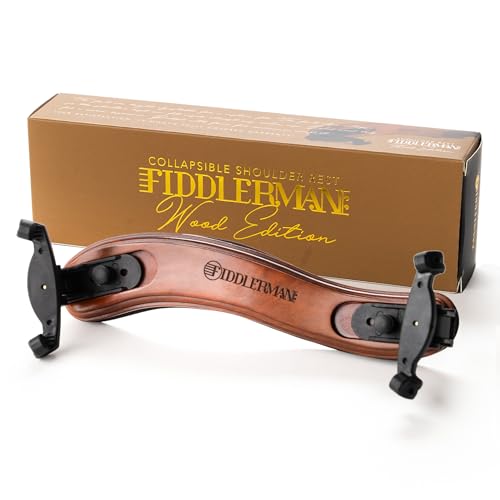 FIDDLERMAN Fiddlerman Wood Violin Shoulder Rest for 4/4 and 3/4 with…
View on Amazon ↗
Listing names and images come from Amazon and are rechecked against the live listings; last checked Nov 8, 2026. No prices shown; the current price is on the listing.
About this guide. This guide explains how to evaluate a violin shoulder rest as a category, not which model to buy. It draws on general knowledge of how these rests fit and wear, without reading individual product documents or reviews. Check the clamp range, height, and foot material on any listing before you order.