Two factors separate a useful starter kit from a sealed box of bulk: deck size and card pool. A lean, focused deck teaches the game faster, while a larger card pool supports collecting and deck building. Decide who opens it. A brand new player needs a playable deck out of the box. A collector wants variety and long term value. The main tradeoff is learning speed against collection potential.
Deck size decides the first game
A starter kit's deck size sets how fast someone can sit down and play. A kit with two complete decks gets two people playing immediately. That matters for a first game, because a rulebook alone does not teach pacing. A single deck kit works for one player who already has an opponent or a local group.
Smaller, focused decks are easier to learn. A deck built around one or two mechanics shows how cards interact without overwhelming a new player. Larger decks or multiple decks in one box add variety but also add reading time. Compare the listed card count and whether the kit includes a ready to play deck rather than loose packs.
Card pool size changes what the kit is for
Card pool means the total number and variety of cards in the box. A large card pool supports collecting, trading, and building custom decks later. A smaller, curated pool serves learning and quick matches. Both are legitimate, but they suit different people.
Check whether the kit includes fixed cards or randomized booster packs. Fixed cards give a predictable experience and a balanced first game. Randomized packs add surprise and collection value, but they can leave a player without a coherent deck. A kit marketed as a collector starter may favor volume over playability.
For school gifts or desk displays, a visually varied card pool matters more. For travel entertainment, a compact fixed deck travels better than a box of loose boosters.
Play readiness is the feature that matters most
Marketing language often highlights foil cards, exclusive promos, or storage boxes. Those are nice, but none of them matter if the kit does not contain a playable deck. Play readiness means the box includes everything needed for a first game: enough cards for a legal deck, a rulebook, and any required counters or tokens.
Some kits are built around a single powerful card or a collectible promo. That works for collectors, but a new player needs a coherent deck. Check the listing for the words 'ready to play' or 'complete deck' and verify the card count matches the game's minimum deck size. If the game requires 40 or 60 cards, the kit should include at least that many for one deck.
A common mistake is assuming every starter kit is a playable product. Some are collection boosters with a starter label. Read the contents list before buying.
Two design types sit at opposite ends
Starter kits generally split into two design types. The first is the two player set, which includes two complete decks, a rulebook, and often a playmat or counters. Its strength is immediate play and shared learning. Its weakness is a smaller card pool and less long term collecting value.
The second is the collector oriented kit, which includes a large number of cards, often randomized boosters, and sometimes a storage box. Its strength is variety and collection growth. Its weakness is that it may not include a ready to play deck, or the included cards may not form a legal deck without more purchases.
A third, less common type is the single deck kit. It offers one focused deck and is best for someone joining an existing play group. The table below shows how these trade off.
| Kit style | Deck size | Card pool | Play readiness | Suits |
|---|---|---|---|---|
| Two player starter | Two complete decks | Small, fixed | High | New players, families |
| Single deck kit | One complete deck | Small, fixed | High | Joining a group |
| Collector booster kit | Often none | Large, random | Low | Collectors, traders |
The tradeoff is clear: two player and single deck kits prioritize playing now. Collector booster kits prioritize building a collection over time. A kit that tries to do both often does neither well.
Who should skip a starter kit entirely
A starter kit is not the right product for every trading card game buyer. If someone already owns a large collection and plays regularly, a starter kit mostly duplicates cards they have. They are better served by buying individual cards or a specific expansion.
Likewise, a competitive player who wants a tournament ready deck should not start with a starter kit. Starter decks are built for learning, not for optimized play. The card pool in a starter kit rarely matches the power level of a constructed competitive deck.
For a collector who only wants rare or valuable cards, a starter kit is a slow way to get them. The guaranteed cards are usually common or fixed, and randomized packs are a gamble. Buying singles from a local store or an online marketplace is more direct.
Mistakes that come from reading the box, not the contents
One common mistake is buying by card count alone. A box with 200 cards sounds better than one with 60, but if 150 of those are duplicates or unplayable filler, the kit is worse for a new player. Compare the card list, not just the number.
Another mistake is ignoring the game's format. Some trading card games have rotating formats, where older cards are not legal in standard play. A discounted starter kit may contain cards that cannot be used in the current format. Check the game's official rules or ask the seller before buying.
A third mistake is buying a kit for a game no one around you plays. A starter kit is a social product. If the recipient has no opponent and no local group, the kit becomes a desk display. For travel entertainment or school gifts, confirm the game has a local or online player base.
Do not assume a starter kit includes everything for two players. Some kits are single player only. The listing should state how many players the included cards support.
How to read a starter kit listing
Before buying, check four things on the listing. First, the exact contents: how many cards, how many decks, and whether the cards are fixed or randomized. Second, the deck legality: does the included deck meet the game's minimum size and format rules? Third, the included accessories: rulebook, playmat, counters, or storage box.
Fourth, the game's current edition. Trading card games release new core sets regularly. A listing that says 'starter kit' without naming the set may be an older edition. Older editions can still be fun for casual play, but they may not be legal for organized play.
Ask the seller specific questions if the listing is unclear. Does the box contain a complete playable deck? Are the cards fixed or randomized? What set or edition is this? A seller who cannot answer those questions has not verified the product.
Long term costs go beyond the first box
A starter kit is an entry point, not an endpoint. Most trading card games require ongoing purchases to stay competitive or to grow a collection. Budget for sleeve protectors, a storage box, and eventually more cards.
Card sleeves are the most important accessory. Unsleeved cards wear quickly, especially if shuffled often. A pack of sleeves costs little compared to replacing damaged cards. For a collector, a binder or a rigid storage box protects card value.
If the kit is a gift for a school aged child, expect the collection to grow. Budget tier kits with fixed cards are fine for learning. Mid range kits add more variety. Premium kits with collector boosters are only worth it for someone who already knows they enjoy the game.
Travel entertainment calls for a compact kit. A two player starter with two small decks fits in a bag and plays on a train tray or a hotel table. Avoid kits with large boxes or many loose packs for travel.
Starter Kit Questions Worth Asking Before You Buy
What is a trading card game starter kit?
A trading card game starter kit is a boxed product that includes cards, a rulebook, and sometimes accessories like a playmat or counters. Its purpose is to give a new player everything needed for a first game. Some kits include two complete decks for two players, while others include one deck or a mix of fixed and randomized cards for collecting.
Which trading card game starter kit is best for a beginner?
For a beginner, look for a kit with two complete, ready to play decks and a clear rulebook. A smaller, fixed card pool teaches the game faster than a large pile of random cards. The kit should match the game's current standard format so the cards remain usable. Avoid kits that are mostly booster packs unless the beginner already knows how to play.
Is a trading card game starter kit worth buying for a collector?
It depends on the collector's goal. A starter kit with fixed cards offers little collection value beyond the guaranteed cards. A collector oriented kit with randomized boosters adds variety but is a gamble. Serious collectors usually get more value from buying single cards or specific expansions than from a starter kit.
How do I know if a starter kit is ready to play?
Check the listing for the phrase 'ready to play' or 'complete deck' and verify the card count against the game's minimum deck size. If the kit includes only randomized booster packs, it may not form a legal deck. The rulebook should be included, and any required tokens or counters should be listed in the contents.
Can a starter kit be used for travel?
Yes, if you choose a compact kit. A two player starter with two small decks and a folded rulebook fits easily in a bag. Avoid kits with large storage boxes, many loose booster packs, or oversized playmats. Look for a kit whose cards come in a sturdy tuck box or a small deck box.
Which Starter Kit Fits the Person Opening It
A new player who has never tried the game needs a two player starter with two complete fixed decks and a clear rulebook. That box teaches pacing and strategy without extra purchases. A collector who already knows the game and wants variety should instead buy a collector booster kit or, better, single cards from a local store. The two player starter is wrong for that second buyer because its fixed card pool offers little collection growth.
Real trading card game starter kit listings, so you can check the points in this guide against actual products. These are affiliate links: as an Amazon Associate we earn from qualifying purchases, at no extra cost to you.
 COOKIERUN: BRAVERSE TRADING CARD GAME CookieRun TCG: Starter Deck Purple - 60 Cards - 2…
View on Amazon ↗
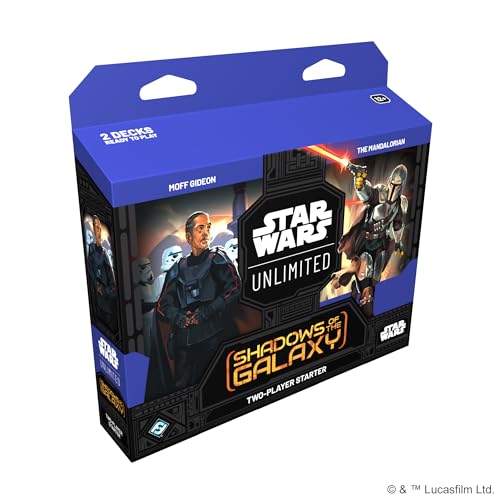 ASMODEE Asmodee Star Wars: Unlimited TCG Shadows of The Galaxy Starter…
View on Amazon ↗
 MYA MYA Trading Card Game Glacial Maxima Starter Box
View on Amazon ↗
Listing names and images come from Amazon and are rechecked against the live listings; last checked Nov 8, 2026. No prices shown; the current price is on the listing.
Scope and limits. Use this guide as a checklist to hold against any starter kit listing you open. It is written from general category knowledge about trading card games, not from any individual product documents or tests. Always verify the exact card count and deck contents on the listing before you buy.