Start with two choices: what the bag is made of and how fine the tea inside is cut. Paper, nylon, and plant based mesh each steep differently. Whole or broken leaves give more flavor than fannings or dust. Match the bag to how you brew: a quick mug, a travel tumbler, or a pot that sits. The main tradeoff is convenience against flavor clarity.
Bag Material Sets the Ceiling
Paper is the familiar choice: cheap, stable, and fine for a quick dunk. Because paper fibers restrict water flow, the tea inside is usually cut small to compensate. That means more surface area, faster color, and a cup that turns bitter if the bag sits.
Nylon and PET mesh bags, often shaped like pyramids, let water move freely and give whole leaves room to unfurl. A larger leaf can release aroma and sweetness without the sharp edge of fine dust. The tradeoff is that nylon steep is less forgiving: leave it in too long and the cup overextracts.
Plant based mesh, usually made from corn starch or sugar cane, behaves like nylon but softens in hot water and breaks down in compost. Check the listing for the specific material. Some plant meshes seal with heat, some with knots, and the seal can affect how much leaf dust escapes.
Unbleached paper bags avoid chlorine processing but can add a faint papery note to light teas. If you drink delicate green or white tea, a mesh bag or an unbleached paper bag with a roomy shape makes that note less likely.
Leaf Cut Decides Bitter or Sweet
Tea bags hold four broad grades. Whole leaf means the leaf is intact or nearly so. Broken leaf is torn into small pieces but still has visible structure. Fannings are tiny fragments left after sorting. Dust is the finest grade, almost powder.
Dust and fannings infuse fast and dark, which suits a strong breakfast cup with milk. They also go bitter quickly because the small particles give up tannins all at once. Whole and broken leaves steep slower and stay sweeter, but they need a bag with room to expand.
A listing that says 'orange pekoe' does not mean whole leaf. It is a leaf size term, not a quality grade. Look for words like 'whole leaf', 'broken leaf', or a photo that shows visible leaf pieces inside the bag. If the bag looks like powder when held to light, expect a brisk, strong cup.
For a tea bag, the best flavor usually comes from broken leaf or small whole leaf in a mesh pyramid. That combination balances speed and clarity. A paper bag filled with whole leaf rarely works well because the leaf cannot open, so the cup tastes weak.
Shape and Room to Expand
A flat, square paper bag gives tea little space. The leaves clump in the corners, and water only reaches the outside of the clump. A round bag is often worse: the circular seal creates folds that trap leaves.
Pyramid bags, whether nylon or plant mesh, create a three dimensional space. Leaves can circulate and open. That is why pyramid bags are usually paired with larger leaf grades. A tagless round bag with a string is designed for speed, not for flavor.
Some bags use a 'flow through' design with an open top or extra holes. The idea is to let water move through the bag like a small infuser. Check how the bag is sealed: a crimped edge can split if squeezed, spilling leaves into the cup.
For a mug, a roomy square bag or a small pyramid works. For a teapot, a larger pyramid or two standard bags gives the leaves enough water to move. If the bag is packed tight and has no empty space, the tea will not infuse evenly.
What the Listing Shows and What It Hides
A tea bag listing usually shows the box, the bag, and a brewed cup. The box art tells you the flavor intent, not the leaf grade. Look for a photo of the dry bag or a cut open bag: can you see leaf pieces, or only a brown powder?
Check the bag count and net weight. Two boxes can both say 20 bags, but one holds 40 grams and the other 60 grams. More tea per bag usually means larger leaf or a stronger cup. A very low weight per bag is a sign of dust or fannings.
The string and tag matter for daily use. A long string lets the bag hang in a tall travel mug without falling in. A staple can rust or tear the bag; a knotted string or a heat sealed tag avoids that. If you compost, check whether the tag, string, and bag are all plant based.
Ask the seller three questions if the listing is unclear: what is the bag made of, what is the leaf grade, and what is the net weight per bag. A clear answer tells you the seller knows the product. A vague answer usually means dust in a paper bag.
Flavoring and Additives
Flavored tea bags often use oils, extracts, or 'natural flavors' sprayed onto the leaf. These can taste bright at first but fade fast, and they can coat the bag material, leaving an oily film. Plain tea bags let the leaf speak, which matters more for green, oolong, and white teas.
Herbal blends rarely contain actual tea leaves. If the box says 'herbal tea', check the ingredient list: it may be mostly hibiscus, apple, or chicory with a small amount of the named herb. A 'peppermint tea' should list peppermint first.
Some bags add 'natural sweeteners' like stevia leaf or licorice root. These change the cup from tea to a sweetened drink. If you want to control sweetness, choose an unsweetened bag and add your own honey or sugar.
Dust and fannings absorb flavorings unevenly because the particles are so small. A flavored whole leaf or broken leaf bag gives a more even flavor. The bag material also matters: paper can trap flavor oils, while mesh lets them release.
Steeping Habits Change the Same Bag
A tea bag that works in a 10 ounce mug may fail in a 16 ounce travel tumbler. The larger the water volume, the more leaf you need. One standard bag in a big tumbler gives a weak, thin cup unless you steep it very long, which brings bitterness.
Water temperature is the second habit. Black tea and herbal blends take boiling water. Green, white, and oolong need cooler water, usually 160 to 180 degrees Fahrenheit, or they turn harsh. A bag that says 'green tea' does not fix the water.
Steep time is the third. Most black tea bags peak at 3 to 4 minutes, green at 2 to 3, herbal at 5 to 7. Leaving any bag in the cup past its window pulls out more tannins. If you like to leave the bag in, choose a larger leaf in a mesh pyramid, which overextracts slower.
If you brew the same bag twice, expect a different cup. The first steep pulls most of the caffeine and flavor. The second steep is lighter and often sweeter, but only works well with whole or broken leaf. A dust bag gives almost nothing on the second steep.
Cost per Cup and Long Term Value
A box of 100 dust grade bags can cost less per cup than a box of 15 whole leaf pyramids, but the cups are not equal. If you drink tea daily, a mid range broken leaf bag in a roomy paper or mesh bag gives a better cup without a premium price.
Check the net weight per bag, not just the bag count. A 'budget' box with 100 bags at 1.5 grams each gives 150 grams of tea. A 'premium' box with 20 bags at 3 grams each gives 60 grams. The premium box costs more per gram but often tastes twice as good.
Long term costs include more than the box. If you add milk and sugar to cover bitterness, you are paying for those too. A slightly more expensive bag that steeps clean may need no additions. If you throw away half a cup because it is bitter, the cheap bag was not cheap.
For a daily black tea with milk, fannings in a round paper bag are a legitimate choice. For an afternoon green or oolong without milk, spend more on a pyramid with whole or broken leaf. The price difference is small per cup; the flavor difference is large.
Who Should Skip Tea Bags Entirely
If you drink loose leaf tea at home and have time to measure and strain, a bag is a downgrade. Loose leaf gives you control over leaf amount, water ratio, and steep time. Bags force a fixed portion and a fixed leaf grade.
If you drink five or more cups a day, a large bag of loose leaf costs less per cup than premium tea bags and produces less waste. A stainless steel infuser or a small teapot with a basket replaces the bag entirely.
If you want a very light, delicate cup, most tea bags oversteep by the time the water cools enough to drink. A gaiwan or a small glass teapot with loose leaf gives you the control to stop the steep exactly when you want.
If you care about compostability, check the whole bag: tag, string, staple, and bag. Many 'compostable' bags still use a plastic seal or a synthetic string. A loose leaf routine with a metal strainer avoids the question.
For more on the loose leaf route, see loose leaf tea for a morning cup and an afternoon pot.
A Quick Check Before You Buy
Hold the listing against five checks. First, bag material: paper, nylon, or plant mesh. Second, leaf grade: whole, broken, fannings, or dust. Third, bag shape: flat, round, or pyramid. Fourth, net weight per bag. Fifth, flavoring: plain or added.
If any of the five is missing from the listing, ask the seller or move on. A tea bag brand that hides the leaf grade is usually selling dust. A brand that hides the bag material may be using a plastic mesh that melts in boiling water.
Compare two bags of the same tea, for example two English breakfast blends. One may be broken leaf in a square paper bag, the other dust in a round bag. The first gives a malty, balanced cup; the second gives a sharp, flat cup. The listing photos and net weight usually reveal which is which.
| Bag style | Leaf room | Steep speed | Flavor clarity | Suits |
|---|---|---|---|---|
| Round paper bag | Very little | Fast | Low, turns bitter | Quick mug, milk tea |
| Square paper bag | Limited | Medium | Medium, can be dusty | Everyday black tea |
| Nylon pyramid | Large | Medium | High if timed | Green, oolong, white |
| Plant mesh pyramid | Large | Medium | High, softer finish | Delicate teas, composters |
The table shows why bag style matters before flavor. A round paper bag will never taste like a plant mesh pyramid, even if both contain the same tea. Choose the bag style first, then pick a flavor within that style.
Tea Bag Questions Worth Asking Before You Buy
Are tea bags worse than loose leaf?
Not automatically. A broken leaf tea in a roomy pyramid bag can taste close to loose leaf because the leaf has space to expand. A dust grade tea in a tight paper bag will always taste flat and bitter. The gap comes from leaf cut and bag room, not from the bag itself.
What are tea bags made of?
Three common materials: paper, nylon or PET plastic mesh, and plant based mesh such as corn starch or sugar cane. Paper is cheap and compostable but restricts flow. Nylon lets leaves open but is plastic and can melt in boiling water. Plant mesh behaves like nylon but breaks down in compost.
Can I compost tea bags?
Only if every part is plant based: bag, string, tag, and seal. Many bags use a plastic heat seal or a synthetic string. Check the box for a compostable claim that names the material. If unsure, tear open a used bag and look for a shiny plastic edge or a staple.
How many tea bags should I use per cup?
One standard bag for an 8 to 10 ounce mug. For a 16 ounce tumbler, use two bags or steep one bag longer, which risks bitterness. For a teapot, use one bag per 6 to 8 ounces of water. Whole leaf pyramids can stretch to one bag per 10 ounces if you give them time.
Which tea bag shape brews the best cup?
A pyramid bag, nylon or plant mesh, gives the most even brew because leaves can circulate. A square paper bag is next. A round paper bag is the weakest shape because the circular seal traps leaves in folds. Shape matters most for delicate teas; for strong black tea with milk, a square paper bag is fine.
Which Tea Bag to Reach For
For a daily black tea with milk or a quick morning mug, a broken leaf English breakfast in a square paper bag gives a strong, balanced cup without fuss. If you drink green, white, or oolong without additions, switch to a whole leaf or broken leaf pyramid in plant mesh. The mesh lets the leaf open and keeps the cup sweet. A dusty round bag is fine only for iced tea or a very strong brew that you plan to dilute.
Real tea bags listings, so you can check the points in this guide against actual products. These are affiliate links: as an Amazon Associate we earn from qualifying purchases, at no extra cost to you.
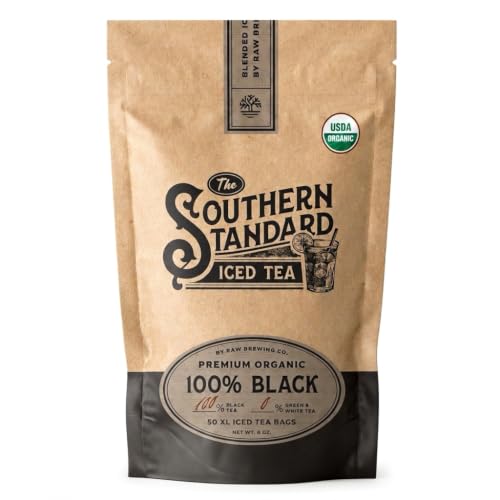 RAW BREWING COMPANY The Southern Standard | Organic Iced Tea Bags – 100%…
View on Amazon ↗
 LIPTON Lipton Black Tea Bags, Hot or Iced High Caffeine Tea,…
View on Amazon ↗
 DAVIDSON'S Davidson's Organics, Yunnan Black, Loose Leaf Tea, 16-Ounce Bag
View on Amazon ↗
Listing names and images come from Amazon and are rechecked against the live listings; last checked Nov 8, 2026. No prices shown; the current price is on the listing.
What this guide is. Use this guide as a checklist to hold against any listing before you buy. It covers the tea bag category in general, not any single model or brand, so confirm the bag material, leaf grade, and net weight on the product page for the specific box you are considering.