Silver necklaces split by chain style, clasp, and silver grade. Chain style decides how it lies on your neck and how easily it tangles. Clasp decides whether you can put it on alone and whether it stays secure. Silver grade decides tarnish speed, durability, and skin reactions. Settle those three before anything else. A dainty cable chain looks elegant but breaks faster than a curb or rope chain. A lobster clasp is the easiest solo choice, while a spring ring frustrates anyone with long nails or low dexterity.
Chain Style Chooses How It Sits and How It Breaks
Chain style is the first decision because it decides drape, tangling, and how much force the necklace survives. A cable chain is the classic oval link style. It lies flat and looks light, but the thin links twist easily and can catch on hair, scarves, or a collar. A curb chain has flattened, interlocked links that resist twisting better than cable. A rope chain is made of many small links twisted into a braid. It holds its shape through daily wear and rarely kinks, but it looks heavier and can feel textured against the neck. A box chain has square links that lie smooth and resist kinking, though the corners can pinch fine hair.
For a pendant necklace, the chain must be strong enough to hold the pendant without stretching. A very thin cable chain under a heavy pendant will pull and eventually snap at the jump ring. For a bare chain worn alone, a rope or box chain gives a cleaner line and fewer tangles. For a necklace that disappears under a shirt, a flat curb chain is the quiet choice. Check the chain width in the listing. Under 1 mm is delicate and suited to light pendants only. Over 2 mm reads as a statement chain and handles daily wear without strain.
Clasp Type Is the Part You Touch Every Single Wear
A clasp you cannot open or close ruins a necklace no matter how pretty the chain is. A lobster claw clasp is the easiest for one handed use. The lever opens a wide jaw, and it snaps shut by itself. A spring ring clasp is a small circle with a tiny lever. It is harder to grip, especially with long nails, arthritis, or cold fingers. A box clasp with a safety catch is secure but takes two hands and fine motor control. A toggle clasp is a bar that slips through a ring. It is stylish and easy for some people, but it can work loose if the chain is too short and the toggle flips out.
The clasp also affects whether the necklace stays on during sleep, exercise, or a hug. A lobster clasp with a firm spring holds better than a spring ring of the same size. A magnetic clasp is easy to fasten but can separate if pulled hard, so it suits light necklaces worn at rest. If you plan to sleep in the necklace, pick a lobster clasp and a chain style that does not kink. If you have a pendant with a large bail, make sure the clasp fits through the bail or you will need to open the chain every time you change pendants.
| Chain style | Tangling risk | Break risk | Suits |
|---|---|---|---|
| Cable | High | High under pull | Light pendants, occasional wear |
| Curb | Low | Low to moderate | Daily wear, under shirts |
| Rope | Very low | Very low | Statement look, sleeping in it |
| Box | Low | Moderate | Smooth look, fine hair |
Match the chain width to the clasp size. A tiny spring ring on a thick rope chain looks off balance and is hard to open. A big lobster clasp on a 1 mm cable chain adds weight that tugs the chain out of place. The clasp should be proportional to the chain and pendant.
Silver Grade Explains Tarnish, Strength, and Skin Reactions
Fine silver is 99.9 percent pure. It is too soft for most necklaces and scratches or bends easily. Sterling silver is 92.5 percent silver mixed with other metals, usually copper. That is the standard for good necklaces. The copper makes it harder but also causes tarnish, a dark film that forms when silver reacts with sulfur in the air. Argentium silver is a type of sterling with some copper replaced by germanium. It tarnishes much slower and is more tarnish resistant. Silver plated jewelry is a base metal like brass or copper coated with a thin layer of silver. The plating wears off with friction and reveals the base metal.
If your skin turns green or black under a necklace, the cause is usually copper in the alloy or a plating that has worn through. Sterling silver can still leave a faint mark on some people, especially in humid weather or with lotion. Argentium or rhodium plated sterling reduces that reaction. Rhodium plating is a coating that makes silver look whiter and slows tarnish, but it wears off over months or years and needs replating. For a necklace you wear daily, argentium or rhodium plated sterling is a practical choice. For a necklace worn only on special occasions, standard sterling is fine if you store it properly.
Length and Pendant Weight Decide the Whole Silhouette
Necklace length changes where the chain falls and what it looks like with different necklines. A 14 to 16 inch chain sits close to the throat, like a choker. A 18 inch chain lands at the collarbone and works with most shirts. A 20 to 24 inch chain falls below the collarbone and suits a pendant. A 30 inch or longer chain can be worn as a long strand or doubled. The listing should state the length in inches or centimeters. If it only says "one size," ask the seller.
Pendant weight matters more than people expect. A heavy pendant on a light chain pulls the chain into a V shape and stresses the jump ring where the clasp attaches. A very light pendant on a heavy chain can slide around and end up at the back of your neck. A good rule is that the pendant should be no more than about one third of the chain's total weight. You can check this by asking the seller for the weight of each piece in grams. If the pendant has a large bail, make sure it slides freely on the chain without catching on the links.
Finish and Coatings Change the Look More Than Marketing Suggests
A silver necklace can have a high polish, a matte or satin finish, an oxidized or blackened finish, or a rhodium plate. High polish reflects light and looks bright but shows scratches more. A matte finish hides small scratches but can look dull. An oxidized finish darkens the recesses of a design to make details stand out. It is not a flaw; it is a deliberate look. Rhodium plating gives a bright white shine and tarnish resistance, but it wears off fastest at the clasp and around a pendant bail.
Some listings use words like "never tarnishes" or "tarnish proof." No silver is tarnish proof. Even argentium tarnishes, just slower. "Nickel free" matters if you have a nickel allergy, but sterling silver already contains no nickel by standard. "Hypoallergenic" is a marketing word with no legal definition. Check the metal content instead. If the listing says "silver" without saying "sterling" or "925," it may be plated. Look for a stamp or a written guarantee of silver content.
Care and Long Term Costs Sit in the Storage and the Polish
Silver tarnishes faster in humid air, in contact with perfume, lotion, sweat, or wool. The cheapest way to slow tarnish is to store the necklace in a sealed plastic bag with the air pressed out. Anti tarnish strips or cloths add a small recurring cost. A polishing cloth removes light tarnish without scratching. Liquid silver dips remove heavy tarnish fast but can damage some finishes and leave a residue in crevices. Ultrasonic cleaners are not safe for all silver necklaces, especially ones with glued stones or delicate chains.
If you wear the necklace daily, body oils and friction keep tarnish down on the parts that touch skin. The clasp and areas near a pendant can still darken. A quick wipe with a soft cloth after wearing removes lotion and sweat. For a necklace with gemstones, pearls, or enamel, do not dip it in silver cleaner. The chemicals can dull or dissolve the other materials. A silver necklace with no stones is easier to care for than one with set gems. That is a real long term cost difference, not a marketing point.
Who Should Skip a Silver Necklace and Pick Another Material
Silver is not the right choice for every buyer. If you want a necklace for swimming, showering, or heavy gym use, silver will tarnish faster and the chain will wear. Stainless steel or titanium holds up better in water and sweat. If you have a strong copper allergy and react to sterling silver, look for argentium, fine silver, or a non silver metal like platinum or gold. If you want a necklace you never have to clean or store carefully, silver is not that. A gold filled or stainless steel necklace needs less care.
If you plan to wear the necklace on a baby or toddler, silver is a poor choice. A thin chain can break and a small clasp can come off. A parent who wants a keepsake for a child should consider a charm on a stronger chain or a non necklace item. Silver necklaces are for people who will remove them before rough activity, store them dry, and accept some polishing over time. If that sounds like a chore, skip silver.
Mistakes That Send a Silver Necklace Back or Into a Drawer
The most common mistake is buying a chain that is too thin for the pendant or too short for the intended neckline. A 16 inch chain on a high necked shirt disappears. A 1 mm cable chain under a 10 gram pendant snaps within weeks. Another mistake is ignoring the clasp until it arrives. A spring ring clasp is the number one reason a necklace sits unworn. People with long nails or shaky hands cannot open it, and the necklace becomes a two person job.
Buyers also mistake oxidized or matte silver for tarnished silver. They return a necklace that looks exactly as designed. Check the photos for a stated finish. If the listing shows dark shadows in the design, that is oxidation. If the whole chain is dark and dull, it may be tarnish or a deliberate antique finish. Ask the seller which one it is. Another mistake is buying a silver plated chain at a sterling price. If the price seems too good for sterling, the listing probably says "silver toned" or "silver plated" in the fine print. Read the metal content line, not just the title.
Silver Necklace Questions Worth Asking Before You Pay
How do I keep a silver necklace from tarnishing?
Store it dry in a sealed plastic bag with anti tarnish paper or a strip. Wipe it with a soft cloth after wearing to remove lotion and sweat. Keep it away from perfume, hairspray, and wool. Humidity speeds tarnish, so a bathroom is the worst storage spot. A polishing cloth removes light tarnish in seconds.
What does 925 mean on a silver necklace?
925 means sterling silver, which is 92.5 percent silver and 7.5 percent other metals, usually copper. It is the standard for durable silver jewelry. The stamp may be on the clasp or a small tag near the clasp. If the necklace has no stamp, it may be silver plated or a lower grade. Ask the seller for the metal content before buying.
Can I sleep in a silver necklace?
Yes, if you choose a strong chain like a rope or curb style and a secure clasp like a lobster claw. A thin cable chain can kink or snap when you roll over. A spring ring clasp can come open. Sleeping in silver does not hurt the silver, but it increases tangling and stress on the links. A shorter chain tangles less at night.
Is sterling silver hypoallergenic?
Sterling silver contains no nickel, so it is safe for most people with nickel allergies. However, the copper in sterling can react with some skin and leave a green or black mark. That is not an allergy but a chemical reaction with sweat or lotion. Argentium silver or rhodium plated sterling reduces that reaction for sensitive skin.
Which silver necklace length is best for a pendant?
An 18 inch chain is the most versatile for a pendant because it sits at the collarbone and works with most necklines. A 20 to 24 inch chain gives the pendant more room and suits a lower neckline. Match the chain strength to the pendant weight. A heavy pendant needs a chain at least 1.5 mm wide and a sturdy jump ring.
The Silver Necklace Pick That Matches Your Daily Wear
Someone who wears a small to medium pendant every day should start with a 1.5 mm to 2 mm curb or rope chain, an 18 inch length, a lobster clasp, and argentium or rhodium plated sterling silver. That combination resists tangling, holds a pendant, fastens with one hand, and tarnishes slowly. A person who wants a delicate, barely visible chain for occasional wear should instead pick a 1 mm cable chain in standard sterling, knowing it needs gentle handling and a light or no pendant.
Real silver necklace listings, so you can check the points in this guide against actual products. These are affiliate links: as an Amazon Associate we earn from qualifying purchases, at no extra cost to you.
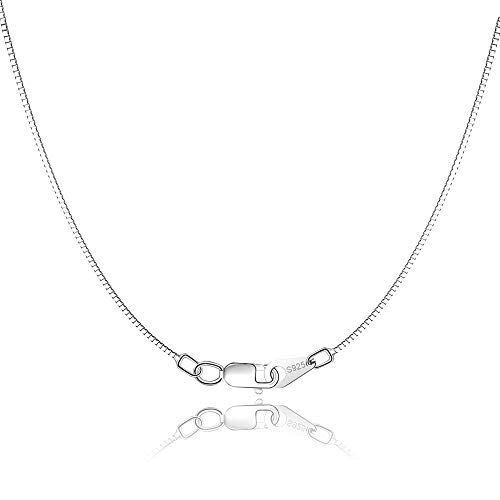 JEWLPIRE Jewlpire 925 Sterling Silver Chain for Women Girls 0.8mm Box…
View on Amazon ↗
 KCCTOO Kcctoo Silver Lobster Claw Clasp with Closed Jump Rings 14K…
View on Amazon ↗
 GIRLUKY Girluky 925 Sterling Silver Chain Necklace for Women, 1.3MM Box…
View on Amazon ↗
Listing names and images come from Amazon and are rechecked against the live listings; last checked Nov 8, 2026. No prices shown; the current price is on the listing.
What this guide is. This guide covers silver necklaces as a category, not any specific listing. It is written from general knowledge of chain styles, clasps, and silver grades, without reading individual product pages or customer reviews. Always confirm the chain length, width, metal content, and clasp type on the listing before you order.