A rugged phone earns its place when the drop rating matches your worst fall, the screen works with wet or gloved hands, and the battery lasts through a full shift. Check the actual drop height and the IP rating for dust and water, not just the word rugged. The main tradeoff is weight and screen brightness against survival.
The Drop Rating Is a Number, Not a Feeling
A rugged phone listing often says MIL STD 810H, but that standard only means the manufacturer followed a test method. Look for the actual drop height in the listing, such as 1.5 meters onto concrete. Without a stated height, the rating tells you nothing about your fall.
Check the corners. Drop tests usually hit the face, edges, and corners, but corner impacts cause the most screen cracks. A phone with raised bezels or a thick bumper around the corners is likely to survive a fall from a ladder or a tailgate better than one with a flat, exposed edge.
Water and dust use the IP code. IP68 means dust tight and able to handle submersion, but the depth and time vary. A listing that says only water resistant without the IP code is not enough for a dusty job site or a rainy day on a roof.
The Screen Modes Decide If You Can Answer a Call
A rugged phone is only useful if you can use it with gloves on or with wet fingers. Look for a glove mode or wet touch setting in the listing. This mode increases touch sensitivity so a tap registers through leather or water drops.
Brightness matters more on a job site than in an office. A screen that is hard to read in direct sunlight forces you to shade the phone with one hand. Compare the listed nits. A value around 500 or higher is often needed outdoors, but check the listing rather than assuming.
Some rugged phones include a programmable button on the side. You can set it to open the flashlight, push to talk, or a barcode scanner. On a job site this saves seconds. If the listing mentions a customizable key, that is a feature worth considering over a plain volume rocker.
Battery Math for a Full Shift
A large battery cell matters, but the more useful number is how long it lasts with your apps. A 5000 mAh battery is common in rugged phones, but a bright screen and constant GPS drain it faster. Look for a battery capacity of at least 5000 mAh and check if the listing mentions screen on time.
A removable battery changes how you work. If you can swap a dead pack for a fresh one in seconds, you do not need to stand by a charger. This is a feature many standard phones have lost, and it is common on rugged models.
Fast charging is less important than you think on a dusty site. A phone left in a hot truck cab charges slower and ages the battery faster. A removable battery or a slower, cooler charge is often better for long term battery health.
The Weight You Carry All Day
Rugged phones are heavy. A typical model weighs 250 to 350 grams, while a standard phone is around 180 grams. That extra weight is the armor. If you carry the phone in a chest pocket or a tool belt, the weight pulls on one side all day.
The size also affects one handed use. A thick phone with a wide bezel is hard to hold while climbing a ladder. Check the dimensions and compare them to a phone you already know. A slim rugged phone may survive a waist high drop but not a fall from scaffolding.
Belt clips and holsters help, but they add their own bulk. Some rugged phones come with a clip, others do not. If the listing does not include one, you will need to buy a case separately, which adds cost and thickness.
Read the Listing Like a Site Foreman
Before you buy, check three things on the listing: the drop height, the IP code, and the battery type. If any of those is missing, ask the seller. A vague answer means the phone is not fully specified, and you are buying a mystery.
Ask the seller about warranty and replacement parts. A rugged phone that breaks needs a screen or battery that you can actually buy. If the seller cannot tell you where to get a replacement screen, the phone is disposable after the first crack.
Check the operating system version and update policy. A rugged phone with an old Android version may not run your work apps. Many rugged phones ship with an older OS and never get updates, so confirm the version before buying.
Look at the ports. A USB-C port with a rubber flap keeps dust out but the flap wears out. A phone with exposed, waterproof ports is easier to charge but may fail if the seal degrades. Decide which tradeoff fits your work.
The Design Types and Their TradeOffs
Rugged phones fall into three broad groups: armored slabs, rubber bumper phones, and slim rugged phones. Each protects differently, and the table below shows how they compare on the factors that matter on a job site.
| Design type | Drop survival | Weight and bulk | Screen brightness | Suits |
|---|---|---|---|---|
| Armored slab | Highest, often 2 m or more | Heaviest, 300 g plus | Often 500+ nits for outdoor use | Construction, mining, outdoor work |
| Rubber bumper | High, around 1.5 m | Moderate, 250 to 300 g | Varies, check the listing | Warehouse, delivery, field tech |
| Slim rugged | Moderate, around 1.2 m | Lightest, under 250 g | Often lower, indoor focused | Office plus occasional site visits |
Armored slabs survive the worst falls but feel like a brick in a pocket. Slim rugged phones are easier to carry but crack sooner. The middle option, a rubber bumper phone, balances both for most mixed workdays.
The Features That Matter and the Marketing Fluff
A thermal camera is real and useful for electricians or HVAC techs, but it adds cost. If you do not inspect heat leaks or overheating panels, you are paying for a feature you will never open. Skip it unless your work calls for it.
A loud speaker is a genuine job site feature. A phone that can hit 100 decibels cuts through machinery noise. Check the speaker output in the listing if you work near engines or pumps.
Marketing often shows a phone being run over by a car. That is a stunt, not a specification. The drop rating and IP code are the only repeatable tests. Ignore the dramatic photos and ask for the numbers.
Some listings brag about a military grade design or a gorilla glass screen. Gorilla Glass is scratch resistant but not shatterproof. A screen protector still helps, and a raised bezel protects more than the glass brand.
Long Term Costs Beyond the Purchase
A rugged phone with a sealed battery needs a repair shop when the battery dies after two or three years. A removable battery costs less and takes seconds to swap. Factor that into the total cost.
Replacement screens for rugged phones are often more expensive than for standard phones because of the reinforced glass and adhesive seals. Check if the seller lists screen replacement as a service or sells the part.
Software updates are the hidden cost. A phone stuck on an old Android version may stop running your dispatch app. A phone with a promised update cycle is worth more over three years than one with a newer camera.
Some rugged phones are sold as renewed or refurbished. That can save money, but the battery may have wear. Ask the seller about battery health or a replacement battery before you buy a renewed model.
Rugged Phone Questions to Ask Before You Buy
What does MIL STD 810H actually mean on a rugged phone?
It means the manufacturer followed a military test method for environmental stress, but the standard does not specify a pass or fail height. The phone may have been tested for drops, vibration, or humidity. Always look for the specific drop height and surface, such as 1.5 meters onto concrete, in the listing.
Can I use a rugged phone with wet hands or gloves?
Most rugged phones include a glove mode or wet touch setting that increases screen sensitivity. You usually enable it in the display settings. Check the listing for this mode before buying, because not every rugged phone has it, and a standard touchscreen will not register taps through thick gloves.
Is a removable battery better than a bigger built in battery?
For a full work shift, a removable battery is often more practical. You can carry a spare pack and swap it in seconds instead of standing by a charger. A bigger built in battery lasts longer per charge but ties you to a cable when it dies. Choose based on whether you work near power or far from it.
How do I know if a rugged phone will survive my job site?
Match the drop rating to your worst fall. If you work at height, look for a stated drop height of at least 1.5 meters onto concrete. Check the IP code for dust and water. IP68 means dust tight and submersible, but the depth varies. Finally, confirm the screen has a glove mode if you wear work gloves.
Which rugged phone is best for outdoor work in bright sunlight?
Look for a screen brightness of at least 500 nits. Some rugged phones reach 800 nits or more for direct sunlight. A matte screen finish also reduces glare. Check the listing for the nits value, because a bright screen is the difference between a readable map and a mirror.
The Rugged Phone Pick for a Real Workday
A field worker who drops a phone from waist height onto concrete and answers calls with gloves on should look for a rubber bumper phone with a stated 1.5 meter drop, IP68, and a glove mode. That middle design balances protection and daily carry. If you work on scaffolding or around heavy machinery, step up to an armored slab with a drop rating above 2 meters and a removable battery, even though it weighs more.
Real rugged phone listings, so you can check the points in this guide against actual products. These are affiliate links: as an Amazon Associate we earn from qualifying purchases, at no extra cost to you.
 OUKITEL OUKITEL G1 Rugged Smartphone 10600mAh Battery Cell Phone 24GB RAM…
View on Amazon ↗
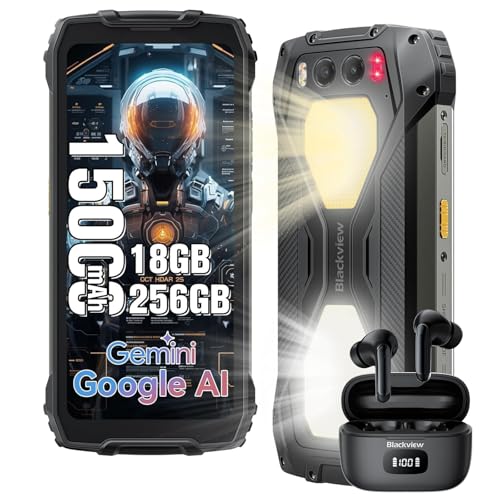 BLACKVIEW Blackview BV7300 Rugged Phone, 15000mAh/45W, Dual 800LM Camping Light, Night…
View on Amazon ↗
 ULEFONE Ulefone Armor X13 Rugged Phones Unlocked, IP68/IP69K Waterproof Phone, MTk…
View on Amazon ↗
Listing names and images come from Amazon and are rechecked against the live listings; last checked Nov 8, 2026. No prices shown; the current price is on the listing.
How to read this guide. This guide covers rugged phones as a category, not any single model, so use it as a checklist to hold against a listing. It is written from general knowledge of the category, with no reviews or product documents used, so confirm any dimension or rating on the seller's page.