The two factors that decide a pop filter are the filter material and how it attaches to your stand. Mesh and metal screens stop plosives differently, and a gooseneck clamp works only if your mic mounts the same way. Buyers who record close to the mic or have strong plosives should choose a double layer screen. A single layer works for softer voices and farther mic distances.
The Filter Material Shapes the Take
Pop filters use one of three materials: nylon mesh, perforated metal, or open cell foam. A nylon mesh screen lets air pass through thousands of small openings, which breaks up the burst of air from a plosive before it reaches the capsule. Two layers of mesh, with a small air gap between them, stop harder consonants like P and B more effectively than a single layer.
A metal screen works differently. Rather than absorbing the air, it redirects it across a curved or angled surface. This keeps more high frequency detail in the voice, which can matter for singers who want breath and articulation to stay present. The perforation pattern and the curve of the metal determine how well it stops plosives at close range.
Foam filters are usually thinner and less effective against strong plosives. They fit over the microphone grille instead of sitting away from it, so the air has less distance to slow down. Foam is useful when space is tight or when the mic moves around a lot, but it tends to soften the overall tone more than a mesh or metal screen.
Mounting Decides Whether You Use It Every Day
Most pop filters attach with a clamp that grips the shaft of a microphone stand or a boom arm. The clamp size matters: a filter made for a thin desktop stand will not close around a thicker studio boom arm. Check the clamp's maximum opening against the diameter of the stand you own.
The gooseneck between the clamp and the screen is the part most likely to fail. A short, stiff gooseneck holds position well but limits how far you can angle the filter. A long, flexible gooseneck reaches around a large condenser mic but can sag over time. Look for a gooseneck with a metal core rather than a thin wire, and test whether it holds the screen where you set it.
Some filters screw directly onto the microphone stand's thread, while others use a spring clamp. A screw mount is more secure but slower to move between setups. A spring clamp is faster but may slip on a smooth or tapered stand. If you record in different rooms, a quick release clamp saves setup time.
Distance From the Mic Changes Everything
A pop filter works by creating space between your mouth and the microphone. The burst of air from a plosive loses speed as it travels, and the filter adds another barrier. A common starting point is to place the filter two to four inches from the mic, then sing or speak six to twelve inches from the filter.
If the filter sits too close to the mic, the plosive burst still hits the capsule with force. If it sits too close to your mouth, you lose the natural tone of the voice and may bump into it while performing. The distance that works depends on how loudly you project and how strong your plosives are.
A curved or angled filter can help when the mic is off to the side rather than directly in front of you. The curve spreads the air across a wider area. For a flat screen, keep it perpendicular to the mic so the air passes through the mesh rather than around the edges.
What the Listing Should Tell You
A useful product listing states the screen diameter, the clamp opening range, and the gooseneck length. The screen diameter matters less than you might think: a six inch screen covers a typical cardioid mic at normal distances. A smaller screen can work if you stay on axis, but it leaves less room for head movement.
Check whether the listing names the mesh material and the number of layers. Nylon mesh should be described as a fine weave, not a coarse net. A metal screen should mention the perforation size or the gauge of the metal. Vague wording like 'professional quality' or 'studio grade' tells you nothing about how the filter behaves.
Ask the seller about the clamp material if the listing does not show it. A plastic clamp can crack when tightened onto a metal stand, while a metal clamp may scratch a painted stand. The swivel joint between the gooseneck and the screen is another wear point: a ball joint holds better than a simple hinge.
Mistakes That Ruin a Take
The most common mistake is buying a filter that does not fit the stand. A clamp made for a half inch shaft will not hold a one inch boom arm. Measure the stand before you order, and compare that number to the clamp's stated range.
Another mistake is using a single layer filter for a voice with strong plosives. If you hear a low thump on P and B sounds even with the filter in place, a double layer screen or a curved metal filter will likely help more than moving the mic back.
Some producers angle the filter so it blocks only the direct line to the mouth, leaving a gap for air to sneak around the edge. The filter should cover the full path from your mouth to the mic capsule, not just the center. A larger screen or a slight angle adjustment fixes this.
Room and Voice Decide the Layers
A bedroom or small untreated room adds reflections that make plosives sound worse. The close mic distances common in those spaces mean the filter has to work harder. A double layer mesh or a curved metal screen is the safer choice for a small room with hard walls.
A voice with soft consonants can get away with a single layer and keep more high frequency sparkle. A voice with hard P, T, and K sounds needs the extra layer. Podcasters who sit close to the mic and speak with energy usually fall into the second group.
Streamers and gamers who move around while talking need a filter that stays put. A foam cover is the most forgiving because it moves with the mic, but it dulls the tone. A gooseneck filter works only if the clamp is tight and the gooseneck is short enough not to wobble.
When to Skip a Pop Filter
If you record at a distance of eighteen inches or more, a pop filter may not be necessary. The air from plosives loses most of its force by then, and a foam windscreen on the mic handles the rest. A filter adds a piece of gear to the signal path without changing the sound much at that distance.
Some dynamic mics have a built in pop filter or a thick grille that does the same job. A separate filter on top of that can make the voice sound muffled. Check the mic's specifications before adding another layer.
For live performance, a pop filter on a gooseneck gets in the way of movement and can catch stage lights. A foam windscreen is the practical choice on stage. In the studio, a standalone filter gives better plosive control and more consistent positioning.
Long Term Costs Stay Low
A pop filter has no consumable parts. The mesh or metal screen lasts for years if it is not bent or torn. The main long term cost is replacement if the gooseneck breaks or the clamp cracks, which is more common on budget filters with thin plastic parts.
Cleaning is occasional. A nylon mesh screen can be rinsed with mild soap and water, then left to air dry. A metal screen wipes clean with a damp cloth. Foam covers attract dust and skin oils, so they need more frequent washing to stay hygienic.
Spending more on a filter with a metal gooseneck and a metal clamp usually means you buy it once. A cheap filter with a plastic clamp may need replacing after a year of regular use, especially if it is moved between stands often.
Compare the Main Designs
| Design | Plosive control | High frequency clarity | Best for |
|---|---|---|---|
| Double mesh | Strong | Somewhat reduced | Podcasters, strong plosives |
| Single mesh | Moderate | Mostly intact | Singers, soft voices |
| Metal screen | Strong | Mostly intact | Close vocals, detailed highs |
| Foam cover | Moderate | Noticeably reduced | Live use, moving mics |
Double mesh and metal screens are the two strongest options for close studio work. The choice between them comes down to whether you want the slightly softer tone of mesh or the brighter tone of metal. Foam is the fallback when a gooseneck gets in the way.
Pop Filter Questions Before You Buy
What is a pop filter for?
A pop filter blocks the burst of air from plosive sounds like P, B, and T before it hits the microphone capsule. That burst creates a low thump or distortion in the recording. The filter spreads the air across a mesh or metal screen, leaving the voice clear while the plosive force is reduced.
Which pop filter is best for podcasting?
For podcasting, a double layer nylon mesh filter is the most forgiving choice. Podcasters tend to sit close to the mic and speak with energy, which produces strong plosives. A double layer stops those bursts without adding the metallic resonance that some metal screens introduce on certain voices.
Should I buy a metal or mesh pop filter?
Choose metal if you want to keep high frequency detail in a singing voice or a bright speaking voice. Choose mesh if you want a slightly softer, warmer tone and maximum plosive protection. Metal screens are easier to clean, but mesh screens are less likely to add any coloration.
Can I use a pop filter with any microphone?
The filter itself works with any mic, but the clamp must fit your stand. Check the clamp opening against the stand diameter. For a USB mic on a small desktop stand, look for a clamp with a narrow minimum opening. For a studio boom arm, you need a wider clamp range.
Does a pop filter affect sound quality?
Yes, slightly. A pop filter reduces plosive distortion, which improves the recording, but it also absorbs or redirects a small amount of high frequency energy. A single layer mesh has the least effect on tone. A thick foam cover or a double layer mesh can make the voice sound a little duller.
Which Pop Filter Fits Your Setup
A podcaster who records close to the mic in a small room should start with a double layer nylon mesh filter on a metal gooseneck clamp. It stops hard plosives and sits firmly on a boom arm. A singer who wants to keep the breath and articulation in a bright voice should choose a curved metal screen instead, accepting a slightly different tone for more high frequency detail.
Real pop filter listings, so you can check the points in this guide against actual products. These are affiliate links: as an Amazon Associate we earn from qualifying purchases, at no extra cost to you.
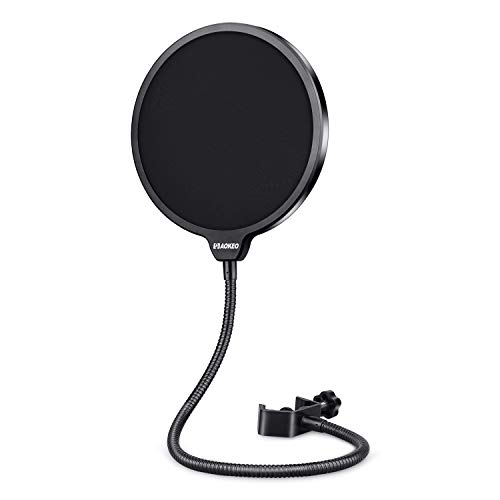 AOKEO Aokeo Professional Microphone Pop Filter Mask Shield For Blue Yeti…
View on Amazon ↗
 INNOGEAR InnoGear Microphone Stand Mic Boom Arm for Blue Yeti HyperX…
View on Amazon ↗
 NEEWER NEEWER Professional Microphone Pop Filter Shield | Compatible with Blue…
View on Amazon ↗
Listing names and images come from Amazon and are rechecked against the live listings; last checked Nov 8, 2026. No prices shown; the current price is on the listing.
Scope and limits. This guide covers the pop filter category as a whole, not any individual model. It is written from general knowledge of how these filters work; no product documents, reviews, or tests were used. Check the clamp opening and gooseneck length on the listing before you buy.