Two things decide a personalized bib: the fabric and the closure. Absorbent cotton or terry cloth suits droolers and milk feeds, while coated or laminated fabrics handle purees and finger food with less scrubbing. Size matters more than the stitching, since a bib that sits at the collarbone catches nothing. If you want one bib for every meal, choose a wipeable fabric. If you want softness against a newborn's neck, choose cotton and plan to change it often.
Fabric Decides the Mess It Handles
Personalized bibs split into two broad fabric families: absorbent natural fibers and wipeable synthetics or coatings. Cotton, muslin, and terry cloth soak up drool, milk, and water. That makes them the right choice for a newborn who spits up or a teething baby who soaks through a bib in an hour. The tradeoff is that purees, carrot stains, and avocado work into the fibers and need soaking or stain treatment.
Coated cotton, laminated fabric, and food grade silicone style bibs resist stains and wipe down with a cloth. They suit babies eating solids, especially messy foods like yogurt or tomato sauce. The coating also makes the bib less breathable and stiffer around the neck. A coated bib worn during a long teething drool session traps moisture against the skin instead of absorbing it.
Check the listing for the fabric content and any coating. A bib described only as 'soft fabric' tells you little about how it cleans. Look for words like 'terry cloth backing', 'food safe coating', or 'polyurethane laminate'. If the listing shows a close up of the fabric texture, compare that to what you know about cotton, fleece, or plastic finishes.
The Closure Decides Whether It Stays Put
A bib that falls off mid meal is worse than no bib. Most personalized bibs use one of three closures: hook and loop, snaps, or ties. Hook and loop is easy for a parent to fasten one handed, but it grabs hair, lint, and threads in the wash. Over time the loop side loses grip, especially after repeated washing with fabric softener.
Snap closures hold more reliably and do not snag laundry, but they are harder to fasten on a squirming baby. Some bibs use two snap positions, which lets the bib grow with the child. Metal snaps can rust if the bib is washed frequently and not dried fully; plastic snaps avoid that but may crack under pressure.
Ties are the least secure for a moving baby, since a pulled knot loosens. They appear most often on handmade bibs with a vintage look. If you choose a tie closure, check that the ties are long enough to double knot and short enough not to dangle into food.
- Hook and loop: easiest to fasten, catches lint, wears out faster
- Snaps: more secure, harder to do one handed
- Ties: decorative, least secure for active eaters
Size and Shape: Where the Mess Actually Lands
A bib that looks adorable in a product photo may only cover the chest above the nipple line. Purees and drips run down the chin and land lower. For a baby starting solids, look for a bib with a wide bottom panel or a catch pocket that extends past the collarbone. Measure from the neckline to the bottom hem in the listing photo if a ruler is shown.
The neck opening matters as much as the length. A neck hole that is too wide lets food slide down the sides; too narrow chafes and leaves red marks. Some bibs include an adjustable closure, which helps a bib fit from four months to two years. If the listing gives an age range, treat it as a rough guide and compare the measurements to a bib you already own.
A bandana style bib sits high on the neck and works well for drool, but it does not catch food that falls from the mouth. A full coverage bib with sleeves or a long front panel protects clothing but feels bulky on a small baby. Decide whether you are buying for drool management or for solid food, because the same bib rarely excels at both.
Personalization: What Survives the Wash
The name or monogram is the reason you are buying a personalized bib, so check how it is applied before you care about the font. Embroidery holds up to washing better than vinyl or screen printing, but it can feel scratchy against the neck if the stitching sits on the inside. A bib with an embroidered name on the front and a plain soft backing avoids that problem.
Heat transfer vinyl looks crisp on day one, but it can crack, peel, or fade after repeated washing and drying. If the listing says 'hand wash only' for a vinyl personalized bib, that is a sign the decoration may not survive a normal laundry cycle. Screen printed names fade fastest, especially on dark fabrics that need hot water to remove stains.
Ask the seller how the personalization is applied if the listing does not say. A bib that is embroidered by hand costs more than one with an iron on name, and the price difference usually reflects how long the personalization lasts. The exact thread color and font matter less than the method.
| Decoration | Wash survival | Feel on skin | Cost tier |
|---|---|---|---|
| Embroidery | High, keeps color | Slight texture | Mid to premium |
| Heat transfer vinyl | Medium, may crack | Smooth | Budget to mid |
| Screen print | Low, fades fast | Smooth | Budget |
A bib that is personalized on a separate patch and then sewn on offers a middle ground: the name is embroidered but the bib fabric stays flat. Check whether the patch edges are finished, since raw edges fray in the wash.
Care and Long Term Costs No One Puts in the Listing
Every bib needs washing, often several times a day. A bib that must be hand washed and line dried will sit in the laundry basket while you reach for a machine washable one. Cotton and terry bibs usually machine wash well, but they shrink. A bib that fits perfectly before the first wash may ride up after three cycles if the fabric was not preshrunk.
Coated bibs cannot go in a hot dryer without the coating breaking down. Most wipeable bibs need a quick rinse and air dry, which is fast but means you need more than one if you feed solids three times a day. Snaps and hook and loop both survive machine washing, but the hook side of Velcro will pill any cotton bib it touches in the same load.
Replacement cost is rarely discussed because bibs are inexpensive, but a bib that fades or cracks after two months costs more per use than a durable one that lasts a year. Consider how many bibs you realistically need: one for the diaper bag, one in the wash, one in use. A personalized bib is often a gift, so the recipient may feel obligated to keep using it even after the name peels off.
Mistakes That Turn a Cute Gift Into a Drawer Liner
The most common mistake is buying for the photo instead of the feeding stage. A tiny bandana bib with a delicate embroidered name looks perfect in a newborn shoot, but it will not catch puree from a six month old. Match the bib to the baby's current eating stage, not the age printed on the gift tag.
Another mistake is ignoring the closure direction. Hook and loop that fastens at the back of the neck is easy for a parent but impossible for a toddler who wants to pull the bib off. Snaps at the side or front are harder for little hands to undo. If the baby uses bibs during independent eating, choose a closure they cannot reach.
Buying a bib without checking the neck measurement leads to gaping gaps or red marks. A bib that says 'fits 6 to 24 months' may be too big for a small six month old and too small for a large two year old. Compare the listed neck opening to a bib you already own, or ask the seller for the measurement.
When to Skip the Personalized Bib Altogether
A personalized bib is a gift item first and a practical feeding tool second. If you need bibs for daily use and you do not care about the name, a plain pack of terry cloth bibs will cost less and wash better. The personalization adds price but not absorbency or fit.
If the baby has sensitive skin or eczema, skip coated or laminated bibs. The plastic layer traps heat and moisture against the chest, which can irritate skin. Choose an uncoated organic cotton bib and accept that it will stain. For a baby with a strong pull reflex, skip ties and hook and loop; snaps are the only closure that survives a determined toddler.
If the bib is for a baby shower gift and the parents have not chosen a name, a monogram with the last initial is safer than a first name. But even a last initial becomes wrong if the family changes their surname. A plain bib with a matching burp cloth may be more useful than a personalized one the parents feel they cannot use.
Reading the Listing: What to Check Before You Add It
Start with the material list, not the product name. A bib called 'organic cotton' may have a polyester backing or a vinyl name patch. Look for a full material breakdown in the description or the item specifics. If the seller only says 'soft fabric', ask what the fiber content is before you buy.
Check the decoration method and the care instructions together. A bib that says 'machine washable' but has a heat transfer vinyl name may still peel in the dryer. Sellers sometimes list the fabric care separately from the decoration care. Ask whether the bib can be machine dried, and at what temperature.
Look at the closure type in the photos. A close up of the back of the neck shows whether the bib uses snaps, hook and loop, or ties. If no back photo exists, ask. Also check the bib length against the baby's torso. A bib that ends at the sternum will not protect the lap from spilled puree.
- Fabric content, including any coating or backing
- Personalization method: embroidered, vinyl, or printed
- Closure type and whether it is adjustable
- Bib length and neck opening measurements
- Care instructions for both fabric and decoration
Personalized Bib Questions Worth Asking
What is the best fabric for a personalized baby bib?
It depends on the feeding stage. For drool and milk, absorbent cotton or terry cloth works best because it soaks up moisture. For solids and messy purees, a coated or laminated fabric wipes clean with less scrubbing. Double layer cotton offers a middle ground, with a soft absorbent front and a waterproof or wipeable backing.
How do I clean a personalized bib without ruining the name?
Turn the bib inside out before washing to protect embroidered or vinyl names from friction. Use cold or warm water, not hot, and avoid fabric softener on hook and loop closures. Air dry coated bibs and bibs with vinyl names, since dryer heat can crack or peel the decoration. If the listing says hand wash only, follow that instruction.
Can a personalized bib be used from newborn to toddler?
Only if it has an adjustable closure and a generous length. Most bibs fit a narrower age range than sellers claim. A bandana bib that fits a newborn will not cover a toddler's chest. Look for a bib with at least two snap positions or a long tie, and compare the neck opening to a bib that currently fits your child.
Is embroidery better than vinyl for a personalized bib?
For longevity, yes. Embroidery survives repeated washing and drying with less fading and cracking than heat transfer vinyl. The downside is that embroidery can feel slightly textured against the skin. If the bib has a backing layer or the embroidery is on a separate patch, that solves the comfort issue.
Which closure is safest for a baby bib?
Snaps are generally the most secure and do not catch on hair or lint. Hook and loop is easier to fasten but can come undone if the baby pulls hard, and the hook side damages other laundry. Ties are the least secure and should only be used under supervision. Avoid any closure with small parts that could come loose.
Which Personalized Bib to Put in the Cart
A parent feeding a baby purees and finger foods needs a bib that wipes clean, stays snapped on, and covers the chest below the collarbone. Choose a coated or laminated cotton bib with a snap closure and an embroidered name. If the bib is a gift for a newborn who mostly drools, choose an uncoated terry cloth bib with embroidery and a soft backing. That second bib will soak up milk and spit up without irritating the neck. Buy the first bib for solids, the second for the early months.
Real personalized bib listings, so you can check the points in this guide against actual products. These are affiliate links: as an Amazon Associate we earn from qualifying purchases, at no extra cost to you.
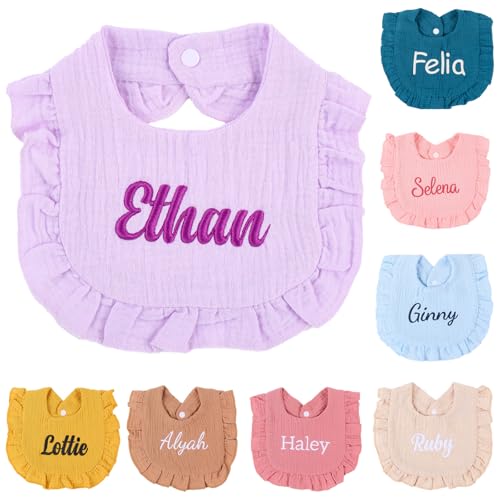 VAN FAN & SHI Van Fan & Shi Personalized Embroidered Baby Bib pure Cotton…
View on Amazon ↗
 FUNNY GIRL DESIGNS Funny Girl Designs Personalized Baby Bib EMBROIDERED with Your Custom…
View on Amazon ↗
 PRINTUALIST Printualist Personalized Baby Bib with Embroidered Text, Red - Custom…
View on Amazon ↗
Listing names and images come from Amazon and are rechecked against the live listings; last checked Nov 8, 2026. No prices shown; the current price is on the listing.
About this guide. Use this guide as a checklist to hold against any listing you open, not as a verdict on a specific model. It is written from general knowledge about how personalized bibs are made and used. Check the measurements and decoration method on the listing before you buy.