Start with where you play and how often it moves. A heavy folding stand suits home practice and school bands; a light travel stand fits a backpack but struggles outdoors. Then check deck grip, column lock, and base weight. Skimping on those turns a cheap stand into a wobbling, page dropping frustration.
Where You Play Decides the Stand
A stand for a bedroom corner faces different forces than one for a windy outdoor rehearsal. Home players can trade portability for a wide desk and a heavy base. School band members need a stand that survives daily folding and stacking without the column lock loosening.
Traveling musicians should look at stands that collapse into a slim bag, but expect a tradeoff. A light stand shakes when you turn pages quickly or when a breeze catches the music. Check the folded length against your backpack or carry on before buying.
Outdoor rehearsals punish weak bases. A tripod with thin legs digs into soft ground but tips on pavement. A solid back desk acts like a sail in wind. If you play outside often, look for a stand with a low center of gravity and a lip deep enough to hold a binder.
The Three Checks That Stop a Wobble
Deck grip is the first thing to test in a listing. A shallow lip drops single sheets; a slick deck lets a book slide. Look for a textured surface or a lip at least an inch deep. Some stands add spring clips or side arms, but those help only if the deck itself sits flat.
Column locks fail quietly. A friction collar works until it wears smooth, then the stand sinks mid rehearsal. A clutch or cam lock holds better over time. Compare the mechanism in the listing photos and check whether replacement parts are sold separately.
Base weight does more than the material list suggests. A wide tripod footprint resists tipping better than a narrow one, even at the same weight. For home use, a heavy round base is stable but hard to move. For travel, a folding tripod saves weight but needs careful placement.
Design Types and Their Tradeoffs
Four main designs cover most buyers. Folding wire stands are cheap and light but flex under thick books. Solid back stands give a flat writing surface and hold multiple pages, yet weigh more and cost more. Travel stands fold into a small bag but wobble in wind. Orchestra stands offer a wide desk and heavy base, ideal for rehearsals but bulky to store.
The table below lays out how these types compare on the factors that matter day to day.
| Design | Deck grip | Column lock | Base weight | Suits |
|---|---|---|---|---|
| Folding wire | Weak lip, slick | Friction, wears | Light tripod | Beginners, occasional home use |
| Solid back | Deep lip, flat | Clutch, holds | Heavy tripod or round | Home practice, school band |
| Travel | Shallow lip | Twist lock, compact | Very light | Carry on musicians |
| Orchestra | Wide, deep lip | Cam lock, firm | Heavy round base | Rehearsal halls, seated players |
A folding wire stand works for a beginner who plays once a week. A solid back stand earns its weight when you mark scores or lean a thick fake book on it. Travel stands suit someone who flies to gigs, not someone who practices in a garage.
Reading a Listing Before You Buy
Check the folded dimensions, not just the height range. A stand that adjusts from 28 to 48 inches may still fold to 30 inches, too long for a carry on. Compare the folded length and weight against how you actually carry it.
Ask the seller about the deck material and lip depth if the listing is vague. A photo can hide a slick plastic deck or a lip too shallow for a music book. Confirm the column lock type and whether the base has rubber feet, which stop sliding on tile or wood floors.
Ignore marketing phrases like 'professional grade' or 'heavy duty' unless the specs back them up. A stand with a 2 pound base is not heavy duty, no matter the label. Look for a stated weight capacity or a base diameter instead.
Mistakes That Cost You Later
Buying the lightest stand for home practice is a common error. It saves a few dollars but slides across the floor and needs one hand to hold it while you turn pages. A heavier stand stays put and lets you mark a score without chasing it.
Choosing a stand without checking the folded length for travel is another. Many 'travel' stands fold to 24 inches or more, which fits a checked bag but not a backpack. Measure your bag before you order.
Skipping the deck depth for thick books causes daily annoyance. A lip that holds single sheets bends under a 200 page book. Look for a lip depth of at least 1.5 inches if you use fake books or binders.
Care and Long Term Costs
Most stands need little care, but friction locks wear out. A stand with a replaceable clutch or cam lock lasts longer than one with a molded plastic collar that cannot be swapped. Check whether the maker sells spare parts before you commit.
Rubber feet eventually harden and crack. Some stands use standard sized feet you can replace at a hardware store. Others use proprietary clips, which means buying a whole new base. Peek at the foot design in the photos.
A carry bag is worth the extra cost if you move the stand weekly. Without one, the deck corners scratch and the tripod legs bend in a trunk. A padded bag also keeps the column lock from getting knocked out of alignment.
Who Should Skip a Music Stand
A guitarist who only plays from a tablet or phone does not need a full stand. A small clamp on device mount or a tabletop holder may work better. A music stand with a deep lip is wasted if you never put paper on it.
A drummer who reads charts between songs might prefer a low, angled tray that clamps to a cymbal stand. A full height music stand takes up floor space and gets in the way of pedals. Consider the footprint before buying.
A choir singer who holds a folder may not need a stand at all. A handheld folder with elastic straps is lighter and easier to carry. A stand only helps if you need both hands free or read from a large score.
Case and Accessory Fit
A stand that lives in a school locker needs a folded size under 30 inches and a tough hinge. Check the locker depth before buying. A stand that travels on a flight should fit a checked bag or a carry on, which rules out most orchestra models.
For other gear that moves between home and rehearsal, a protective case for school lockers and flights faces the same tension between bulk and protection. A stand bag should match how far you carry it, not just what it holds.
Clip on accessories like a pencil tray or a cup holder only work if the deck edge is thick enough. Some solid back stands have a rolled edge that rejects clamps. Compare the listing photos or ask the seller before adding accessories.
Music Stand Questions That Come Up Before Buying
What is a good height for a music stand?
For seated playing, the deck should sit around 28 to 36 inches from the floor. For standing, 40 to 48 inches suits most adults. Check the stand's listed height range and measure from your elbow to eye level while seated or standing as you play. A stand that cannot reach your comfortable height causes neck strain.
Which music stand is best for outdoor use?
Look for a low, wide tripod base and a deck with a deep lip. A solid back deck catches wind, so a wire or vented deck may actually perform better outdoors. Rubber feet help on pavement. Avoid travel stands with thin legs, which tip on grass or uneven ground.
How do I stop my music stand from sinking?
The column lock is the culprit. Friction collars wear smooth and slip. A clutch or cam lock holds better. If your current stand sinks, try cleaning the column and tightening the collar. If that fails, replace the stand with one that uses a mechanical lock rather than friction alone.
Is a solid back music stand worth the extra weight?
For home practice, school band, or any player who writes on scores, yes. A solid back gives a flat, stable surface and a deeper lip. The extra pounds stop the stand from sliding. If you travel weekly, the weight becomes a burden, and a folding wire or travel stand may suit better.
Can I carry a music stand on a plane?
Only a compact travel stand folds small enough for a carry on, typically under 20 inches. Most standard folding stands fit a checked bag but not an overhead bin. Check the folded length against your airline's limits and consider a padded bag to protect the hinges.
Which Music Stand to Pick for Your Practice
A player who practices at home most days and occasionally plays with a school band should get a solid back stand with a clutch lock and a wide tripod base. It holds binders, stays put, and lasts years. A traveling musician who flies to gigs needs a compact travel stand instead, one that folds under 20 inches and fits a carry on, even though it wobbles more outdoors.
Real music stand listings, so you can check the points in this guide against actual products. These are affiliate links: as an Amazon Associate we earn from qualifying purchases, at no extra cost to you.
 GLEAM GLEAM Sheet Music Stand - Full Metal with Carrying Bag,…
View on Amazon ↗
 TIALERO Sheet Music Stand with Light and Phone Holder, 57" Portable…
View on Amazon ↗
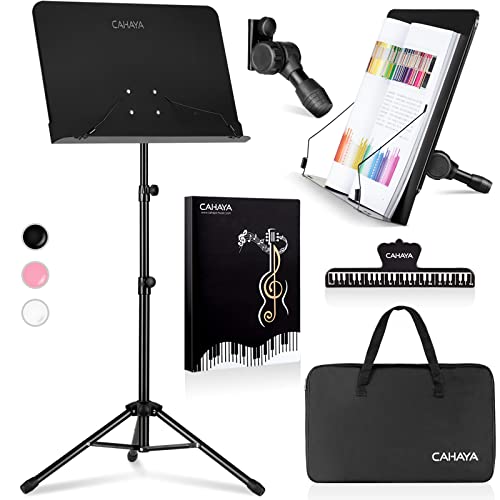 CAHAYA CAHAYA Sheet Music Stand Dual-use Convert to Desktop Stand Adjustable…
View on Amazon ↗
Listing names and images come from Amazon and are rechecked against the live listings; last checked Nov 8, 2026. No prices shown; the current price is on the listing.
Scope and limits. This guide draws on general knowledge of music stand designs and how their parts behave in different settings. It cannot tell you whether a specific listing has a weak clutch or a shallow lip, so check the product photos and ask the seller about dimensions and lock type before ordering.