The Babbel app fits adults who want structured 10 to 15 minute lessons across 14 languages. For kids, the Airbition Talking Flash Cards suit ages 1 to 4 with 224 words, while the ZONSTVYS set adds a writing board and 510 words for ages 1 to 6. The hahaland tablet offers five languages for ages 1 to 3. The Channie's Vocabulary Journal supports any learner who prefers writing. Christine Studio Dasapp is a basic digital companion for streaks and flashcards. The main tradeoff is between guided app lessons and in person tools for young children.

Babbel Language Learning App
Best for: Adults wanting bite size lessons in 14 languages
- Offers 14 languages including Spanish, French, German, and English.
- Lessons last 10 to 15 minutes, fitting into a busy daily routine.
- Covers real life topics like travel, business, and food.
Keep in mind: Requires a compatible device and internet for app lessons.
Check price on Amazon ↗
Airbition Talking Flash Cards
Best for: Toddlers ages 1 to 4 starting vocabulary
- Includes 224 illustrated cards with sounds across animals, vehicles, and food.
- Plays words in a standard American accent with real animal sounds.
- Screen free with rechargeable battery lasting up to 4 hours.
Keep in mind: Card set is limited to 224 words, so it may be outgrown.
Check price on Amazon ↗
ZONSTVYS Flash Cards with Writing Board
Best for: Kids 1 to 6 needing speech practice and writing
- Combines 510 sight words across 14 themes with a 7 inch LCD writing tablet.
- Uses double sided cards with standard American pronunciation and sounds.
- Glare free, blue light free screen designed for young learners.
Keep in mind: Requires charging about 1 hour for a month of use.
Check price on Amazon ↗
Hahaland 5 Language Learning Tablet
Best for: Toddlers 1 to 3 exploring multiple languages
- Offers English, French, Spanish, German, and Italian on one device.
- Includes 90+ modules covering animals, shapes, letters, and numbers.
- Screen free with four modes: learning, quiz, music, and pretend play.
Keep in mind: Designed for ages 1 to 3, so older kids may need more challenge.
Check price on Amazon ↗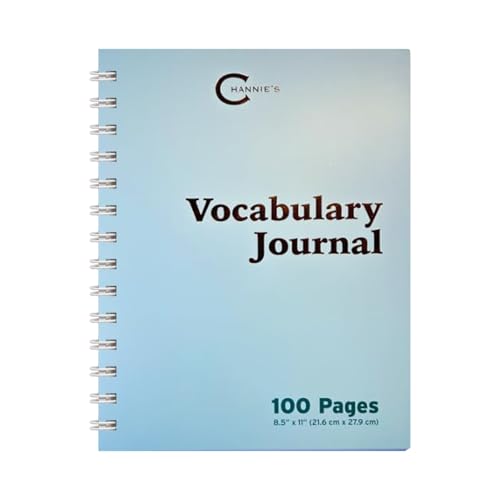
Channie's Vocabulary Journal
Best for: Learners who prefer writing words by hand
- Provides structured pages for definitions, synonyms, antonyms, and example sentences.
- Includes dedicated spaces to write each word multiple times.
- Suitable for test prep and language exams.
Keep in mind: No audio or digital component, so it relies on self study.
Check price on Amazon ↗
Christine Studio Dasapp Language Learning Magic
Best for: Digital learners wanting simple streak tracking
- Tracks study streaks to build a daily habit.
- Offers flashcards and vocabulary saving in one app.
- Described as a modern study companion.
Keep in mind: Listing does not state which languages or lesson content are included.
Check price on Amazon ↗Product names and images come from the Amazon listings and are rechecked against them (last checked Nov 8, 2026). The highlights restate each listing's own bullet points as published on Nov 8, 2026. Prices change often, so we do not show them. These are affiliate links: as an Amazon Associate we earn from qualifying purchases, at no extra cost to you.
What Each Tool Actually States
The six listings split into three groups: a subscription app, four in person tools for children, and a paper journal. Babbel is the only pick built for adult learners who want guided lessons. The Airbition and ZONSTVYS products are talking flash card readers for toddlers, while the hahaland tablet uses touch icons instead of cards. Channie's is a notebook with structured spaces for word study.
The table below compares the attributes each listing states. Where a listing does not mention a detail, the table says Not listed. This keeps the comparison honest to the source data rather than filling gaps with assumptions.
Age range appears in most kids' listings but not in Babbel or the journal. Word count is stated for the flash card sets but not for the app or tablet. Language options vary from one to 14. Price is not listed for any product, so buyers must check current cost on the product page.
| Product | Age range | Languages | Word count | Format | Screen |
|---|---|---|---|---|---|
| Babbel App | Not listed | 14 | Not listed | App lessons | Device screen |
| Airbition Flash Cards | 1 to 4 | English | 224 | Cards + reader | Screen free |
| ZONSTVYS Flash Cards | 1 to 6 | English | 510 | Cards + LCD board | Blue light free screen |
| Hahaland Tablet | 1 to 3 | 5 (EN, FR, ES, DE, IT) | Not listed | Touch tablet | Screen free |
| Channie's Journal | Not listed | Any (user writes) | Not listed | Paper notebook | No screen |
| Christine Studio Dasapp | Not listed | Not listed | Not listed | App | Device screen |
Matching the Tool to the Learner
Adult learners who want structure will find Babbel's 10 to 15 minute lessons a practical fit. The app states it covers speaking, listening, reading, and writing across real life topics. That breadth is not claimed by any other listing here.
For toddlers, the flash card readers differ mainly in word count and extra features. Airbition offers 224 words with a simple card insert design. ZONSTVYS adds an LCD writing board and 510 words, which may suit a child ready to trace letters. Hahaland skips cards entirely and uses a tablet with five languages, which could work for a family raising a bilingual child.
Learners who retain words best by writing them down will prefer Channie's journal. It does not teach pronunciation or grammar, but its pages for definitions, synonyms, and example sentences support deliberate vocabulary study. The Christine Studio Dasapp is the least defined listing, so it only makes sense for someone who wants a lightweight digital companion and is willing to research its languages before buying.
What to Confirm on the Listing
Before choosing, check three things on the product page. First, confirm the age range or level matches the learner. A toddler tool will not serve an adult, and an app with no stated age may not fit a young child's attention span.
Second, verify the language list. Babbel names 14 languages, but if you need a less common one, confirm it is included. The hahaland tablet lists five languages, while the flash card sets are English only by their listing text.
Third, look at the format and power needs. The app requires a compatible device and internet. The flash card readers need charging, with Airbition lasting up to 4 hours per charge and ZONSTVYS about a month per charge. The journal needs no power but no audio either.
Who Should Skip These Picks
If you want live conversation practice with a human tutor, none of these listings provide that. Babbel offers audio lessons and topics, but the listing does not mention live classes or speaking feedback.
Learners who need a specific dialect or advanced certification should look elsewhere. The kids' tools focus on basic vocabulary, and the app is built for everyday topics rather than test prep. The journal can support exam study but does not teach content.
Anyone wanting a physical book with grammar explanations will also need a different design. Channie's is a blank structured journal, not a textbook. For a different approach, see the selection guide for commuters and curious beginners.
Common Comparisons Before You Decide
Is Babbel worth it compared to a free flashcard app?
Babbel's listing states it was designed with over 100 linguistic experts and offers structured 10 to 15 minute lessons. A free flashcard app may only drill vocabulary. If you want a planned curriculum across 14 languages, Babbel fits that need. If you only need to review words you already know, a simple flashcard tool may be enough.
Can a toddler use the ZONSTVYS writing board independently?
The listing says children ages 1 to 6 can use it, and the card insertion is simple. The writing board adds a drawing surface, but a very young toddler may need help pressing buttons or holding the stylus. The repeat function and volume control are designed for easy use, but supervision is still wise.
Does the hahaland tablet really teach five languages?
The listing states it includes English, French, Spanish, German, and Italian. It covers basic vocabulary and sounds, not full grammar. For a toddler, this is exposure to multiple languages. For an adult, it would be far too simple. The tablet is screen free, which may be a plus for parents limiting screen time.
Which Pick Fits Your Situation
A commuter who wants to use 10 spare minutes daily will get the most from Babbel. Its short lessons and 14 language range match an adult with a busy schedule and a clear goal like travel or business conversation. A parent looking for a first vocabulary tool for a two year old should choose the Airbition Talking Flash Cards. It is screen free, simple to operate, and limited to 224 common words, which is enough for early speech practice without overwhelming a toddler.
Scope and limits. The shortlist was built from listing details only, comparing stated features like language count, age range, word count, and format. The spread includes a subscription app, two flash card readers, a tablet, a paper journal, and a basic app, so different learning styles are covered. No units were handled or used; the comparison relies on what each listing text states.