Fit over prescription glasses, lens coating, and vent style decide most of the result. Workers with fogging problems need indirect or sealed vents plus an anti fog lens. Those in dusty or splash areas should pick a sealed frame even if it feels warmer. The main tradeoff is breathability against splash and dust protection.
Start with the gap between your glasses and the frame
Many industrial safety goggles are sold as fitting over prescription glasses, but the clearance behind the lens varies a lot. Check the listing for an OTG mark or a stated inside depth. If you wear wide frames, look for a deeper cup with a soft edge that will not press the temple arms into your head.
A goggle that touches your glasses transfers pressure every time you turn your head. The frame should sit evenly against your forehead and cheeks, with the strap adjusted so the lens does not pull sideways. If the listing does not give inside dimensions, ask the seller for the width and height between the side shields.
Lens coatings do more than the tint
Clear lenses are the default for indoor work, but the coating on that lens changes how long it stays usable. Anti fog is the one to check first in warm or humid areas. A standard polycarbonate lens fogs as soon as your breath or sweat raises the humidity inside the frame.
Scratch resistance matters when the goggles share a locker with tools or get set down on a bench. Hard coated lenses resist that haze longer. Some listings mention an anti static layer, which helps in dusty rooms because it stops fine particles from clinging to the plastic.
UV protection is worth checking even indoors if you work near welding arcs or curing lamps. The lens should block UVA and UVB, which most polycarbonate lenses do, but the listing should state it.
Vent style sets the comfort limit
Direct vent frames have open holes or slots along the top and sides. They move the most air, so they fog the least, but they let dust, fibers, and liquid droplets enter. They suit a clean warehouse or a packaging line where nothing is airborne.
Indirect vent frames use baffles or hoods over the openings. Air still moves, but a straight line splash cannot reach the eye. They are the middle choice for metal workshops and light chemical areas where the main risk is a splash from the side.
Sealed frames have no openings at all. They are the only choice for fine dust, fumes, or spray mist, but they trap heat and moisture against your face. Expect more fogging unless the lens has a strong anti fog treatment and you take short breaks to vent the frame.
Compare the frame types before you open a listing
The frame style sets the protection level and the comfort tradeoff. Use this table to match the design to your work area, then check the lens coating on any model you consider.
| Frame style | Airflow | Protection focus | Best for |
|---|---|---|---|
| Direct vent | High | Impact and large particles | Clean indoor areas |
| Indirect vent | Moderate | Splashes and chips | Workshops, light chemical use |
| Sealed | Low | Dust, mist, fumes | Grinding, spraying, fine powder |
The table shows why a single goggle cannot be best in every room. Choose the frame style for your main daily risk, then use the lens coating to make that style wearable.
Check the strap before you trust the fit
A goggle is only as stable as its strap. Look for a wide elastic band with a quick adjust buckle or clip. A thin round cord digs in after an hour and lets the frame slide down your nose.
If you wear a hard hat, check that the strap has a way to attach or at least lies flat under the shell. Some frames have a split strap design that cups the back of the head, which helps when you bend over a conveyor or a workbench.
What the listing should tell you
The product title and images are not enough. Check the listing for the lens material, the vent type, and the OTG claim. Polycarbonate is the standard for impact resistance, but the listing should state the impact rating, not just say shatterproof.
Ask the seller about the inside dimensions if you wear glasses. Ask whether the lens is replaceable or the frame is disposable. A goggle with replaceable lenses costs more up front but avoids buying a whole new unit when the lens scratches.
Watch for marketing words that do not mean anything on their own. Fog resistant without a named coating, universal fit without measurements, and industrial grade without a standard are signs to ask more questions.
Skip goggles when a face shield fits the job better
Goggles seal around the eyes, but they do not protect the rest of the face. In a grinding booth or when pouring molten metal, a face shield worn over safety glasses is the right choice. The shield catches the debris and heat that a goggle cannot.
In a laboratory with low risk and no splash, standard safety glasses with side shields may be more comfortable and still meet the requirement. Reserve goggles for tasks where the eye needs a seal, not just a barrier.
Some workers also choose a full face respirator when the job combines eye protection with vapor or fume exposure. That is a different product category and not a like for like swap with goggles.
The mistake most people make is ignoring the seal
A goggle that looks protective but gaps at the nose or temples is not doing its job. Try the frame on with your work glasses, then press gently around the edge. Air should not leak in at the corners.
Another common error is buying a tinted lens for indoor work. The tint looks tough but cuts the light you need to see fine details. Save tinted or amber lenses for outdoor glare or specific contrast needs.
The last mistake is keeping a scratched lens too long. Scratches scatter light and hide hazards. If the lens is not replaceable, replace the whole goggle sooner than you think.
Long term costs hide in the lens and the strap
The frame can last for years, but the lens and strap wear out. Check whether the lens is replaceable and how much a replacement costs before you buy. A cheap goggle with a fixed lens can cost more over two years than a mid range one with replacement lenses.
The strap loses elasticity with sweat and washing. A replaceable strap is a small feature that keeps the frame usable. If the strap is stitched in, the whole goggle is done when the elastic gives out.
Questions Before You Buy Industrial Safety Goggles
What is the difference between direct and indirect vent goggles?
Direct vent goggles have open holes that let air flow straight through, so they resist fogging but let dust and splashes enter. Indirect vent goggles use baffles over the openings, so air moves but a straight line splash cannot reach the eye. Choose indirect for workshops and light chemical areas, direct for clean rooms.
How do I know if safety goggles fit over my glasses?
Look for an OTG mark or a stated inside depth in the listing. Measure the width and height of your glasses, then compare them to the inside dimensions. The frame should sit evenly on your face without pressing the temple arms. If the listing does not give dimensions, ask the seller before buying.
Can I wear safety goggles instead of a face shield?
No, goggles protect only the eyes and the area immediately around them. A face shield covers the whole face from flying debris, heat, and splashes. For grinding, pouring, or any task with large particles, wear a face shield over safety glasses or goggles.
Which lens coating should I choose for a hot factory?
Choose an anti fog coating, and pair it with indirect or direct vents if the work area allows. A sealed frame in a hot room will fog even with a coating. If you must use a sealed frame, look for a high performance anti fog lens and plan short breaks to open the frame.
Do industrial safety goggles expire?
The frame does not expire, but the lens and strap wear out. Scratches reduce visibility, and a loose strap lets the frame slip. Check the lens for haze and the strap for lost elasticity. If the lens is not replaceable, replace the whole goggle when the lens is damaged.
Which Goggle to Pick for Your Shift
A factory worker on a clean assembly line should start with an indirect vent, over the glasses frame with an anti fog, scratch resistant clear lens. That design handles the occasional splash and the daily humidity without feeling like a sealed mask. A metal workshop where grinding dust fills the air needs a sealed frame instead, even if it fogs more often. The sealed goggle is the only one that keeps fine particles out, and a replaceable anti fog lens makes it livable.
Real industrial safety goggles listings, so you can check the points in this guide against actual products. These are affiliate links: as an Amazon Associate we earn from qualifying purchases, at no extra cost to you.
 HPYNPES HPYNPES Safety GlassesClear Anti-Fog Goggles Over-Spec Glasses Protective Eye Wear…
View on Amazon ↗
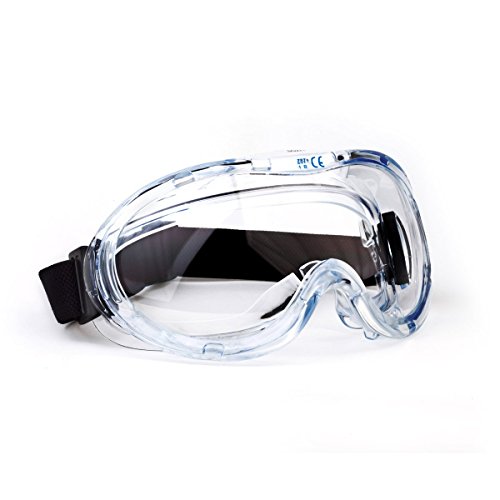 TR INDUSTRIAL TR Industrial Anti-Fog Approved Wide-Vision Lab Safety Goggle, ANSI Z87.1…
View on Amazon ↗
 HONMEIN Honmein 2-Pack Safety Goggles, Anti-Fog Lab Goggles for Men and…
View on Amazon ↗
Listing names and images come from Amazon and are rechecked against the live listings; last checked Nov 8, 2026. No prices shown; the current price is on the listing.
What this guide is. Use this guide as a checklist to hold against any listing, not as a verdict on a specific model. It is written from general category knowledge, and you should verify the inside dimensions and vent type on the listing before you buy.